Pages

Showing posts with label indie author. Show all posts

Monday, April 25, 2016

S.P.M Barrett-The IAN Interview

Hello! So my name is Sam and I write under the pen name S.P.M Barrett. I am an Irish citizen and I have been soaked by more showers of rain then I have seen sunshine! Aside from the obvious fact that I am an author (I know, I am a little shocked too!) I have a few other passions, ranging from dodgeball, dancing and ketchup. I absolutely love to taste new types of ketchup and yes, it’s as delicate an art as tasting wine. I love animals and wanted to be a vet but had decided to become a comparative physiologist instead and now I write Sci-fi and fantasy. A bit of a jump I know but I think that you’ll enjoy the story I have to say.

So Underbelly was born almost completely of procrastination. I had my exams in third year of college and I really did not want to study. I felt this uncontrollable urge to create and craft and I tried to quell it by writing a bit of poetry but it wasn’t enough. Then I remembered that one time my English teacher had tried to get me to publish a short story that I had written for an exam and I had refused to, I decided to use the story as a skeleton. So Underbelly was born. It was so much more than the short story I had originally wrote; the Dynomamian Empire rose from my mind and conquered Islandari and it is into this unstable world that Merissa is born into and the warring factions savaging for control. Beautiful conflict, and I was somewhat inspired by a quote by one of my favourite authors “darkness does not always equate to evil, just as light does not always bring good.” P.Cast. Merissa soon finds out that not everyone in the Underbelly is not as straight forward as it seems.

At this moment in time, it is only available as an e-book on Amazon, however I am working on other media options. It will be in paperback form in July 2016 but until then it is only available as an e-book.

Link here: Amazon.co.uk

I’m very excited to be working on the next book Surface, the next in the Turf Wars series. It feels amazing to be looking at a blank screen and pages again and feeling like I could go anywhere with it (obviously I have a rough idea where I’m going but why not take the scenic route and meet and see interesting things and people?).

IAN: You’ve mentioned that you have a background in science and as a Sci-fi author, does this feed into how realistic your book is?

S.P.M Barrett: That’s actually a good point and it raises an idea that I’ve come away with from doing my course. As a fantasy author too, one might expect me to believe in magic however as I have a strong science background, I no longer believe in magic, just unexplained science. While for others this may be a buzzkill, for me it means that I have to think of logical reasons as to how something has happened. I think that it’s incredibly tempting for fantasy, and Sci-fi authors to an extent, to just wave a wand around and just fix the problem. But as I introduced new elements of the story to Underbelly, I had to really think each of them through and make them as watertight as possible. I wanted people to believe the story was possible. 

IAN: Interesting, since you’ve put this much thought into the mechanics of the book, would I be right in presuming that you have a specific message for readers?

S.P.M Barrett: Aside from, please enjoy the story! I am a big advocate for mental health awareness and in all of my works, I tend to tackle a particular facet of the stigmas that surround mental health. In Underbelly, it was all about forgiveness and learning to trust again. While I believe that there are some unforgivable acts and that distrust forms naturally, holding that kind of baggage is just so corrosive to our mental health and as a species we tend to generalise. So if we are hurt enough, we learn not to trust anyone and I decided to explore this as an undercurrent theme in Underbelly.

IAN: So do you see writing as a career?

S.P.M Barrett: Absolutely, I am actually working in Eason and sons and this is the main book shop in Ireland. So I can see the business side of it and there is certainly a career to be made out of it. It’s hard, it’s gruelling and it’s full of doubt. But that is what makes it rewarding! Even if in the end and no one likes my writing at least I can hang up my pen saying that at least I tried.

IAN: Since the road to becoming an author is so difficult, if you could have a writing mentor, who would you have?

S.P.M Barrett: J.K Rowling. Without a doubt. I don’t think I would even use her as a writing mentor, she seems to be such a genuinely lovely person that I would love to be on friendly terms with her. Sure it might even be nice to have deep meaningful conversations about life and beyond in the wee hours of the morning. And if some of her genius does rub off of me, I’ll not complain!

IAN: You’ve already touched on this, but what exactly inspired you to write Underbelly?

S.P.M Barrett: So as I’ve already said Underbelly was essentially a procrastination project. At the time I had just discovered Wattpad, a free publishing website where you could just post up a story and others could read it for free, vote and comment on it. So I did that. I threw up a chapter every day for 19 days, with no editing. It went all around of the world, it was read by nearly 900 people in 6 of the 7 continents and I got huge support for it and it convinced me that maybe this story was worth publishing. But the real push came when a mole on my left hand started changing colour and bleeding and for several days I thought that I had melanoma. I remember standing in the shower thinking that I had cancer and thinking that I was going to die, it was singularly the most terrifying thought I ever had. But I was thankfully given the all clear and I had the mole removed as a precaution but in those weeks I knew that I wanted to do and that was to tell people stories and to share my insights into this crazy thing we call life.

IAN: Oh wow, that must have been intense. Did you have much support outside of your family?

S.P.M Barrett: Oh yes, I have a wonderful partner John who was my rock. He’s not much of a reader though! But he soldiered through all of my drafts of Underbelly and I think that nearly says more, when someone does something that they don’t like when they know that it’s important to you, you know he’s a keeper! I had also a great support in the form of my friends and even at work, my colleagues were always supporting me with my ups and downs. I have also recently made contact with the only Sci-fi and fantasy magazine in Ireland, Albedo and I’m hoping that they become an even greater help than they have already. I also had a kickstarter project to raise funds for my book trailer for Underbelly and that has made a great community that is so supportive.

IAN: Ok I just a couple of more questions before we wrap up, as I am sure that you’re aware writing is hard, but what did you find particularly difficult about writing and what advice would you give to other novice writers?

S.P.M Barrett: I think for me, the actual difficult part of writing, are the nitty gritty details. I always excited to write the interesting parts but the dry parts that were necessary to advance plot can sometimes be a little boring and I struggled to capture the magic within myself to power through it. There was one part where I spent weeks going through it to get it right because it was so detailed and it was like chipping away at marble, a sliver of stone here, a chunk there. Eventually it was there but my mind was a little fatigued! I think this feeds into the advice that I would give to new writers, keep at it. Write what you want to write, free speech exists for a reason. Everyone has a story to tell and it’s up to you whether or not you get to tell it.    

Monday, October 5, 2015

Rebecca Bryn: The IAN Interview


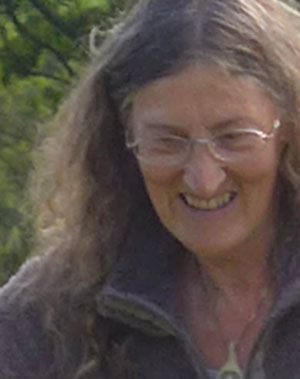
I live on a smallholding in West Wales with my husband, rescue dog and a flock of sheep. A self-taught artist, I paint the fabulous coastal scenery in watercolour and have work in private collections worldwide. I love walking, gardening, good company, and anything creative. My stories reflect my interests and my concerns, my love of family, animals and the countryside, my hatred of injustice and intolerance, my determination, and my sometimes gravely-challenged ability to forgive. I’m fairly laid-back, have developed a pretty thick skin, and I rarely get angry. I suppose I’m a contradiction.


IAN: Please tell us about your latest book.

R.B.: Touching the Wire, my second published novel, is set the Nazi death camp of Auschwitz, in 1944-45, and also in 70s and present-day England. It’s a story of the women of the holocaust and the effects the holocaust still has on our lives. It’s dedicated to the memory of a very special Polish Jew whose pain haunts me still.

Miriam, a Jewish nurse, steps down from a cattle wagon into the heart of a young doctor. As their relationship blossoms, they fight to save lives amidst the horrors of a death camp, joining the camp resistance and risking death daily. Liberation catapults them from one hell into another as they are separated. While Miriam is left behind in the camp infirmary, sick with scarlet fever, the doctor is forced onto the March of Death across Poland in the bitter January of 1945, taking with him stolen evidence of war crimes.

In post-war Britain, to protect his new family, the doctor fails to keep his promise to reveal the truth about the death-camp doctors and is haunted by guilt. It’s his granddaughter, Charlotte, seventy years later and fighting her own demons, who unravels her grandfather’s past and keeps his promise to his lost love.

IAN: Where can we go to buy your books?

R.B.: My second novel, Touching the Wire is available in e-book or print at http://author.to/TouchingtheWire

My first novel, The Silence of the Stones, a psychological thriller set in West Wales is available at http://author.to/TheSilenceoftheStones also in e-book or print.

IAN: Tell us about your next book or a work in progress. Is it a sequel or a stand-alone?


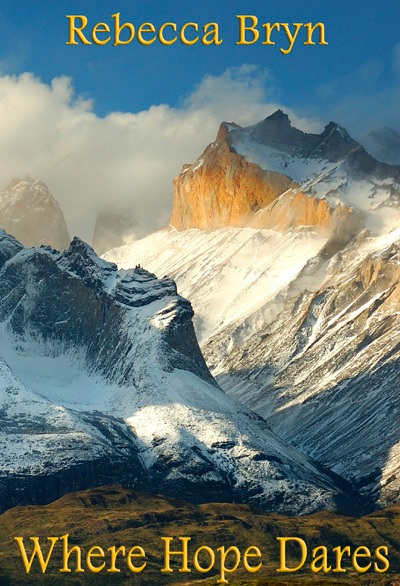
R.B.: Where Hope Dares is my third novel, a stand-alone thriller, and I hope to release it later this month.

Where Hope Dares is available for Kindle at http://getbook.at/WhereHopeDares

It’s a story of courage, faith and hope in the eternal struggle of good over evil.

In a time of social, religious and political upheaval, two isolated cultures clash with devastating results. Kiya, a young healer, is kidnapped and brutally raped by Alaric the Chosen to fulfil the ancient prophecy of The Gift. He takes her north across the High Atlas Mountains of Morocco to the high priest of one of his people’s pagan gods.  Raphel, Kiya’s storyteller husband, embarks on a thousand-mile journey to rescue her from the high priest’s warmongering regime. Kiya and Raphel both look to Abe, an enigmatic peddler for aid, but Abe has a secret agenda of his own – a prime directive dictated by a long-dead pope. The two lovers find help where they least expect it, but who can they really trust – friend or foe?

IAN: What inspired you to write Where Hope Dares?

R.B: Where Hope Dares was inspired by current scientific thinking about the past, present and future of our planet, and mankind’s less than beneficial stay upon it It’s also inspired by our strange relationship with our gods, and religious and racial tolerance as a whole.

IAN: Did you use an outline or do you just wing the first draft?

R.B.: I rarely use an outline. I have an idea of a beginning and a notion of the end. How I get from one to the other is largely down to my characters and where they take me. It’s usually a dramatic, painful and circuitous route, for them and for me.

IAN: How long did it take to write Where Hope Dares?

R.B.: Where Hope Dares was actually the first novel I wrote, back around 2004. Then it was called Destiny, and wasn’t very good: I’ve learned a lot about writing, character development, settings and research during the last eleven years. But I always liked the story, and still felt strongly about the issues that led to its conception so, last year, I decided to rewrite it. I spent about six months converting the tale to my new and, hopefully, more readable style of writing. I then sent it out to beta readers who informed me of its many shortcomings. Obviously much had been lost in ‘translation’. This was a setback I hadn’t anticipated but I was undaunted: all criticism is valid and useful – it’s just a matter of knowing how best to make use of it and apply it. Fortunately, one reader, who has since written me a brilliant scientific ‘afterword’, suggested I gave a more prominent role to Abe, an itinerant peddler and one of my minor characters. It took several months to ponder how this could be achieved and how it would impact the plot, and six more to weave what was essentially a new character into the original story, but it has transformed the novel, given it added depth and lifted it, I think, to a higher plane.  So, you could say it’s taken me eleven years to write Where Hope Dares.

IAN: What do you hope your readers come away with after reading Where Hope Dares?

R.B.: Oh gosh. That’s a difficult question to answer. I hope they value what and who they have. I hope they see greed and intolerance as evils. I’d like to think they’ll see our planet as a fragile and beautiful thing that we should protect at all cost, not plunder indiscriminately for a quick buck: it’s the only one we have and we have a duty of care to all the creatures that share it with us. I hope they see religion for what it is, a comfort and a way of life to those who believe, whatever their creed, not a weapon to beat others’ religions with. I’d better get off my soap-box.

IAN: How much of the book is realistic?

R.B.: The science behind it is as up-to-date and factual as I can make it. The history of the Oromo people and the settings were researched, as were the biblical texts that drive the underlying story and sub-plot. The characters and the coming together of the three aspects of the tale are entirely figments of my imagination.

IAN: How is Where Hope Dares different from others in your genre?

R.B.: I’d like to think it digs deeper, both into mine and my readers’ psyches. I’d like to think there are important issues underscoring the story: things like love, loss and hatred, tolerance, faith and what we build faith on, the errors of corporate greed, political and religious idealism and fanaticism whether for good or evil, and the diminishing resources and overpopulation of our planet.

IAN: If you had to choose, which writer would you consider a mentor?

R.B.: I think Tolkien’s skill at creating great characters with moral strengths and weaknesses, and providing richly-described settings and a believable, totally-grounded and historically-documented world has to be the greatest influence in my writing. Not that I could ever hope to emulate his work.

IAN: Name one entity that you feel supported you outside of family members.

R.B.: My long-time friend, Sarah Stuart, author of romances Dangerous Liaisons and Illicit Passion, has been a huge support throughout my life and my writing career. She is my harshest and most honest critic, and also helps with editing and proof-reading my novels. (aka tearing apart rubbish and ‘upcycling’ it J)

IAN: Did you learn anything from writing Where Hope Dares and what was it?

R.B.: All the research into my novels has taught me something. The Silence of the Stones taught me about rune-casting, in fact I actually used real rune-casting to drive the story, and also it opened my eyes to mental illness. Touching the Wire gave me a humbling insight into the holocaust and makes me grateful daily for what I have. Where Hope Dares kept me awake at night, thinking of what man is doing to the earth, but the research also gave me hope that the planet will survive despite our attempts to destroy it. The writing process itself has made me realise that I never give up. The bigger the challenge, the higher I climb.

IAN: Do you have any advice for other writers?

R.B.: Research, research, research. Then write, take criticism and act on it if it improves your writing and the story. Rewrite, edit, proof-read, take on board suggestions with an open mind but stay true to yourself. Don’t try to write in isolation: join a writing group – The Word Cloud on-line forum is a great place to start. And keep at it. It’s a huge learning curve and, after three published novels and several unpublished ones, I realise that the more I learn the less I know.

IAN: Do you have anything specific that you want to say to your readers?

R.B.: I hope you enjoy my tales as much as I enjoyed writing them. On a higher plane: appreciate what you have, love with all your heart, bear no malice, care for our planet – teach your children well: they are our future.

IAN: What were the challenges (research, literary, psychological, and logistical) in bringing your three books to life?

R.B. Another interesting question. I do like a challenge! Time to do the research, and write and promote is a huge challenge. The learning curve has been almost vertical at times, and encompasses aspects of writing and publishing I had no idea existed.

I think for me, the main challenge, apart from learning my craft, is allowing myself to dig deeply into the painful parts of my life and laying my soul bare to my readers in order to give life to my characters. In that respect, writing has been cathartic but it hasn’t always been easy. In my early attempts at writing I tended to gloss over emotion, as I often did in life. But the results were bland, superficial, false and, as in life, unreal. By bringing my own pain and emotion to the surface, I’ve made Alana, a struggling artist in The Silence of the Stones, a woman fighting to carve out her own path and free herself from her mother’s apron strings and the feeling she has of responsibility for her mother’s happiness. Walt, in Touching the Wire, suffers the guilt we all carry in one respect or another: by tapping into my own I could show the effect it had on his life and his family. Kiya, in Where Hope Dares, has my determination and my eternal optimism, though her faith is far stronger than mine will ever be. 

Friday, July 3, 2015

The Advantages of Self Publishing

The Advantages of Self Publishing

By Colin Dunbar 

Self publishing may not be for everyone. For many writers, however, it is an
option that makes perfect sense. While not always plain sailing or a walk in the park, the advantages of self publishing are significant and hard to ignore.

Let's see what you stand to gain from taking the self publishing route. Here are three of the most definitive advantages of self publishing.

1. Profit Margins

When you self publish, you have to pretty much do all the work. This additional effort is rewarded by the fact that you can keep all the profit from your book sales. This is one of the advantages of self publishing that will apply in particular to anyone who already has a way of promoting their book to an audience. Think in terms of motivational speakers, who can easily self publish their books and then sell them right at their seminars.

If you already run a bookshop, either online or offline, this can also be the perfect way to get buyer's eyes on your new book right away.

2. Complete Freedom

This is one of the big advantages of self publishing. A publisher will inevitably tie you down and control the look, layout and other aspects of your book. If you self publish, you will have complete control and freedom over how the book looks, and you can easily do further self promotion inside where the publisher would have promoted themselves instead.

This is particularly good for business related books, or anyone who has a backend catalogue that the reader may be interested. If they like your book, chances are they'll want more, and you can easily advertise this inside your self published book.

You can also choose the cover design and other visual aspects of your book to suit your own preferences.

3. You Own Your Work

This yet again ties into one of the big advantages of self publishing: the fact that you maintain total control over your book. If you publish a printed copy, you can easily convert that into a digital publication as well, for example. Many publishers will not allow you to do that without further red tape.

If you find it hard to sell your book, you can break it up, give it away for free, sell rights to it. As long as you maintain control as a self publisher, your work can continue to serve you in many ways even if it fails in its primary objective.

So, those are just a few of the advantages of self publishing. It may not be right for everyone, but many people have had great success with it.

Colin Dunbar offers practical advice on self publishing, and publishes his Self Publishing Journal, where you can follow him on his indie author journey. Subscribe to his newsletter, and receive a free copy of The Ultimate Self Publishing Checklist. ColinDunbar.com

Article Source: The Advantages of Self Publishing