Pages

Showing posts with label ebook. Show all posts

Saturday, December 24, 2016

How to Leverage Kindle Unlimited for Marketing Your Books

How to Leverage Kindle Unlimited for Marketing Your Books

How to Leverage Kindle Unlimited for Marketing Your Books
By Amy Harrop

Whether you're an experienced author already racking up sales and new readership, or you're just dipping your toes into the vast waters of the self-publishing industry, the thought of making your books available through Kindle Unlimited (KU) has no doubt crossed your mind.

The real questions is, should you or shouldn't you?

Is there a clear advantage for you, the author, in using this service? Because let's be honest, your main goals are to gain exposure for your work and make a living while doing it.

With this in mind, let's discuss how you can market your books effectively by leveraging the Kindle Unlimited platform, along with the pros and cons of using KU vs a wider distribution strategy.

What is Kindle Unlimited?

If you don't already know, Kindle Unlimited is a subscription-based service offered by Amazon that allows readers (Prime and otherwise) to access their entire inventory of KU books for one low monthly fee.

At under $10 a month, it's easy to see why Kindle Unlimited has gained a reputation as the "Netflix" of books!

But, wait a minute... $10 a month for unlimited access to all of their books!? If you're wondering who makes money with this arrangement other than Amazon, you'd be in good company.

Authors the world over have been scratching their heads and tip-toeing around signing up for Kindle Unlimited because they're not sure about its long-term benefits or potential drawbacks.

The Pros and Cons of Using KU vs. Using Wider Distribution

There are several pros and cons that go along with using KU vs. wider distribution options, or doing the exact opposite.

Pros

  • It enhances the reach of your books - Amazon has at least fifty percent market share in the US and UK when it comes to digital book sales. That's VERY significant. Their best-selling Kindle e-readers, tablets and apps, as well as Amazon's amazing ecommerce platform and knack for turning browsers into buyers are what drive this phenomenon. And it's increasing every year.

The bottom line? Having your books featured on Amazon increases the likelihood that they will be found and read by a lot of people.

  • You gain access to Amazon's ecommerce tools - Amazon's team is masterful at getting consumers to buy, and it's no different when they market digital books.

Through their KU program, you gain access to unique promotional tools like their Kindle Countdown Deals and Free Book Promotion, which both help to boost your readership and launch your new titles to success.

  • You earn royalties for ever page read - Unlike traditional books sales where a customer buys your book and you get a one-off payment, with KU authors are paid a small royalty for every page read from each book.

Yes, you probably won't make millions, but every penny does add up.

Cons

  • Exclusivity of your book title with KU - You read right. If you decide to promote a book using Kindle Unlimited, you cannot promote that title anywhere else.

You're title is bound to Amazon's KU for 90 day spans, after which, you have the option to renew your contract.

  • Potentially low earnings - Unless you're in the top percentile of book publishers in the Kindle Unlimited program, you shouldn't expect to get hefty royalty checks.

The vast majority of self-published authors find that the potential for earnings per book are much higher on other platforms when compared to KU.

There seems to be more to love about the program than there is to hate it.

But is it wise to put all of your eggs in one basket and have titles exclusive to Amazon's Kindle Unlimited? Is there a point to even signing up if the chance of earning significant royalties are slim?

The Answer: Yes and No, depending on your marketing strategy.

How to Use KU to Sell More Books

We already mentioned that Amazon has the lion's share of the digital book market, but something that you may not know is that their KY customers are no ordinary readers.

The average person who signs up for a subscription service like Kindle Unlimited is best described using one word: Voracious!

Think about it.

Who else would sign up for an unlimited supply of books each and every month? Someone who can't get enough of the written word and who has the potential to turn into a very loyal reader, if given a good reason!

Marketing experts the world over have used the "free offer" angle to hook new users into their products and services for decades. Some examples are, free samples given away at wholesale clubs, free trials of software and free content given away to get new subscribers for email lists.

It's so surprise that this strategy works amazingly well for selling eBooks too, especially if you're newer to the game and haven't made a name for yourself among readers.

If you view Kindle Unlimited as a springboard for launching your self-publishing career it can be a real asset. The key is not to make all of your books available there, but only a few of your absolute best.

And why your best work?

Because, if a reader comes across one of your books you want them to be so excited, spellbound and addicted that they have no choice but to go out and buy additional titles if they want more. How's that for encouragement?

Even a single exceptionally written and presented book offered on the KU platform has the ability to move you from completely unknown to prominent among your target audience, literally overnight.

But what if you're an established self-publisher who already has a significant following?

If you're already well-known and enjoying lucrative digital books sales, Kindle Unlimited may not be an essential aspect to growing your readership (although it can't hurt).

On the other hand, by not publishing at least one title on the platform, you may be missing out on significant marketing potential (don't worry, you can always use a pen name).

Lindsay Buroker, one author earning a full-time income for her work, attributes anywhere from 85-90% of her income to utilizing the Amazon Kindle Direct Publishing and Kindle Unlimited platforms. In contrast, her other book titles spread across seven alternative platforms collectively bring in the remaining 10-15%.

In her case, the math is undeniable.

But the only way to know how it would work for you is to choose some titles, register for your own Amazon KU account and see what happens.

The Perils of Avoiding Wider Distribution

No matter how you feel about Amazon, the fact is that they are one of the major book distributors worldwide. While it may be a grave mistake to leave them out of your plans for marketing and distributing self-published titles, total exclusivity could be equally troublesome.

While it can be very effective, as with most things, there is one caveat to using Kindle Unlimited exclusively for marketing your brand.

While Amazon does have the majority of readers, you are missing out on the millions of readers on other platforms such as Apple's iBookstore, Kobo, Barnes & Noble, and more.

For that reason alone, it is never recommended to use any single distribution and promotion strategy. Instead, focus on using KU to promote some of your best books to gain the exposure and new readership that only Amazon can offer and put the rest of your books up for sale on any platform and in any format that will produce sales and profits for your work.

While Kindle Unlimited isn't a good fit for every author, it is worth investigating as part of a multi-strategy book marketing plan.

Check out my blog for more publishing tips. Amy Harrop Blog

Article Source: http://EzineArticles.com/expert/Amy_Harrop/695929
http://EzineArticles.com/?How-to-Leverage-Kindle-Unlimited-for-Marketing-Your-Books&id=9547879

Friday, May 8, 2015

Rik Stone: The IAN Interview


Rik Stone worked in shipyards in the North East of England before going into the Merchant Navy. Eventually, he yearned for change and studying seemed a good way to get it so he worked through the lower level stuff and then on to gaining a BSc. degree in Mathematics and Computing. But he loved reading fiction and had always harbored a secret ambition to write it. In his younger days such aspirations weren’t realistic, but an early retirement at the age of fifty provided the opening he wanted and he began pursuing the dream seriously. First came the debut novel, Birth of an Assassin, and more recently, The Turkish Connection, the second in the series.


The Independent Author Network. Hi Rik. Please tell us about your latest book.

Rik Stone. The Turkish Connection is the second in the series to Birth of an Assassin. While Jez, the protagonist in the first book, is dealing with the events thrust upon him in Russia, Mehmet, a young Turk, is caught up in the backwash of those same actions in Turkey.

Only eight years old and Mehmet is thrown into a life where he battles to survive the murky Istanbul of 1951. On a daily basis, he is forced to learn the skills of thievery and violence alongside other street children caught in the same trap. Every evening he curls up under a stinking jetty in a waterway off the Bosporus Strait, yearning to break free from the life inflicted on him by his drunken, womanizing father, but little knowing that his father’s rotting body lies at the bottom of those same waters.

Adulthood comes before Mehmet finds out that it wasn’t fate that had taken control of his life as a boy, but a very real nemesis. The man in question; a powerful crime lord who has support in the highest places within the Turkish government. Can Mehmet compete with such an opponent or has his life been doomed from the start?

IAN. Is The Turkish Connection published in print, e-book or both?

R.S. The Turkish Connection is available in paperback now and the ebook version is scheduled for release on the 28th of May.

IAN. Where can we go to buy The Turkish Connection?


IAN. What inspired you to write The Turkish Connection?

R.S. I’ve toured Turkey fairly extensively. I love its exotic atmosphere and was able to imagine being back there as I wrote.

IAN. Did you use an outline or do you just wing the first draft?

R.S. I start with a beginning, middle and end in three paragraphs. I write towards the latter two introducing relevant sub-plots as I go.

IAN. How long did it take to write The Turkish Connection?

R.S. At around nine months I had completed the fourth draft, but I am a habitual tinkerer so the months stretched out to twelve.

IAN. Do you have a specific writing style?

R.S. I like to keep things simple in terms of wording. When I read a thriller, there is nothing worse than stopping to look up the meaning of words; it kills the pace and hauls the reader back to reality.

IAN. What do you hope your readers come away with after reading your books?

R.S. My intention is not only to thrill, I want the reader to walk away satisfied, and yet sad to lose the characters they’ve grown to know.

IAN. How much of The Turkish Connection is realistic?

R.S. I think all thrillers have a touch of the improbable otherwise the protagonists wouldn’t survive. However, I have no trouble believing the story could have happened.

IAN. Are experiences based on someone you know, or events in your own life?

R.S. I take life’s experiences and grossly exaggerate them; to the point the experiences become unrecognizable to me.

IAN. How is your book different from others in your genre?

R.S. Probably the setting, protagonist and that it is more believable than most. Also, it seems the norm to make the hero a European or an American, but people are the same everywhere, living the same lives and having the same aspirations, albeit they have different levels of finance, so why can’t they have heroes too?

IAN. Do you see writing as a career?

R.S. I think about and develop my work in every situation I find myself in, it is all consuming, so writing is not my career, it is my life.

IAN. Who designed the cover?

R.S. Even if I can’t actually see the picture, I have a full brief in my mind of what it should look like; I know, that hardly makes sense. I write the brief down and hand it over to the professionals, www.designthing.co.uk, and after a couple of prototypes we end up at the same place.

IAN. Do you have any advice for other writers?

R.S. The hardest part of writing is the promotional aspect and there are times it will get you down. When that happens, forget about marketing and lose yourself in writing until the woes are gone; it works for me.

IAN. Tell us about your next book or a work in progress. Is it a sequel or a stand-alone?

R.S. I’m in the final drafts of book three in the series and hope to have it out at the end of this year.


Tuesday, May 13, 2014

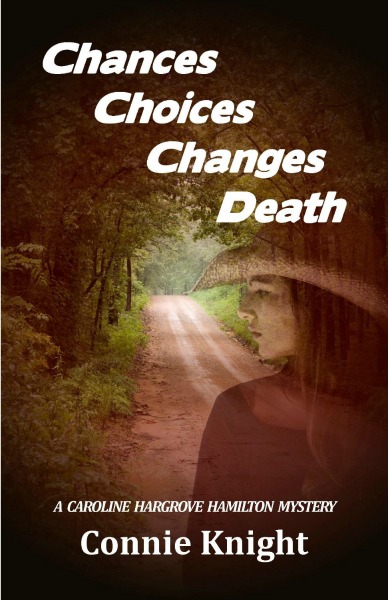
Connie Knight: The IAN Interview


I grew up in San Antonio, Texas. My father’s family lived in the country some miles away, in the DeWitt Colony area settled in 1825. We visited his family often, and I vividly remember my grandmother, my great-uncles and their wives, my cousins, and the places they lived, so different from the city.

Reading and writing were always my favorite activities. In college, I studied creative writing in San Francisco, journalism back in San Antonio, and then I worked in Houston as a journalist and magazine editor. I still live in Houston close to my family, and I visit my cousins in the country.

After leaving journalism, I found myself writing fiction. So far, two mystery novels have materialized. Chances Choices Changes Death follows Cemetery Whites in the Caroline Hargrove Hamilton Mystery series.

Independent Author Network: Please tell us about your latest published book.

Connie Knight: Chances Choices Changes Death is the second novel in a series-to-be of cozy mysteries set in Texas ranch land near San Antonio. I used the same heroine, amateur sleuth Caroline Hargrove Hamilton and her cousin Janet, in the events of the story.  
     
The group of initial book characters was enlarged with others: three bad guys in particular. Their portraits extend the cozy basis of the book. My writing style remains humorous, but there’s depth to the plot, just as there is to life. One bad guy, Brian Atkins, is really sleazy rather than evil. He causes the death of Myra but not on purpose. Trying to escape arrest, he tells some things to the police, but hides more. He was an interesting character to write about as the book developed.

So was the diversity between identical twin brothers, Donny and Danny. Earlier in life, they were alike, but they made different choices, and different changes occurred to them. One fell in love, and the other could not, as the book goes on.


IAN: What inspired you to write the book?

CK: I wanted to set a book on a big ranch. Generally, it’s a sequel to Cemetery Whites. In writing fiction, I chose to write a mystery, a genre novel, rather than a work of literary mainstream. I couldn’t think of a plot for a mainstream.

IAN: Did you use an outline or do you just wing the first draft?

CK: I used an outline, and pages written about events, or characters. The outline changed as writing went on, things changed, new people popped up. Still, I’d rather have an outline plan than wing it.

IAN: How did you come up with the title?

CK: That’s a good question. I’m not sure how I came up with it. I do know that the first title, Cemetery Whites, eluded many people, to my dismay. It’s the name of a white iris planted in graveyards. I thought it was common knowledge. Anyway, Chances Choices Changes Death indicates a stream of events. One leads to another, although death is not always the consequence.

IAN: How much of the book is realistic?

CK: The whole book is fictional, although it’s not a fantasy or set in outer space. The characters, the places, the events, could exist, but they don’t.
Except for the State of Texas, DeWitt County, Yorktown and Cuero. They really exist, but the exact cottages and ranches and characters in my book don’t.

I’ve read comments by authors about taking something they saw or heard and incorporating it into a book. Muriel Sparks wrote about seeing someone with beautiful, fragile hands that she gave to another character one day. The hands were real, but fictionally used.

IAN: Are experiences based on someone you know, or events in your life?

CK: I’ve tapped into some experiences, but they’re not always important to the story. For a few years, I took English riding lessons, and I gave that background to Caroline when she and Janet are taking Western riding lessons at Robinson Ranch. I gave her an old horse with an English history although he knew Western riding now. That comes in handy when Caroline needs to jump a fence later on.

Actually, I had a similar experience in my English riding lessons. A formerly Western horse mistook my English signals and started walking backwards. The more I tried, the worse it got, until someone took the reins out of my hands.

IAN: Name one entity that you feel supported you outside of family members.

CK: Going back to early days, that would be Mother Estelle-Marie, my teacher in the eighth grade. With her encouragement, I wrote a play for my class to perform and a poem for a contest. Also a short story that didn’t get published. I’ll always remember Mother Estelle. She got me started.

IAN: What was the hardest part of writing your book?

CK: The development of this book brought police activity into it more than I meant to. A police officer proofed it for me and made comments about accuracy of events, or changes to be made.

IAN: Did you learn anything from writing your book and what was it?

CK: I think you always learn something from anything you do. This was my second book, and I learned things additional to what I learned with writing my first book. It’s more complex, the characters vary, and I moved some pages from here to there. There was more flexibility in putting things together.

IAN: Is your book published in print, e-book, or both?

CK: It’s an e-book now.

IAN: Where can we go to buy your book?

CK: Both are available as an e-book on Amazon and Barnes andNoble.

IAN: Tell us about your next book. Is it a sequel or a stand-alone?


CK: It’s a sequel, and it’s in progress. There’s an outline, research material, some writing, and Chapter One. Caroline’s daughter comes to the country and—a subplot—decides to be a small farmer. She’s fun to think about.

Wednesday, October 2, 2013

Author M. R. Mathias announces the release of The Legend of Vanx Malic Book Three: Saint Elm’s Deep

Once again Mathias has created another exciting masterpiece of a novel with the familiar captivating style that we have grown to expect. A Top 500 Amazon Reviewer on The Legend of Vanx Malic


Enjoy The Legend of Vanx Malic series with this huge Kindle giveaway of Books One AND Two from Oct 1 - 5 


M. R. Mathias is the author of the international bestselling “Wardsone Trilogy,” the Locus Poll nominated “Dragoneer Saga,” fantasy series, and the “Crimzon and Clover Short Story Collection.” He is also the author of the award-winning horror thriller “The Butcher’s Boy” under the pen name Michael R. Mathias.

“Saint Elm’s Deep” is Mathias’ latest entry in the highly-rated fantasy series, “The Legend of Vanx Malic.” Book One of the series made it to #1 in the Amazon Fantasy/Mythology bestsellers list in May 2013 and Book Two has been as high as #3 on that same list.

In “Saint Elm’s Deep,” our hero, a half-zythian bard named Vanx, is being drawn to places from his father’s infamous past. After helping Darbon get over the loss of his first love, and finding a map on a grueling hunt, Vanx and his new companions decide to travel deep into the Bitterpeaks. There they hope to find the fabled Hoar witch's palace in a hidden valley of the treacherous and magical Lurr Forest.

The story broadens, as we delve into Vanx's past and the future of as-unlikely-a-group of heroes as you will ever find. The journey, and the strange creatures they encounter along the way, makes this a fantasy adventure that you just don’t want to miss. Action and adventure, drama and thrills, and a barrel-keg full of adventure await readers in Saint Elm's Deep, the third installment of M. R. Mathias’ The Legend of Vanx Malic.

“We get a deep look at Vanx’s father Captain Saint Elm here, and the characters around Vanx are superbly drawn, complete with depth, emotions, and problems all their own. Especially, the Hoar witch” -  Digital Wizard.

And even better news, from October 1st through the 5th 2013, everyone can get The Legend of Vanx Malic Book One “Through the Wildwood” and Book Two “Dragon Isle” FREE in the Amazon Kindle Store here:  http://www.amazon.com/dp/B009A0Q5D2   If you don’t have a Kindle, just get the free Kindle reading app for your phone, PC, or tablet. Then get the books. It is that easy.

“Saint Elm’s Deep – The Legend of Vanx Malic Book Three,” is available for pre-order online at Amazon here: http://www.amazon.com/dp/B00F9IK6U2  and will officially release November 20th 2013.


REVIEW COPIES AND INTERVIEWS AVAILABLE www.mrmathias.com 

Monday, September 17, 2012

The Girl Who Swam to Atlantis is a Y.A. Historical Fiction Novel by Elle Thornton

historical fiction; middle-grade/young adult

Nearly everything important in twelve-year-old Gabriella’s life that summer of 1957 can be traced to the river. On the North Carolina military base where she lives, she meets the African-American Marine Hawkins by the river’s brown-green water. When her father, the general, treats her as if she doesn’t exist, Gabriella’s determined to show him she’s good at something: she’ll learn to swim. And it’s the river with its mysterious worlds that leads to her mother, even though she doesn’t want to be found.

At the river, Gabriella discovers Hawkins is far more than a servant in the kitchen of her father’s quarters. He becomes her swim coach and a person she can talk with—even about the tragedy of the youth Emmett Till. The fourteen-year-old was lynched two years earlier, his body thrown into Mississippi’s Tallahatchie river. But this river, her river, isn’t a place of death. Emmett’s spirit is alive in its waters. It’s a place of magic.

At the river she works with Hawkins on her swimming so she can enter a competition and make her father proud. Then maybe the general won’t send her north to school for another lonely year. At the river Hawkins helps her find her strength. Emmett helps her find her heart.

Emmett had been murdered for whistling at a white woman. Could her friendship with Hawkins endanger the tough Marine? It doesn’t seem possible. Until a sudden storm on the river changes Gabriella’s life—forever. FREE at Amazon September 17, 18, & 19


Elle Thornton 


I grew up on military bases in the south and west of the 1950s. And it still feels like I’m really home when I’m around airfields, parade grounds, barracks, Quonset huts, the PX, and folks in uniform.

This background has found its way into my first historical fiction novel, Swimming to Atlantis. The story tells how the murdered youth Emmett Till comes to life in twelve-year-old Gabriella’s heart that summer of 1957, when the African-American Marine Hawkins teaches her to swim in a North Carolina river. 

I’ve been fortunate to work with some fine reporters and editors who taught me to write news stories. After leaving the news business, I became a technical writer for a major computer company and later a marketing writer for still another international corporation. Journalism taught me to write under tremendous pressure and to feel comfortable with words. Working with engineers as a technical writing taught me the importance of clarity. 

I valued all that I’d learned, but something was missing. Since grade school, I’d loved books and poetry. So when I had the opportunity, I earned a graduate degree in English and began to study and write poetry and fiction along with teaching. To date, some of my poetry has been published in small journals. The adventure of becoming a YA novelist is unfolding with the publication of The Girl Who Swam to Atlantis.


Sunday, September 16, 2012

Tim Vicary: The IAN Interview

My name’s Tim Vicary and I live near the historic city of York, in the north east of England. I’m a writer and also a teacher at the university of York. I’ve written four historical novels, three legal thrillers, a couple of textbooks and around twenty graded readers for foreign learners of English. I’m a grandfather and hope to retire next year, so that I can concentrate on writing more. I live in the English countryside with my beloved wife, two dogs, two cats and two horses.  


IAN. Hi Tim. Please tell us about your latest book.

TV. Nobody’s Slave is the story of two boys on a voyage which transforms both their lives. Madu, a young boy from West Africa, is captured by the Elizabethan slave-trader Sir John Hawkins. Tom Oakley is an English sailor in charge of the slaves. He is asked to train Madu to be a page-boy to serve Hawkins on board ship. At first the two boys hate each other. But as the voyage continues their positions are reversed. Tom becomes a prisoner of the Spanish colonists in Mexico, and is forced to take orders from Madu. Both boys long to escape, and come to depend on each other much more than they could ever have imagined.

This is an adventure story based on real historical events. History as you never learned it in school!

IAN. How long did it take to write Nobody’s Slave?

TV. Probably about six or eight months altogether. And a lot of editing and revising afterwards.

IAN. What inspired you to write Nobody’s Slave?

TV.  As a boy I loved to read stories about Elizabethan sailors like Sir Francis Drake and Sir John Hawkins. They were always presented as great English heroes and of course they were, they were very brave and talented men. But unfortunately there was another side to them. Hawkins in particular was a slave trader. He captured hundreds of African slaves and sold them to Spanish colonists in across the Atlantic. So I began to wonder what it was like for those Africans, and how their story could be included in a historical novel too. So I read as much as I could about the history of one particular voyage, in 1568 – a particularly exciting and dramatic voyage, as it turned out – and then I tried to write a novel which would show what it might have been like for two young boys on either side, one English and one African.

IAN. Talk about the writing process.

TV. I write in the morning whenever I can, because that is when I have most energy, but I have a teaching job at the university so I can’t always do that, obviously. I write in the evenings when I have the energy, and in the vacations.

IAN. Did you use an outline or do you just wing the first draft?

TV. I always try to have an outline, because it’s a terrible waste of time to write two or three chapters and then realize you can’t use them because you’ve gone in the wrong direction. But my plans are like all plans; they change as soon as they come into contact with reality!

IAN. How is Nobody’s Slave different from others in your genre?

TV. Well, I write two sorts of books: historical novels and legal thrillers. Nobody’s Slave is a historical novel, but it’s set in an earlier period to my other historical novels. One of them, The Monmouth Summer, is set in England in 1685, and the other two, The Blood Upon the Rose, and Cat and Mouse, are set in England and Ireland around the time of the first world war, in a world a bit like the TV drama Downton Abbey.

My legal thrillers, A Game of Proof, A Fatal Verdict, and Bold Counsel, are all set in modern times.

IAN. Is Nobody’s Slave published in print, e-book or both?

TV. It’s an ebook, at the moment.

IAN. What do you hope your readers come away with after reading Nobody’s Slave?

TV. Well, I hope they will have had an exciting, enjoyable read, will have laughed and cried a little with the characters, and at the same time will have learned a little history, in a painless, entertaining way. I’ve tried to write a fast-moving, entertaining story, but I’ve done my research pretty carefully, so the readers can trust me that all the historical events in the story really did happen, and everything that happens to the two boys really could have happened.

IAN. Where can we go to buy your book?

TV. Amazon.com, Amazon.co.uk, and Smashwords. I expect it will be on Kobo and Nook and other outlets soon.

IAN. Tell us about your next book or a work in progress. Is it a sequel or a stand alone?

TV. Nobody’s Slave is a stand-alone book at the moment, though it ends in a way that means a sequel might be possible one day. At the moment I’m trying to get started on a fourth book in my legal thriller series, The Trials of Sarah Newby. 

IAN. Any other links or info you'd like to share?

TV. You can read more about all my books on my website http://www.timvicary.com
    There is a blog post about Nobody’s Slave here http://historicalthrillers.wordpress.com/

You can buy the book on


Nobody’s Slave by Tim Vicary
255 pages
historical fiction
White Owl Publications Ltd


In this excerpt both boys are slaves of a rich Spanish lord in Mexico City. Madu, the African boy, has just ordered the English boy, Tom, to clean out the privy.

 ‘You - you really did this?’

‘Many times. What Antonio say, I do it. But today, he say you do it. So I tell you.’

Tom hesitated, and some of the light seemed to fade from his eyes as their difference in status sank in. But the anger of the burly steward Antonio was not to be trifled with; he knew what Madu said about whipping was true. He took a deep, bitter breath.

‘All right, then.’

‘Good. I show you the shovel.’

It was a small victory, but a vital one for Madu, and he knew he would have to win it many times again. But at least he had some slight claim to Tom's gratitude now, as well as his scorn. Three days ago, when the Viceroy had decreed that anyone who wished could take the recaptured English sailors into their houses as unpaid servants - slaves, in fact, if not in name - it had been Madu who had helped Don Carlo choose Tom, by saying, when asked, that he was reliable, a hard worker. Neither of these things had been especially true, but Madu felt he owed Tom something, for having unwittingly caused his recapture; and he knew Don Carlo was not a naturally cruel master, as others might have been. Tom owed him something for that, Madu thought; and now that Tom was actually in Don Carlo's household with him, he saw that it was vital to make him realise that things were not the same between them as they had been on the Jesus. Here Tom was even less important than he was himself.

But Tom did not seem to accept this.

‘You're not my master,’ he hissed angrily at Madu later that night, as Madu showed him where to sleep and told him what he would have to do the next day.

‘You not mine, either,’ answered Madu coolly. ‘I just tell you Antonio orders. We both slaves now.’

‘I'm nobody's slave! I'm a free Englishman tricked into captivity by these treacherous Spaniards! If it hadn't been for you I'd be free yet, waiting for John Hawkins by the sea!’

‘If…’ If they'd managed to walk that far, Madu had been going to say; but there was a bigger ‘if’ than that. ‘If not for you and John Hawkins, I'd be free, now, too.’

‘What are you talking about?’ Tom brushed his straggly hair out of his eyes, irritably. ‘That's different, Maddy, that's trade. And anyway ...’

‘Trade!' Madu's shout of indignation echoed in the little sleeping cell. ‘Oh, I see. When I am slave is trade, but when you are slave is talk of English freedom and Spanish tricks! This what you say?’

‘But - we caught you in war, Madu! That's fair enough ...’

‘Spanish caught you in war too. Is the same. And was not fair enough.’

‘The Spanish are not at war with us. We never attacked them.’

‘The English not at war with us. We never attacked them!’

‘But ...’
No answer immediately came to Tom's lips. Tired, irritable, angry, he stared at the earnest black face glaring into his own, and then shook his head to try and clear it of confusion.

‘But Maddy, I treated you fair, on the ship, didn't I? You can't have forgotten that?’

‘I treat you fair now, here, in Don Carlo's house. You listen, do like I say, and we can be friends, help each other. But you a slave now, same like me. You must do what you told.’

‘I am not a slave.’

‘You are.’

The two pairs of eyes, one alight with that cold, unearthly blue, the other with the deep, steady brown of the earth itself, glared at each other, refusing to agree. Yet later, as each boy lay on his hard wooden bed, both Tom and Madu were troubled by what the other had said, and the words of their quarrel echoed in their dreams like the whispers of ghosts.


Sunday, September 9, 2012

Meet Derek Graystone: Author of Two Graves and The Schliemann Legacy


Derek Graystone was born in Rivers, Manitoba, Canada. After a brief stay there and in Trenton, Ontario, Canada, Derek has spent the majority of his life in London, Ontario, Canada. He graduated from the University of Western Ontario with a Bachelors Degree in English Literature in 1984.

Derek has had a varied career including jewellery store manager, warehouse manager for an ice cream distributor, manager of a gas station, and the finance and systems manager for a children's charity. In 2002, Derek quit his day job and started his own office automation and Internet presence company and a relaxation massage business with his wife. Derek is also a Reiki Master.

Derek's first book, The Schliemann Legacy, is a spy thriller involving Nazis, terrorists and the hunt for the treasures of Troy.

Derek followed up with Two Graves, a crime novel about a serial killer who is killing look-alikes of the people who bullied and terrorized him in his youth. Derek is planning to release the next in the Kesle PD series called Too Many Graves which will appear in 2012.

Currently, Derek is working on the first novel in the Witches of Aquarius series; Windcrusher will be released in 2012.

Derek lives with his wife Yvette in their home in London Ontario when they aren't visiting their island getaway in Exuma, Bahamas. Derek is also the father of four girls and one boy and has five granddaughters with another on the way.

The books


Two Graves

Suspense, thriller

Forty year old Preston Peterson, pudgy, myopic and socially inept, knows the terror of being bullied. From his earliest childhood memory, he has faced ridicule, name calling, harassment and beatings. Fear ruled his life, possessed him, controlled his every encounter with others.

Now, he has killed.

Now, rage rules his life.

Digging out his despised High School year book, Preston uses computer aged photographs to find and kill look-alikes of his persecutors.

The time has come for those who bullied him to pay the ultimate price for their torture.

Preston is getting even and everyone is a target.

But with a panicked city and Lieutenant Gregg Mann's task force looking for him, Preston should have remembered the Chinese proverb, "Before you embark on a journey of revenge, dig TWO GRAVES."


The Schliemann Legacy

Suspense, thriller

1873 — Heinrich Schliemann discovered ancient treasure in Turkey which proved the existence of Troy.

1943 — the treasure disappeared from Nazi Germany.

1981 — Henri Mardinaud, international information broker, discovers the treasure in the possession of Friedrich Heiden, ex-commander of Majdanek, a Nazi extermination camp. Using his network, the master gamesman positions his players in a race for the treasure and the Nazi:

David Morritt, recently retired Mossad agent and survivor of Majdanek.

Katrina Kontoravdis, a disgraced Greek intelligence operative hoping to redeem herself.

Duman, a vicious Turkish terrorist who will do anything to achieve his objectives.

From Europe, to Heiden's fortress in Colombia, to a secluded estate in Jamaica, Mardinaud uses the hatred between Greece and Turkey and the horror of the holocaust to fuel his twisted game.

More than the treasure, survival becomes the ultimate prize in this battle of haunting memories, revenge, and love.


Monday, June 4, 2012

Giacomo Giammatteo: The IAN Interview


I live in Texas now, but I grew up in Cleland Heights, a mixed ethnic neighborhood in Wilmington, Delaware, that sat on the fringes of the Italian, Irish and Polish neighborhoods. The main characters of Murder Takes Time grew up in Cleland Heights and many of the scenes in the book were taken from real-life experiences. 

Somehow I survived the transition to adulthood, but when my kids were young I left the Northeast and settled in Texas, where my wife suggested we get a few animals. I should have known better; we now have a full-blown animal sanctuary with rescues from all over. At last count we had 41 animals—12 dogs, a horse, a three-legged cat and 26 pigs. Oh, and one crazy—and very large—wild boar, who takes walks with me every day and happens to also be my best buddy. 

Since this is a bio some of you might wonder what I do. By day I am a headhunter, scouring the country for top talent to fill jobs in the biotech and medical device industry. In the evening I help my wife tend the animals, and at night—late at night—I turn into a writer. 

IAN. Please tell us about your latest book.
GG. Murder Takes Time is a story about three young boys—best friends—who swear an oath to be friends forever. The book begins with a brutal murder, and it falls into the mystery/thriller genre, but it is really a story about friendship and how experiences in life affect people in different ways; in fact, the series is called the Friendship & Honor Series. This is book one. 


IAN. How long did it take to write Murder Takes Time?
GG. It took about two months to do the first draft, then about six months to edit it.

IAN. What inspired you to write Murder Takes Time?
GG. I had been writing fantasy books, but I mostly read mysteries. One night I got an idea for doing a mystery and started it. 

IAN. Did you use an outline or do you just wing the first draft? 
GG. I’m not a true outline person, but I always know the ending of the story before I start. I do have a basic idea of where it’s going-major plot points, etc. 

IAN. How is your book different from others in your genre?
GG. One of the reviewers on Amazon answered this far better than I could: 
This novel is not just a murder mystery.
This novel is not just a thriller.
This novel is not just a love story.
This novel is not just a life story.

This novel is all in one.

I absolutely love that review. 

IAN. Is Murder Takes Time published in print, e-book or both?
GG. both

IAN. What do you hope your readers come away with after reading your book?
GG. A satisfying read. I’m not trying to send any messages, just tell a good story. 

IAN. Where can we go to buy your book?
GG. It is exclusive to Amazon until July 12, 2012, then it will be available at all the online sites: B&N, Apple, Kobo, etc… 

IAN. Tell us about your next book or a work in progress. Is it a sequel or a stand alone?
GG. My next release is in July/August 2012. A Bullet for Carlos, is the first book in a new series—Blood Flows South. You can read about it on my website. I will also be bringing out the second book in the Friendship & Honor Series later this year. It’s already finished, but needs some final editing. 

IAN. Any other links or info you'd like to share?
GG. if anyone wants to know more about me they can check out my blogs. Most of them are stories about the animals from our sanctuary, or my kids, or other things I’m passionate about. 

The blog is here: www.giacomogiammatteo.com/blog 


MURDER TAKES TIME by Giacomo Giammatteo 
Page count: 438
Mystery/Thriller
Inferno Publishing Company


Chapter 1
Rule Number One―Murder Takes Time

Brooklyn, New York—Current Day

He sipped the last of a shitty cup of coffee and stared across the street at Nino Tortella, the guy he was going to kill. Killing was an art, requiring finesse, planning, skill—and above all—patience. Patience had been the most difficult to learn. The killing came naturally. He cursed himself for that. Prayed to God every night for the strength to stop. But so far God hadn’t answered him, and there were still a few more people that needed killing.

The waitress leaned forward to refill his cup, her cleavage a hint that more than coffee was being offered. “You want more?” 

He waved a hand—Nino was heading towards his car. “Just the check, please.” 

From behind her ear she pulled a yellow pencil, tucked into a tight bun of red hair, then opened the receipt book clipped to the pocket of her apron. Cigarette smoke lingered on her breath, almost hidden by the gum she chewed. 

Spearmint, he thought, and smiled. It was his favorite, too. 

He waited for her to leave, scanned the table and booth, plucked a few strands of hair from the torn cushion and a fingernail clipping from the windowsill. After putting them into a small plastic bag, he wiped everything with a napkin. The check was $4.28. He pulled a five and a one from his money clip and left them on the table. As he moved to the door he glanced out the window. Nino already left the lot, but it was Thursday, and on Thursdays Nino stopped for pizza.
He parked three blocks from Nino’s house, finding a spot where the snow wasn’t piled high at the curb. After pulling a black wool cap over his forehead, he put leather gloves on, raised the collar on his coat then grabbed his black sports bag. Favoring his left leg, he walked down the street, dropping his eyes if he passed someone. The last thing he wanted was a witness remembering his face.

He counted the joints in the concrete as he walked. Numbers forced him to think logically, kept his mind off what he had to do. He didn’t want to kill Nino. He had to. It seemed as if all of his life he was doing things he didn’t want to do. He shook his head, focused on the numbers again. 
When he drew near the house, he cast a quick glance to ensure the neighbors’ cars weren’t there. The door took less than thirty seconds to open. He kept his hat and gloves on, walked into the kitchen, and set his bag on the counter. He removed a pair of tongs and a shot glass, and set them on the coffee table. A glance around the room had him straightening pictures and moving dirty dishes to the sink. A picture of an older woman stared at him from a shelf above an end table. Might be his mother, he thought, and gently set it face down. Back to the kitchen. He opened the top of the black bag and removed two smaller bags. He set one in the fridge and took the other with him. 

The contents of the second bag—hair and other items—he spread throughout the living room. The crime scene unit would get a kick out of that. He did one final check, removed a baseball bat from the bag, then sat on the couch behind the door. The bat lay on the cushion beside him. While he stretched his legs and leaned back, he thought about Nino. It would be easy to just shoot him, but that wouldn’t be fair. Renzo suffered for what he did; Nino should too. He remembered Mamma Rosa’s warnings, that the things people did would come back to haunt them. Nino would pay the price now. 

A car pulled into the driveway. He sat up straight and gripped the bat.