Pages

Showing posts with label historical fiction. Show all posts

Tuesday, May 6, 2025

Reese Balducci-The IAN Interview

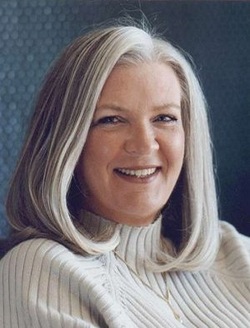
 Reese Balducci


I am a fiction writer who explores themes of perseverance, longing, and the quiet heroism of everyday life. I admire rich, character-driven storytelling and draw inspiration from my family’s deep Italian roots. I have a passion for history, particularly the immigrant experience in America.

As a dual citizen, I live in Tennessee and Tuscany, surrounded by the landscapes and histories that continue to shape my  work. When not writing, I enjoy traveling, reading widely across genres, and spending time with my family.

IAN: Tell us about Letters from the Olive Tree.

Reese Balducci: Letters from the Olive Tree is a literary historical fiction short story set in the early twentieth century. Giovanni Olivi, the second son of a proud but impoverished Tuscan farming family, is bound by tradition and cut off from inheritance. He leaves behind the only life he’s known and the woman he loves, Ersilia Innocenti, in search of opportunity in America, promising to make a life abroad and one day send for her.

What follows is a transatlantic journey of grueling labor, crushing poverty, and bitter desolation for Giovanni, testing the couple’s steadfast love. Told through vivid prose and the letters they exchange, Giovanni’s story unfolds in sweat, sorrow, and relentless hope as he faces the ultimate test of his promise to Ersilia beneath the olive tree.

Letters from the Olive Tree is a lyrical, emotionally resonant story about what it means to belong, in place and person. It is a timeless meditation on land, love, and the courage to keep building when everything seems lost.

IAN: Is Letters from the Olive Tree published in print, e-book or both?

Reese Balducci: Letters from the Olive Tree is published in both print and e-book formats.

IAN: Where can we go to buy Letters from the Olive Tree?

Reese Balducci: Letters from the Olive Tree is exclusively available through Amazon in print and Kindle format, and it is free for Kindle Unlimited subscribers. It is available here: Letters from the Olive Tree. An Audible exclusive audiobook version is currently in production, with a scheduled summer release.

IAN: What inspired you to write Letters from the Olive Tree?

Reese Balducci: I was inspired by a desire to explore the emotional and physical toll of immigration through a personal lens. My family history includes stories of Italian relatives who came to America with very little, driven by promises and pressures they didn’t always fully understand. I wanted to imagine what it meant to leave everything behind out of necessity and love and examine how that kind of devotion holds up under hardship.

IAN: Did you use an outline or do you just wing the first draft?

Reese Balducci: I developed the story around a three-act structure from a detailed outline. I find that historical fiction requires more planning, particularly when working with multiple settings, time periods, and emotional arcs. That said, some of the most meaningful moments in the story emerged during the drafting process, often when the characters’ lives began to take shape.

IAN: What do you hope your readers come away with after reading Letters from the Olive Tree?

Reese Balducci: I hope readers walk away with a deeper appreciation for the untold sacrifices made by those who came before us. This is a story about perseverance in the face of repeated setbacks and what it means to keep your word when everything around you is falling apart. I also hope it prompts reflection on what defines home, not just as a place, but as a relationship.

IAN: How much of Letters from the Olive Tree is realistic?

Reese Balducci: The story is fictional, but it’s grounded in historical reality. Every setting, from the Tuscan hillside to the sharecropper shacks of Mississippi, is informed by real-world research and my personal experiences. The emotional experience of immigration, dislocation, homesickness, uncertainty, and hope is something that has been documented across countless lives, and I tried to portray that with as much honesty as possible.

IAN: Are experiences based on someone you know, or events in your own life?

Reese Balducci: Yes, the inspiration for the main characters came from my real-life great-grandparents, Giovanni and Ersilia Balducci. However, I also drew inspiration from oral histories, family anecdotes, and historical accounts that reflect the time period. This story is a composite of the broader immigrant experience, a fictional narrative built on very real foundations.

IAN: How is Letters from the Olive Tree different from others in your genre?

Reese Balducci: Letters from the Olive Tree focuses more on the emotional arc of its characters than on sweeping historical events. While many historical novels focus on pivotal moments or political shifts, this story centers on the intimate emotional cost of starting over. It’s intentionally quiet and character-driven, using letters as emotional anchors to reflect the uncertainty, distance, and longing between two people navigating a changing world.

IAN: What book are you reading now?

Reese Balducci: The Splendid and the Vile by Erik Larson. It’s an excellent biography of Winston Churchill’s first year as British Prime Minister during the sustained bombing campaign against Great Britain by the Luftwaffe.

IAN: Do you have anything specific that you want to say to your readers?

Reese Balducci: Just that I’m grateful. Writing a story like this is a vulnerable process, and it means a great deal to me when a reader connects with it. If the story resonates or lingers after the last page, I’ve accomplished my goal.

IAN: Tell us about your next book or a work in progress. Is it a sequel or a stand-alone?

Reese Balducci: I am currently writing a full-length novel, Tuscany Calling. It is a contemporary romance novel, and the protagonist, Alex, is the great-great-granddaughter of Giovanni and Ersilia Olivi from Letters from the Olive Tree. It is scheduled to be released this Fall by Veridian House.

Sweeping and emotional, Tuscany Calling is a story of love’s longing, the ties that bind us to the past, and the choices that shape our future. Set against the breathtaking landscape of rural Tuscany, it is a novel about second chances, the power of home, and the undeniable call of the heart. Readers can learn more about this forthcoming project on my Official Author Website Reese Balducci.


Monday, September 7, 2020

Philip Yorke the IAN Interview

Philip Yorke writes historical fiction novels and is currently in the process of publishing a five-book series about the English Civil Wars, and the life of Parliamentarian cavalry officer, Francis Hacker.

His first book, Redemption, has received widespread critical acclaim, with one reviewer hailing it as “a well-told tale as close to real life as you’re ever likely to get”.

A former investigative journalist in the UK, Philip has had a life-long interest in history, particularly the events that defined the seventeenth century and anything, and everything, to do with the reigns of Rubert the Bruce and Edward the First.


IAN: Please tell us about your latest book.

Philip Yorke: Rebellion is set in the First English Civil War and tells the story of Francis Hacker, a Captain in the demoralised Parliamentarian army that’s seeking to clip with the wings of King Charles the First.

The bloody war has already been raging for almost a year and forces opposed to Charles are close to defeat. 

In desperation, John Pym and Oliver Cromwell enlist Hacker to spearhead an audacious plot to bring down Charles and restore peace to the ravaged land. 

Courageous and loyal, Francis is drawn into a deadly deceit that may cost him everything he holds most dear…

Rebellion is popular read in the UK, US, Canada, Japan and Australia.

In August 2020, the Historical Novel Society’s Historical Novels Review praised the book, stating: “The first-person, present-tense account is a quiet, simple narrative rich with emotion. Little is known about the real-life Hacker, yet Yorke breathes life into him. Like us all, he has frailties, but dearly loves his family and God. The secret mission, spy and murder episodes may seem like separate interludes in the book; in actuality, they are as intricately and artfully interwoven as a spider’s web and no one is left untouched.”


IAN: Is Rebellion in print, e-book or both?

Philip Yorke: Rebellion can be bought in paperback and e-book formats.

IAN: Where can we go to buy Rebellion?

Philip Yorke: At these stores. 
PhilipYorke.org/store  Amazon.com  Amazon.co.uk  Goodreads.com

IAN: What inspired you to write Rebellion?

Philip Yorke: A visit to the UK’s National Civil War Museum; it was here that I met Francis Hacker for the first time and learned of his contribution to British history. From the moment I was introduced to his life story, I was hooked.

IAN: Did you use an outline or do you just wing the first draft?

Philip Yorke: I get to know my characters and write from the heart. I do a lot of research, and create ‘quasi outlines’, but I tend to start writing and seldom refer to them. By the time I start tapping away on the keyboard, I usually know where a chapter is heading.

IAN: How long did it take to write Rebellion?

Philip Yorke: Rebellion, which is just over 100,000 words long, took about six months to research and write. It then took a further four months to get everything formatted, proofed and ready for publication.

IAN: Do you have a specific writing style?

Philip Yorke: I write in the first-person. And I try to make the story as authentic as I possibly can. This means I write to a very specific historical timeline, making sure the main threads of the store have credible links to the actual events of the time.

IAN: What do you hope your readers come away with after reading Rebellion?

Philip Yorke: Good question. I want people to understand the complexities of everyday life that enveloped everyone who lived during seventeenth century. It was an incredible time, when faith, the arts and remarkable men and women really started to define the modern world. People did incredible things because of their beliefs. They even died willingly because of the causes they served, refusing to take the easy way out just so they could live longer.

I really think there are some lessons today’s generations could learn from the period.

IAN: How much of Rebellion is realistic?

Philip Yorke: I hope all of it is realistic. The feedback I have received from readers, so far, suggests it is.  I am always on the lookout for feedback, and I seek to learn from it (and apply it to my writing) whenever it is offered.

IAN: If you had to choose, which writer would you consider a mentor?

Philip Yorke: Without doubt, it would have to be the late and great, Nigel Tranter, a brilliant exponent of the craft of blending historical fact with a wonderful story. His books, in my humble opinion, are ‘unputdownable’! He never sought to be a populist author, preferring instead to be an authentic writer. As a result, his many works are wonderful to read. If you haven’t heard of him, my encouragement is check Nigel Tranter out, particularly his trilogy on Robert the Bruce.

IAN: What book are you reading now?

Philip Yorke: I have just bought Burning the Books by Richard Ovenden. It describes itself as “a history of knowledge under attack”. It covers many instances of literary and ‘thought’ suppression – including the period of the Reformation in England, when Henry VIII’s agents burned many thousands of books produced by monks and Catholics.

IAN: Do you see writing as a career?

Philip Yorke: Most certainly. But I doubt whether I will earn royalties on the scale of JK Rowling!

IAN: Do you recall how your interest in writing originated?

Philip Yorke: I used to play rugby union, and the team I was a part of appeared regularly in the local, regional and national press. When I was looking for a job, the lady who became my mother-in-law suggested I write to my local paper to see if they would be willing to advise me on how I could become a reporter. The paper’s editor replied to my letter within three days – offering me the position of fulltime ‘rugby writer’. I took it and used to report on the games I actually played in. This was in the late 1980s, and you would never be allowed to do it today. It was as hard, and as easy, as that!

IAN: Do you have to travel much concerning your books?

Philip Yorke: I try to describe the towns and cities my characters live in and frequent as accurately as possible. To this aim, I travel reasonably extensively. Being based in the middle of England – and with the books focused on England – it means I never really have far to go. And I always make sure there is a good tea shop close by, for an ‘emergency’ cream tea!

IAN: Do you have any advice for other writers?

Philip Yorke: Write for you, and not your imagined audience. You need to love your book and be passionate about the characters you have created. If you don’t, how can you expect others to find your work interesting?

Make sure you are thoroughly absorbed in your main character/s. Develop values and a back-story for each of the main people you introduce to the reader. There needs to be depth and personality, not just a name.

Try and make the mundane interesting. At least 80 per cent of a book isn’t that exciting. But if it is well written, even making a cup of coffee can be made to sound interesting.

Make sure your story contains some surprises. If it’s predictable, your readers will quickly lose interest. Writing a plot/storyline is critical in this regard.

Don’t stop! At times, it will be hard working bashing out a few hundred words, never mind several thousand. But persevere. Write regularly and you’ll be surprised at how quickly you can accumulate 50,000 words.


IAN: Tell us about your next book or a work in progress. Is it a sequel or a stand-alone?

Philip Yorke: Redemption – the sequel to Rebellion – is the second novel in the Hacker Chronicles series. It will be published on 11 January 2021, and tells the story of Francis as he seeks to come to terms with the tragic events of 1644.

It is a fast-paced tale of ambition, betrayal, heartbreak, faith and war, all inter-mingled and played out during one of the most turbulent periods in British history – when brother fought against brother in a bid to oust a tyrant King from the English throne.

At its heart is Francis’s determination to gain vengeance against Gustav Holck, a sadistic Royalist mercenary who kills and tortures his victims for pleasure.

But Holck is a formidable foe, and the odds are heavily stacked against Francis as he seeks to bring to justice the man who has caused his own family such grievous pain.

Saturday, September 9, 2017

Phil Stephens: The IAN Interview

Phil Stephens

Phil Stephens is an Indiana native and a graduate of the Indiana University Kelley School of Business, and of the Dale Carnegie Course. He spent many years working in Fortune 500 America. Raised in a solidly Catholic family, he attended Catholic grade schools in the 1960s and served as an Altar Boy. His writing has appeared in the local newspaper and Pen IT literary magazine. His passions include reading in his favorite genres—history and horror. He also enjoys cooking, exercising, and the environment. Stephens resides in beautiful Brown County in Southern Indiana with his wife Marie, and has an adopted granddaughter, Crystal Maiden, in the Philippines.


IAN: Please tell us about your latest book.

Phil StephensBlack-robed nuns, priests, bishops, the select fraternity of Altar Boys, and the ancient ceremonies of the Catholic Church. Music of the ’60s, boyhood shenanigans, Cootie doctors, and coming of age. Set in the socially and politically tumultuous period of the 1960s, The Altar Boy is the fictionalized memoir of Carl Sanders, a funny, sensitive kid, who’s caught in the middle when his family is fractured by the intrusions of a priest. We follow Carl's confusion and pain as he watches the pious façade of the Church fall away to reveal unholy carte blanche, cover-ups, and collusion.

The book opens in the late 1980s. Carl and his brother down beer after beer at a favorite pub, trying to piece together their family’s chaotic past. The stakes are high—someone is about to return after a 20-year absence, threatening to re-ignite the family conflict. As the brothers’ painful recollections of their past become more traumatic, Carl drifts back in time to the era he tried for so many years to forget. 

The story is realistic, poignant, and at times very funny. Stephens shines a timely spotlight on the then-unquestioned power of the Church, while taking the reader back to the ’60s era of rock & roll, Catholic schools, social upheaval, and boyhood pranks.

IAN: Is The Altar Boy published in print, e-book or both?

Phil Stephens: It is currently published in print only.

IAN: Where can we go to buy The Altar Boy?

Phil Stephens: It is available at Amazon and Barnes and Noble.

IAN: What inspired you to write The Altar Boy?

Phil Stephens: True events...and a story that needed to be told.

IAN: Did you use an outline or do you just wing the first draft?

Phil Stephens: Some chapters I outlined and some I winged.

IAN: How long did it take to write The Altar Boy?

Phil Stephens: Longer than I'm willing to admit.

IAN: How did you come up with the title? 

Phil Stephens: I wanted a title that conveyed the subject matter of the book and grabbed the reader.

IAN: How much The Altar Boy of is realistic?

Phil Stephens: Most all of it.

IAN: How is The Altar Boy different from others in your genre?

Phil Stephens: Very little has ever been written about this subject.

IAN: What books have most influenced your life most?

Phil Stephens: David Halberstam (The Reckoning), Sun Tzu (The Art of War) and Carl Sagan (Contact)

IAN: Do you see writing as a career?

Phil Stephens: Yes, if my first novel takes off.

IAN: Do you recall how your interest in writing originated?

Phil Stephens: It is one of the few things I have a talent for.

IAN: Who designed the cover?

Phil Stephens: I did.

IAN: What was the hardest part of writing your book? 

Phil Stephens: Finding the time to do it.

IAN: Do you have any advice for other writers?

Phil Stephens: First of all START the book and then FINISH it.  Don't give up.

IAN: Tell us about your next book or a work in progress. Is it a sequel or a stand-alone?

Phil Stephens: It is a stand-alone novel titled "On The Edge of the Stairs." A story of a young couple very much in love and planning their wedding but then the girl dies in a tragic accident.  As the woman lay dying she vows to the man she will reincarnate herself and come back to him.  And she does.

Sunday, September 16, 2012

Tim Vicary: The IAN Interview

My name’s Tim Vicary and I live near the historic city of York, in the north east of England. I’m a writer and also a teacher at the university of York. I’ve written four historical novels, three legal thrillers, a couple of textbooks and around twenty graded readers for foreign learners of English. I’m a grandfather and hope to retire next year, so that I can concentrate on writing more. I live in the English countryside with my beloved wife, two dogs, two cats and two horses.  


IAN. Hi Tim. Please tell us about your latest book.

TV. Nobody’s Slave is the story of two boys on a voyage which transforms both their lives. Madu, a young boy from West Africa, is captured by the Elizabethan slave-trader Sir John Hawkins. Tom Oakley is an English sailor in charge of the slaves. He is asked to train Madu to be a page-boy to serve Hawkins on board ship. At first the two boys hate each other. But as the voyage continues their positions are reversed. Tom becomes a prisoner of the Spanish colonists in Mexico, and is forced to take orders from Madu. Both boys long to escape, and come to depend on each other much more than they could ever have imagined.

This is an adventure story based on real historical events. History as you never learned it in school!

IAN. How long did it take to write Nobody’s Slave?

TV. Probably about six or eight months altogether. And a lot of editing and revising afterwards.

IAN. What inspired you to write Nobody’s Slave?

TV.  As a boy I loved to read stories about Elizabethan sailors like Sir Francis Drake and Sir John Hawkins. They were always presented as great English heroes and of course they were, they were very brave and talented men. But unfortunately there was another side to them. Hawkins in particular was a slave trader. He captured hundreds of African slaves and sold them to Spanish colonists in across the Atlantic. So I began to wonder what it was like for those Africans, and how their story could be included in a historical novel too. So I read as much as I could about the history of one particular voyage, in 1568 – a particularly exciting and dramatic voyage, as it turned out – and then I tried to write a novel which would show what it might have been like for two young boys on either side, one English and one African.

IAN. Talk about the writing process.

TV. I write in the morning whenever I can, because that is when I have most energy, but I have a teaching job at the university so I can’t always do that, obviously. I write in the evenings when I have the energy, and in the vacations.

IAN. Did you use an outline or do you just wing the first draft?

TV. I always try to have an outline, because it’s a terrible waste of time to write two or three chapters and then realize you can’t use them because you’ve gone in the wrong direction. But my plans are like all plans; they change as soon as they come into contact with reality!

IAN. How is Nobody’s Slave different from others in your genre?

TV. Well, I write two sorts of books: historical novels and legal thrillers. Nobody’s Slave is a historical novel, but it’s set in an earlier period to my other historical novels. One of them, The Monmouth Summer, is set in England in 1685, and the other two, The Blood Upon the Rose, and Cat and Mouse, are set in England and Ireland around the time of the first world war, in a world a bit like the TV drama Downton Abbey.

My legal thrillers, A Game of Proof, A Fatal Verdict, and Bold Counsel, are all set in modern times.

IAN. Is Nobody’s Slave published in print, e-book or both?

TV. It’s an ebook, at the moment.

IAN. What do you hope your readers come away with after reading Nobody’s Slave?

TV. Well, I hope they will have had an exciting, enjoyable read, will have laughed and cried a little with the characters, and at the same time will have learned a little history, in a painless, entertaining way. I’ve tried to write a fast-moving, entertaining story, but I’ve done my research pretty carefully, so the readers can trust me that all the historical events in the story really did happen, and everything that happens to the two boys really could have happened.

IAN. Where can we go to buy your book?

TV. Amazon.com, Amazon.co.uk, and Smashwords. I expect it will be on Kobo and Nook and other outlets soon.

IAN. Tell us about your next book or a work in progress. Is it a sequel or a stand alone?

TV. Nobody’s Slave is a stand-alone book at the moment, though it ends in a way that means a sequel might be possible one day. At the moment I’m trying to get started on a fourth book in my legal thriller series, The Trials of Sarah Newby. 

IAN. Any other links or info you'd like to share?

TV. You can read more about all my books on my website http://www.timvicary.com
    There is a blog post about Nobody’s Slave here http://historicalthrillers.wordpress.com/

You can buy the book on


Nobody’s Slave by Tim Vicary
255 pages
historical fiction
White Owl Publications Ltd


In this excerpt both boys are slaves of a rich Spanish lord in Mexico City. Madu, the African boy, has just ordered the English boy, Tom, to clean out the privy.

 ‘You - you really did this?’

‘Many times. What Antonio say, I do it. But today, he say you do it. So I tell you.’

Tom hesitated, and some of the light seemed to fade from his eyes as their difference in status sank in. But the anger of the burly steward Antonio was not to be trifled with; he knew what Madu said about whipping was true. He took a deep, bitter breath.

‘All right, then.’

‘Good. I show you the shovel.’

It was a small victory, but a vital one for Madu, and he knew he would have to win it many times again. But at least he had some slight claim to Tom's gratitude now, as well as his scorn. Three days ago, when the Viceroy had decreed that anyone who wished could take the recaptured English sailors into their houses as unpaid servants - slaves, in fact, if not in name - it had been Madu who had helped Don Carlo choose Tom, by saying, when asked, that he was reliable, a hard worker. Neither of these things had been especially true, but Madu felt he owed Tom something, for having unwittingly caused his recapture; and he knew Don Carlo was not a naturally cruel master, as others might have been. Tom owed him something for that, Madu thought; and now that Tom was actually in Don Carlo's household with him, he saw that it was vital to make him realise that things were not the same between them as they had been on the Jesus. Here Tom was even less important than he was himself.

But Tom did not seem to accept this.

‘You're not my master,’ he hissed angrily at Madu later that night, as Madu showed him where to sleep and told him what he would have to do the next day.

‘You not mine, either,’ answered Madu coolly. ‘I just tell you Antonio orders. We both slaves now.’

‘I'm nobody's slave! I'm a free Englishman tricked into captivity by these treacherous Spaniards! If it hadn't been for you I'd be free yet, waiting for John Hawkins by the sea!’

‘If…’ If they'd managed to walk that far, Madu had been going to say; but there was a bigger ‘if’ than that. ‘If not for you and John Hawkins, I'd be free, now, too.’

‘What are you talking about?’ Tom brushed his straggly hair out of his eyes, irritably. ‘That's different, Maddy, that's trade. And anyway ...’

‘Trade!' Madu's shout of indignation echoed in the little sleeping cell. ‘Oh, I see. When I am slave is trade, but when you are slave is talk of English freedom and Spanish tricks! This what you say?’

‘But - we caught you in war, Madu! That's fair enough ...’

‘Spanish caught you in war too. Is the same. And was not fair enough.’

‘The Spanish are not at war with us. We never attacked them.’

‘The English not at war with us. We never attacked them!’

‘But ...’
No answer immediately came to Tom's lips. Tired, irritable, angry, he stared at the earnest black face glaring into his own, and then shook his head to try and clear it of confusion.

‘But Maddy, I treated you fair, on the ship, didn't I? You can't have forgotten that?’

‘I treat you fair now, here, in Don Carlo's house. You listen, do like I say, and we can be friends, help each other. But you a slave now, same like me. You must do what you told.’

‘I am not a slave.’

‘You are.’

The two pairs of eyes, one alight with that cold, unearthly blue, the other with the deep, steady brown of the earth itself, glared at each other, refusing to agree. Yet later, as each boy lay on his hard wooden bed, both Tom and Madu were troubled by what the other had said, and the words of their quarrel echoed in their dreams like the whispers of ghosts.


Saturday, November 26, 2011

Marsha Canham: The IAN Interview

Born and raised in Toronto, Ontario, I have one son, three beautiful grandchildren, a dog and five birds. I've been print published since 1984, hit the USA Today lists with most of my historical romances and won numerous awards for "Best Book of the Year" from Romantic Times.


Hello Marsha. Please tell us about your latest book.

The newest book is an anthology, Masters of Seduction written with five other authors with whom I've shared daily emails for the past 12 years or so. We fondly call ourselves the Loopies, and came up with the idea to release a book with 6 original short stories, all of them linked by a jeweled antique pendant that travels down through the centuries from Medieval England (one of my favorite time periods) to present day Texas (Julie Ortolon's sub genre) In between we have Virginia Henley, Jacquie D'Alessandro, Jill Gregory, and Sherri Browning Erwin writing in their own sub genres, which should make for an interesting progression through the ages.

IAN. How long did it take to write your story for the book?

MC. What the Heart Sees is my first ever short story, and to be honest, I found it harder to write than a full length book. My historicals usually take a hundred pages or so to set the scene, introduce the characters, get the plot twists going. I had under 40 pages to set the scene, intro the characters, have them fall in love, arrange a battle, resolve a plot line... and... set the jeweled pendant off on the first leg of its journey *whew*

IAN. What inspired you to be a part of an anthology?

MC. It was a mutual inspiration, passed back and forth via emails when a couple of us Loopies first ventured into the brave new world of indie publishing. We'd had the idea years ago of writing an anthology together, but the hassles of multiple publishing houses, multiple agents getting involved...was just too much to overcome. When Amazon and Smashwords opened up the world to self publishing, the problems vanished. We even have the first (as far as we are aware) stepback digital cover.

IAN. Talk about the writing process. Do you write at night or in the morning?

MC. I tend to write whenever I get that tingle at the back of my neck and whenever I'm in the right frame of mind. I can't force myself to sit and write ten pages a day. On the other hand, I don't even try to stop myself when it's 3am and I'm still scribbling away.

IAN. Did you use an outline or do you just wing the first draft?

MC. I wing everything. A new editor who was unfamiliar with the way I worked... no outline, just a finished manuscript handed in on deadline...insisted I send her an outline of a book. So I did. I slapped a paperback down on a piece of paper, traced around it and wrote my title on the "cover" and sent it to her. And yes, she was laughing when she called me and said okay, okay, no outline needed.

Q. How is Masters of Seduction different from others in your genre?

A. I have often been criticized for being "too realistic", sometimes "too graphic" when it comes to the violence and brutality of war, but when you love history and you love medieval knights and Scottish Highlanders and pirates...violence and brutality were part of every day living. Publishers Weekly has recommended several of my books to readers who don't just want the history to be wallpaper in the background. I try very hard to make the history as important as the characters rather than have characters who just change their clothing to match the time periods.

IAN. Are your books published in print, e-book or both?

MC. Three of the books currently at Amazon...my Scottish trilogy...are still available in print. The other 14 are ebook only. The anthology will be ebook only, as will my next new release, The Following Sea.

IAN. What do you hope your readers come away with after reading your books?

MC. A sense of having experienced an adventure vicariously through my words. I try to write each scene as if I am living through it, not just writing about it as a narrator. In the words of Willy Wonka, "Come with me and you'll be in a world of my imagination." I hope my readers enjoy it there. *g*

IAN. Where can we go to buy your books?

MC. All of my books are available at Amazon, Smashwords, Barnes and Noble, and Apple.

IAN. Tell us about your next book or a work in progress. Is it a sequel or a stand alone?

MC. The Following Sea is a direct sequel to The Iron Rose. The book opens, in fact, the same day The Iron Rose ends. Many, many readers have written to ask me when and if I was going to be writing more of the Dante adventures and, after being retired for 6 years, what better way to return to the career I loved than writing Gabriel Dante's story.

IAN. Any other links or info you'd like to share?

MC. I often blog over at www.marshacanham.wordpress.com, sometimes even about books *g*. I'm on Facebook and Twitter as well as @marshacanham. My website has information about all of my books as well as upcoming projects. www.marshacanham.com

Masters of Seduction: What the Heart Sees by Marsha Canham

(Historical Romance)

Thomas's smile was a little crooked. "And does the grand-daughter of this Saxon nobleman still regard us as invaders?"

She offered no immediate reply and he smiled again. Walking over to his escritoire he searched amongst the papers for a moment until he found the one he wanted. The wax seal had been broken and the page smudged through various attempts to cipher the words.

"As much as you find Latin and French to be a test of your patience, I find Saxon Englishry to be a maze of confusion. Think you it would go against your grain to read it for me? It is ancient and the script is ruined in places, but it was found along with some trinkets in this old box, which, in turn was discovered recently in the wine cellars."

Cassie approached the desk slowly. Beams of sunlight were streaming through the tall arched window behind him, making tiny dust motes that were suspended in the air glitter around his shoulders. His hair gleamed blue-black, his face was in profile and the sight made her heart leap high into her throat.

To distract herself, she looked at the box. It was old and made of wood, banded with leather straps. It bore a sturdy iron lock that had obviously been forced open, for a jewelled dagger lay beside it, the tip snapped off.

"As stubborn and unyielding as some Saxons I know," he murmured.

Cassie was about to offer up a retort when a stray beam of sunlight flashed off something inside the box and caught her eye. A frown creased her brow as she drew forward and the retort turned into a small gasp.

Nestled inside the box on a scrap of velvet was the silver mirror pendant, the one she had seen and touched not two hours ago.

"I see he finished it," she said.

"Who finished what?"

She pointed. "The pendant. The old jewel-maker was polishing it when I went to the cellars to fetch iron for my father."

"You must be mistaken. The chest and the pendant have been here, in my chambers for a sennight or more. As I said, it was found in one of the empty storerooms and I only broke through the lock last night. The parchment, the pendant and a handful of other jewels and chains were inside."

Cassie shook her head, making the pale cloud of her hair dance in the sunlight. "No. It is the same pendant. I saw your jewel-maker polishing it. There could not be two so much alike."

Thomas's eyes narrowed. "There is no jewel-maker here at Belfontaine. What you see before you is the extent of all this castle possesses in terms of gold or silver. And that, as I said, has only recently come into my possession."

"But I saw him. I spoke to him. He was at his work table and he..." she stopped and looked at the pendant again. She could see her reflection in the mirror and for one heart-stopping moment, she stared at her tousled blonde hair and thought it looked exactly the way—

"He what?"

She pulled her gaze from the pendant with an effort. "H-he said the silver had come from Damascus, the stones had belonged to a Syrian prince."

Thomas scoffed. "Who has filled your head with such tales? Did he have a name?"

"Godfrey. Godfrey the Lombard. And..."

"Yes? And?"

"And... he was blind."

Thomas folded his arms across his massive chest and regarded her from beneath an arched eyebrow. "A blind jewel-maker?"

"But I saw him." Her voice trailed away and she bit her lip. "I could not have imagined it. If so then I must have imagined the other gold and silver plates, the cups, the chains..."

Thomas's left eyebrow arched as high as his right. "Gold plate? Here, in Belfontaine?"

"In the jewel-maker's workroom. In the cellars. I saw them. And I touched this," she reached into the box and lifted the pendant, curling her fingers around it. "I held it, just like this, and... and look!" She opened her palm and pointed to the scratch on the pad of her thumb, then turned the pendant over and found the tiny rough edge on the silver that had dug into her hand. "It even pricked me."

Thomas was looking at her as if she had lost half her senses.

"You don't believe me."

"I don't disbelieve you, I just—"

"I will not be called a liar," she said, her cheeks flushing hot.

"I am not calling you a liar," he said gently. "But you have been up on a tower roof for several weeks without respite, you suffer from lack of sleep, poor food—"

"I saw him," she insisted flatly, the green of her eyes flashing as hot as the emeralds on the pendant. "I saw him and I spoke to him. His hands touched mine. He was as real as you or I."

Thomas clamped his jaw to a square ridge. "Fair enough. There is, of course, one way to verify the existence of this... this Godfrey the Lombard."

He took her by the hand and strode out of his chamber. She had to run to keep apace, hair and skirts flying out behind her. His grip remained firm as he led her down the winding steps and across the dais of the great hall. He went directly to the narrow portal that led to the covered, winding steps and dragged her round and round the steep corkscrew case until they were in the cellars below.

Only then did he leave go of her hand to take up a pitch-soaked torch and touch it to one of the candles in the passageway. When the flame burst into life, he shoved the torch into her hand and pointed. "Show me."