Pages

Showing posts with label The Independent Author Network. Show all posts

Sunday, February 7, 2016

RK Gold: The IAN Interview


R.K. Gold is an award winning novelist from Buffalo, NY. He graduated from the University of Maryland with a Bachelor's degree in English and Literature and has appeared in over a dozen literary journals and magazines. His novella Just Under The Sky won the People's Book Award in December 2015. His collection of short stories, The Little Black Book, reached #7 on the Kindle top 100 short reads list in July 2015. His influences range from traditional American writers and poets like Ernest Hemingway, Langston Hughes, and Kurt Vonnegut, to pop icons like Alan Moore, Stan Lee, and Stephen King.

IAN: Please tell us about your latest book.

RK Gold: Just Under the Sky is a magical realism novella. The main character, Jasper, is
confronted with the reality that the distinct rules of good and evil he was raised to believe in are wrong. When abandoned in the forest surrounding his village, a place his people consider to be pure evil, Jasper realizes things in life are never black and white.

IAN: Is your book published in print, e-book or both?

RK Gold: Just Under the Sky is published in both formats. You can find it in paperback on Amazon, Barnes and Noble, and Weasel Press’ website. Digital copies can be found at the same locations as well as Smashwords.

IAN: Where can we go to buy your book?


IAN: What inspired you to write Just Under the Sky?

RK Gold: I was living in Montana at the time. Being around that much natural beauty was impossible to ignore and rubbed off on my work. The first chapter started as a bit of a joke. I did not have much intention to finish the manuscript, let alone edit it and pitch publishing houses. But as I developed the history of the forest and the rules of its existence, my desire to finish became insatiable.

IAN: How did you come up with the title?

RK Gold: Throughout the entire text Jasper looks up at the sky to use it as a sort of gauge to figure out how deep into the forest he is. There is one scene in the book where he stands over the clouds and looks out at the rest of the world. To him, all the answers are always up, and that moment was the first time they felt within reach.

IAN: What do you hope your readers come away with after reading your book?

RK Gold: What I came away with from writing this book, is that one of the most difficult things to do in this world is to question the lessons you learned growing up. I guess the lesson to learn is don’t be afraid to acknowledge you don’t know everything.

IAN: If you had to choose, which writer would you consider a mentor?

RK Gold: Stephen King without a doubt. I have a copy of his book On Writing on my nightstand. He’s just so prolific, and still somehow so modest. And though he’s a horror author I love how he can bring humor into the scariest moments of our life.

IAN: What book are you reading now?

RK Gold: I’m reading a few. I just finished Edge of Eternity and Saving Capitalism. I just started Race Matters.

IAN: Name one entity that you feel supported you outside of family members.

RK Gold: If I am being completely honest I would not be where I am today without Google. Whenever I have had questions about what my next step should be, or how to find a publisher, or tips on developing my brand, I would use Google.

IAN: Do you see writing as a career?

RK Gold: Absolutely. My writing is my career. Whether it be articles, blogs, or books, I make my living from writing. It’s not something I do only when I feel inspired, it’s something I have to do every day. And the more I treat it as a job, the more I am rewarded with the perks of being employed.

IAN: Is there anything you find particularly challenging in your writing?

RK Gold: Yeah, not sounding like an idiot. Sometimes I feel like I beat away at a point trying to figure out how to express it just right only to come back from a walk with my dog and realize a simple solution for the whole thing.

IAN: What was the hardest part of writing your book?

RK Gold: Finishing it. The closer I get to the end the slower I move. It’s the same with my most recent manuscript. I wrote the first 50 thousand words in only a couple weeks but the last 10 dragged on. I kept finding excuses to procrastinate because I would just tell myself “I can finish it later I’m almost done.”

IAN: Tell us about your next book or a work in progress. Is it a sequel or a stand-alone?

RK Gold: My next book is another novella titled Brinwood. I am publishing with Weasel Press again, and the release date is set for this coming spring. Brinwood is a violent thriller following a man named Casper’s return to his hometown to rescue his sister from a religious cult.

IAN: Do you have any advice for other writers?

RK Gold: When it comes to writing, treat it like a job. A lawyer wouldn’t be a lawyer if he or she only practiced law when they were feeling inspired. Put in the 9-5 hours and you will see the results.

IAN: Do you have anything specific that you want to say to your readers?

RK Gold: Thank you so much for all your support. Your kind words have meant the world to me.

Monday, June 29, 2015

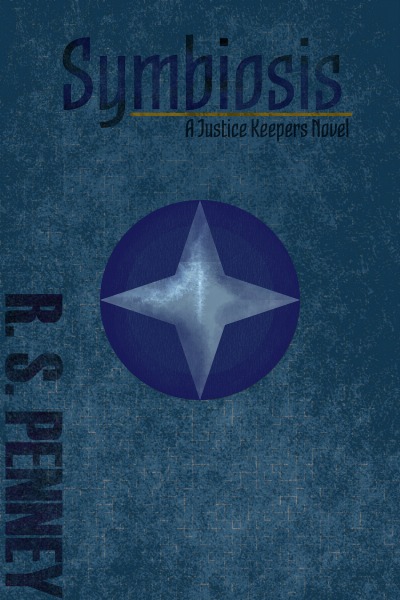
R.S. Penney: The IAN Interview


I was born and raised in Hamilton, Ontario where I attended Saltfleet High School and McMaster University. I've spent most of my life fighting for the little guy in one form or another, advocating for the poor, for environmental sustainability, for minority rights.


Throughout my twenties, I wrote about five novels and threw them all out because they weren't very good. But I improved and honed my skills with each new manuscript. About two years ago, I had an offer from a traditional publishing house, but I chose to go indie instead. Writing is my passion; if I could dedicate myself to one thing, it would be bringing the ideas in my head to life.


IAN: Please tell us about your latest book.

R.S. Penney: Symbiosis is kind of a mix of Star Trek: the Next Generation and Buffy the Vampire Slayer. Gene Roddenberry envisioned an optimistic future, a society where racism, sexism and other such prejudices were all a thing of the past, where poverty and deprivation had been eliminated. I was fascinated by the idea of “what would happen if people from that optimistic future Earth had to live side by side with humans from the present day?”

Ten thousand years ago, a very powerful species took primitive humans and scattered them on Earth-like worlds throughout the galaxy. Some of those societies advanced to the point where they developed space-flight; some are peaceful and egalitarian while others are dystopic and violent. The story examines the culture clash between some these worlds with modern-day Earth thrown into the mix.

Anna Lenai is a young Justice Keeper, an officer of the law who pursues a felon into uncharted regions of space and discovers Earth. 

The series focuses on smaller, interpersonal conflicts such as family or relationship drama in addition to the larger conflicts of falling empires and changing political landscapes. Character development is a very important focus; in fact every review I've had mentions the depth and versatility of the characters. 

IAN: Is Symbiosis published in print, e-book or both?

R.S. Penney: Symbiosis and all subsequent Justice Keeper novels will be available in both print and e-book form

IAN: Where can we go to buy a copy of Symbiosis?

R.S. Penney: If you’d like to purchase Symbiosis in paperback, follow this link. http://bit.ly/symbipaper

If you want to buy it on the Kindle, follow this link. (Note kindle has a free app for iPads, iPhones and other tablets). http://bit.ly/symbiosiskindle

And if you want the Kobo version, it’s right here. http://bit.ly/symbiosiskob

IAN: What inspired you to write Symbiosis?

R.S. Penney: When I was fifteen, I was reading a lot of epic fantasy. Lord of the Rings, Wheel of Time, Sword of Truth: that sort of thing. One thing I very much wanted to do was to create a story with two central protagonists, a young man and a young woman. Those characters eventually evolved into Jack Hunter and Anna Lenai.

The other thing I noticed, when I was a teenager reading epic fantasy, was that everybody was white. If you look at Lord of the Rings or Wheel of Time or even something a little more modern like Song of Ice and Fire, you'll find that most of the main cast is white. You'll get the odd person of colour, but those are few and far between. So I really wanted to write a story where you had a diverse cast with a wide range of ethnicity. The next character I created eventually became Harry Carlson.

At the time, these characters were all living in an epic fantasy world, but I very quickly grew bored with that idea because I couldn't figure out what I was supposed to do with these people. Jack and Anna were living in your typical bucolic fantasy town – you know the one; it looks like Hobbiton from Lord of the Rings – and then something comes along and sweeps them off into an adventure. But I found myself so unenthusiastic about writing that story. One thing I dislike about epic fantasy is that it just takes so long for anything to happen. With the exception of the Hobbit, where the journey is the whole point, I was always thinking “can't we just skip to what happens when they get there?”

One thing I realized I loved in sci-fi/fantasy was seeing characters do ordinary things. Yes, Buffy killed demons, but she also went on dates, did homework, took tests. It makes the characters feel like real people. So I wanted to write characters who had ordinary problems (work, school, family, etc) in addition to the extraordinary problems like saving the world from certain disaster. Put all these things together, and the switch to science-fiction became obvious. 

IAN: Did you use an outline or do you just wing the first draft?

R.S. Penney: An outline? 

God, no! 

I'm the most disorganized person on the planet, but I have this freakishly good memory for certain things like plot points and character bios. And a complete goldfish memory for things like shopping lists. Go figure. I'll step you through the process of how something goes from a flash of inspiration to a finished product. 

I usually write a story around the climax, meaning I come up with the climax first and then fill in the details of what led to that moment afterward. I'm a huge fan of rock music. Rolling Stones, AC/DC, Pearl Jam, Pretty Reckless: that kind of rock music. So a lot of my good ideas happen when I'm behind the wheel of my car.

Take a random song – let's say Alert Status Red by Matthew Good. I'll hear that song, and suddenly the image of Anna running through an office building and dodging security guards will pop into my head. I usually write down the action sequence at my earliest opportunity. I can hold onto it for a few days, but I like to get a first draft on paper before I lose some of the details.

So now that I have that scene, I need a context for it. Generating a context is simply a matter of asking yourself all the logical questions. 

Why is she in the office building?

So I invent an objective. Maybe there's something in the office building she needs to recover. (I'm being vague here to avoid spoilers.)

How did she get into the office building?

What sort of security measures would stand in her way? Most major companies use key-card access. So how does she get a key-card? These all lead to extra chapters that fill in the rest of the story. Chapters where we set up the central conflict, inform the reader of the stakes (What happens if Anna loses), and deal with the mini-conflicts like getting past security. 

Now back to square one. Maybe I'm listening to I'm on Fire by Bruce Springsteen, and that song inspires a major turning point in the romance subplot. Again, ask all the logical questions. How did we get here? Why do the characters feel the way they feel? Put the interpersonal plot together with the action plot, and pretty soon you have a novel.

IAN: How long did it take to write Symbiosis?

R.S. Penney: Six months or twelve years, depending on whether or not you count the time I spent learning how to write. The idea has been in my head since high school. I can generally finish a Keepers book in about six months.

IAN: Do you have a specific writing style?

R.S. Penney: I tend to focus on the nuts and bolts of the scene, the specifics of what happens, and then fill in the character's thoughts, feelings and interpretations afterward. The internal monologue is usually the hardest part for me because I'm always asking myself “how do I express this complex idea without sounding pretentious?” And then, of course, you have to add the little touches that make a character unique. Jack's internal monologue tends to include a lot of slang and vernacular; whereas someone like Wesley Pennfield would have a very dry, very formal monologue. Wesley is less likely to use contractions. That sort of thing.

But I focus on the nuts and bolts for a very simple reason; there is a temptation among authors to really get lost in the musings of your character. That can be fun, but if you do it too often, your readers will start skipping ahead to the point where the story picks up again.

IAN: How is Symbiosis different from others in your genre?

R.S. Penney: Before I answer this question, let me just state that “different” does not mean “superior.” I'll tell you what I think makes my book stand out, but there is a tonne of great sci-fi out there, from a tonne of talented authors, both independent and traditionally published.

My series differs from other science fiction novels by its emphasis on blending the ordinary with the extraordinary. Most science fiction I've read focuses on far-off planets or futuristic dystopias – and there is certainly that element to the Keepers Saga – but the characters who inhabit my universe have jobs, families and social lives. There are chapters of Symbiosis that focus on the friction between Jack and his coworkers or Harry's relationship with his kids.

That's not to say that those elements aren't present in other works of science fiction – they most certainly are – but I think it comes down to the setting. Take, for example, the Hunger Games. Even when she's not in the ring, Katniss's everyday life looks nothing like yours or mine. She lives in a world that is so different from our own that it affects every aspect of her life. For that reason, the minutiae of her average day still feels somewhat fantastic. That's one of the best things about the Hunger Games! Everything feels fresh, new and exciting. 

My characters live in a world that looks very much like our own on the surface, a world where all the fantastic elements are hidden from plain view. To my mind, that has the added advantage of making the abnormal all the more striking when it creeps into the everyday lives of my characters. 

IAN: Are there any new authors that have caught your interest?

R.S. Penney: Glenn Soucy.

He has a remarkable ability to blend crisp fast-paced writing with some very creepy plot twists. The action is solid, the characters fleshed out and the pacing spot on. A strong author all around.

Kristal Shaff.

In her latest novel, Krystal has created a fascinating fantasy world with a unique magic system. It's rare for a book to create a world that pulls you in with its attention to detail and compelling characters. Krystal hits both of those targets with pinpoint accuracy. 

IAN: Do you have any advice for other writers?

R.S. Penney: Absolutely.

Be careful about taking advice from other authors. 

By the way, is this a good time to mention that I do a weekly blog where I offer tips and pointers to new writers? No, but in all seriousness, my advice is to be careful about taking advice from other authors, and that applies just as much to me as it does to anyone else.

When I was younger, I used to read interviews from some of my favourite authors about how to write a book. They'd talk about things like the importance of detailed outlines, extensive notes and what have you, and I tried to do it their way. Their way didn't work for me. 

So to those of you who like my books, don't look at what I do and set that as the benchmark for how you should go about writing a novel. When it comes to writing fiction, there are a million ways to get it right and a billion ways to get it wrong. 

Ultimately, your job – the job of any artist, in fact – is to create an emotional connection with your audience. The nuts and bolts like smooth prose, clever plot twists and snappy dialogue are just tools to achieve that end. Doing these things poorly will damage your emotional connection – so you do want to learn to do them well – but there are so many ways to do them well.

IAN: Who designed the cover?

R.S. Penney: His name is Mason Matlock. If you're interested in his services, you can contact him at mwilliam09@gmail.com.

IAN: Tell us about your next work in progress.

R.S. Penney: The next novel I will be publishing is called Friction, and it's the direct sequel to Symbiosis. The novel is already complete and is currently in editing. I expect a release date in the early fall.

I don't want to get too deep into the details for fear of spoilers, but Friction deals with a terrorist group trying to break up the uneasy alliance between the planets in our corner of the galaxy.

Just last week, I completed the first half of Entanglement, the third book in the Justice Keepers Saga. This book features some shady things going on in the outskirts of our solar system, forcing our heroes to go investigate.

Tuesday, September 17, 2013

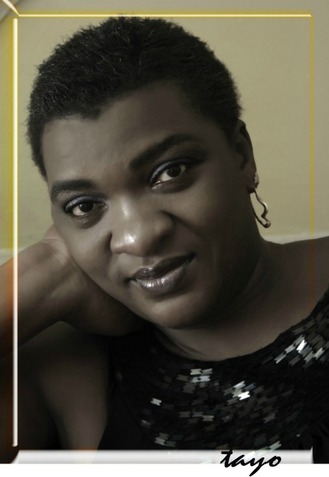
Tayo Emmanuel: The IAN Interview


My name is Omotayo Utomi although I’ve authored my novel as Tayo Emmanuel. I like to believe I mean different things to different people – wife, mother, poet, writer, counsellor and analyst. My corporate working experience covers Corporate Communications, Marketing, Events Management, Customer Care and Business Analysis. I’m educated up to Master’s Degree and I have a Writing Certificate from the City University London. My world view is greatly influenced by my Christian faith and in my spare time, I volunteer for non-profit organisations; training, counselling and writing. I currently maintain a relationship column in Mentor Magazine and a blogging platform at www.rel8ing.co.uk


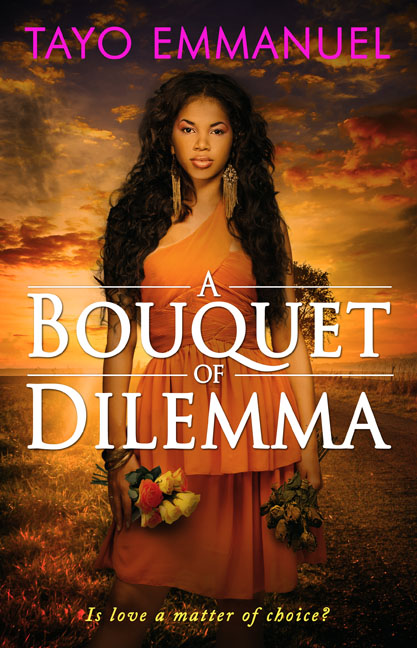
IAN. Please tell us about your latest book
T.E.  My latest book is my debut novel called A Bouquet of Dilemma. It’s a story about the love lives of two friends, Tobi and Maggie. But it focuses more on Tobi as the main protagonist - an undergraduate from a conservative family whose first experience of love is with Richard, a playboy from a relatively errant family. They both met at Maggie’s party and Tobi was totally besotted with Richard. Despite being warned by her friends, she starts dating Richard after her mind-blowing birthday treat. Ironically, Richard stays faithful and even gets engaged to Tobi before travelling abroad. The eventuality happened when Tobi gets a mysterious letter advising her to move on with her life, without Richard. To help her recover, Maggie suggests having a fling with Oba who had been wooing her for over a year. A week to Maggie’s wedding and on the eve of Oba proposing to Tobi, Richard shows up asking for forgiveness. The dilemma for Tobi is to make a choice between ‘charming, unpredictable Richard who spins her life inside out’ and ‘reliable, gentle Oba who was supposed to be just a distraction’. It’s an intense battle between her heart and her mind.

IAN. Is your book published in print, e-book or both?
T.E.  A Bouquet of Dilemma is in both print and electronic formats. 


IAN. What inspired you to write A Bouquet of Dilemma?
T.E. The starting point is that I am usually inspired to draw morals and learning points from life experiences, based on the belief that someone somewhere can always learn from an event. I’ve been a relationship counsellor and that makes me privy to a lot of issues about love and life. A Bouquet of Dilemma was inspired by the true life story of a lady whose first experience of love was with a guy that eventually jilted her so he could afford a better life abroad. A sneak into her life portrays different views and perceptions about defining love and finding happiness.

IAN. Did you use an outline or do you just wing the first draft?
T.E.  Yes, I use an outline, but the outline is a guide to put together my thoughts and see the end of the book before I start. But as the story unfolds, the outline is somewhat overtaken and consumed by the flow.

IAN. How did you come up with the title?
T.E.  A Bouquet of Dilemma came in a flash and I stuck with it. Before then, I had toyed with other titles and I wasn’t quite satisfied because I wanted a unique title that would be catchy and stand out from other titles. And that is based on an experience I once had on Amazon, when I was looking for a book and the title search brought up over five different books with the same title.

IAN. What do you hope your readers come away with after reading A Bouquet of Dilemma?
T.E.  Incidentally, African writers usually write to communicate morals or values. I want my readers to come to an understanding that nothing is cast in stone when it comes to love and life. People change, circumstances change, motivations change and history can be re-written by a simple choice to stay or to walk away. Maggie, the sub-protagonist in A Bouquet of Dilemma had to deal with tribal stereotyping and I want people to see how fitting individuals into pre-defined boxes doesn’t work in love situations.

IAN. How much of the book is realistic?
T.E. For me, the purpose of fiction writing, especially romance is to turn the ‘imaginary’ into the ‘reality’ by creating a plausible and believable story from scraps, otherwise it becomes a memoir. I was happy when one of my readers said, “That happened to me. I was like Tobi some years ago.” To that extent, the book is realistic, but it takes from a lot of unrelated events which I combined with real and historical events in the setting.

IAN. Are experiences based on someone you know, or events in your own life?
T.E.  A Bouquet of Dilemma is based on life experiences of diverse people.

IAN. How is A Bouquet of Dilemma different from others in your genre?T.E.  A Bouquet of Dilemma is in the Contemporary Romance Fiction and New Adult genre and the only way I can say it is different is that it’s original. Every original work of art has a distinct signature and I believe that no two voices are alike in the writing world. Yes, it is a story about two regular but diverse young ladies, but I haven’t read anything like it. And like I would say, maybe it’s because I haven’t read much. It focuses on the transition of a girl into womanhood from a Nigerian perspective. The book is also an expose on politics and the value systems in Nigeria as it affects relationships and aspirations of young adults. One of the recurring comments I’ve heard from non-Nigerian readers is that the novel has opened Nigeria to them in a new interesting light.

IAN. What books have most influenced your life most?
T.E. Kola Onadipe’s The Adventures of Souza and Akinwunmi Ishola’s Oleku taught me to enjoy African stories as a child. Wole Soyinka’s Trial of Brother Jero taught me to love satires, Shakespeare’s Julius Ceaser taught me to love plays and verses, Harold Robbins’ 79 Park Avenue and Jojo Moye’s  Me Before You have shown me how fiction should be written.

IAN. Name one entity that you feel supported you outside of family members.
T.E.  Apart from family, the entity that has supported me most is actually my  writing group called the Angel Writing Group. The group was started after we completed the writing course at City University, it’s a small support group where we critique one another’s work and share knowledge on everything related to writing.

IAN. Do you recall how your interest in writing originated?
T.E.  Up till now, I always feel more comfortable expressing myself writing than talking. I developed a reading culture early in life. In secondary school one of my best subjects was literature, from where I started playing with words and writing poems. I read a numeric course in university, so I forgot writing until I started working and we started an official lifestyle magazine. Over time, I started contributing articles here and there in magazines. I've also worked in Corporate Communications which entails a lot of creative writing. Sometimes in 2010, I decided to compile some of my works and have it published as an anthology of short stories and poetry. Feedback from that spurred me to continue writing.

IAN. What was the hardest part of writing A Bouquet of Dilemma?
T.E.  The hardest part of writing my book was when I developed a mental block and didn’t have any inspiration to write. There was a time I set the book apart for almost four months because the pieces weren’t fitting together.

IAN. Tell us about your next book or a work in progress. Is it a sequel or a stand-alone?
T.E.  My work in progress is a stand-alone novel about a couple who are disenchanted in their marriage and struggling with infertility and infidelity.


Saturday, June 30, 2012

Win a Kindle Fire or a Kindle Touch by M.R. Mathias

 M.R. Mathias


Hello I.A.N.


I just wanted to pop in and tell you about a chance to win a Kindle Fire or a Kindle Touch from me and Fantasy Book Critic. The contest post is here: http://fantasybookcritic.blogspot.com/2012/06/indie-day-giveaway-ii-win-kindle-fire.html

My Wardstone Trilogy is finally complete. “The Wizard and the Warlord – The Wardstone Trilogy Book III” http://www.amazon.com/dp/B008E71GY0 has been released in all eBook formats. In celebration of the 4th of July paperback release, I am offering Book One, “The Sword and the Dragon” http://www.amazon.com/dp/B0085SG1YI  FREE July 2nd, 3rd, and 4th. Of course Book Two is available as well, here:http://www.amazon.com/dp/B005465JO2 

A lot of you know me as @DahgMahn on Twitter. I am also @BookReTweeter, @Michael_Robb, and the ornery @MrStubbsSays is my dog/familiar. If you are not on Twitter, then get on Twitter. Any member who needs starting out tips can email me @ michael@mrmathias.com. I will get you a FREE copy of The First Ten Steps and answer any questions I can. 

If you want a book, blogpost, or review/interview tweeted by @DahgMahn, then put @DahgMahn in the tweet and I will retweet it. The same goes for @BookReTweeter and @MrStubbSays. I get 500 DMs a day and I DO NOT read them anymore. Putting @DahgMahn in a tweet is about the only way I am guaranteed to see it.

I don’t have much else to say, other than thank you to those IAN members who bother to tweet and retweet each other.  Oh, and any IAN member bloggers willing to review any of The Wardstone Trilogy, or Dragoneer books, will not only get free copies, but also the review-post will get tweeted extensively.

Don’t forget to get The Sword and the Dragon FREE over the holiday. And I would be honored if some of you check out my newly completed Wardstone Trilogy. From the moment I started writing it in that Texas prison cell in ’08 until now, I have put my all into that grand epic. So I can only hope you enjoy reading the books as much as I enjoyed writing them and bringing them to fruition.


Indie Rules!  M. R. Mathias aka @DahgMahn  www.mrmathias.com


Thursday, November 3, 2011

Gold Page Membership at The Independent Author Network

Gold Members enjoy a full service author page. The pages are built, maintained and promoted by IAN admin so authors have more time to write.


IAN Gold Page membership is designed for authors who do not utilize social networking to promote their books. This allows authors without a Twitter account to enjoy all the exposure and support as members who are avid Tweeters and Facebookers! IAN Gold Page membership is also perfect for authors who have a large number of books to promote.

Gold Member ship features:

  • Your IAN Gold page will be tweeted daily by IAN admin
  • Your IAN Gold page will be mentioned weekly on the IAN Facebook fanpage
  • Promote a larger number of books on your page. (16-20)
  • 3 books immediately listed in The Avid Reader's Cafe.com
  • Up to 3 booktrailers included at the IAN Trailer Park
  • An Author Spotlight ad placed on IAN home page for at least 1 month
  • Include up to 6 Youtube book trailers on your page
  • Kindle, ePub and or PDF sample excerpts on your page for each book. (author must provide sample files)
  • PDF downloads of book reviews (author must provide sample files)
  • Shortstory and flashfiction downloads (author must provide story files)
  • Your books listed in the IAN bookstore (IAN takes no royalties or fees)
  • You will be mentioned in the first available IAN newsletter after you join.
  • A Welcome to IAN Press Release will be published at PRlog.com
  • A Welcome to IAN blog post at the IAN Blog
  • One more Press Release to announce a signing or new release! (Just let us know and we will publish the release)
  • Weekly page traffic totals can be sent to your email.
More about Gold Page membership

Sunday, August 28, 2011

Markan Throne by Nicholas A. Rose


Picture
Epic Fantasy

Two rival claimants to the empty Markan Throne meet in battle. When Marcus Vintner defeats his cousin Branad, it seems the matter is settled. But Marcus is implicated in a murder and his claim to the throne is suspended.

Zenepha, an intelligent and literate sylph, is plunged into the depths of Markan politics when he is thrust, unwillingly, onto the throne.

Hingast, a third claimant, is also traveling to Marka, determined to press his claim and prepared to use force to get his way.

Marcus must prove his innocence before it is too late and the throne again falls into abeyance.

Amazon/Kindle


Picture
Nicholas A. Rose has been an avid reader for most of his life and a writer for almost as long. He is the author of the ilvenworld novels and novellas.

He enjoys anything to do with the sea, the outdoors and mountains, all of which he finds inspirational, and the rather more sedentary pastimes of chess, photography, real ale, reading and, of course, writing.