Reviews, interviews, author articles, and guest posts of indie and self-published fiction, non-fiction and memoirs.
Pages
Sunday, February 7, 2016
RK Gold: The IAN Interview
Monday, November 23, 2015
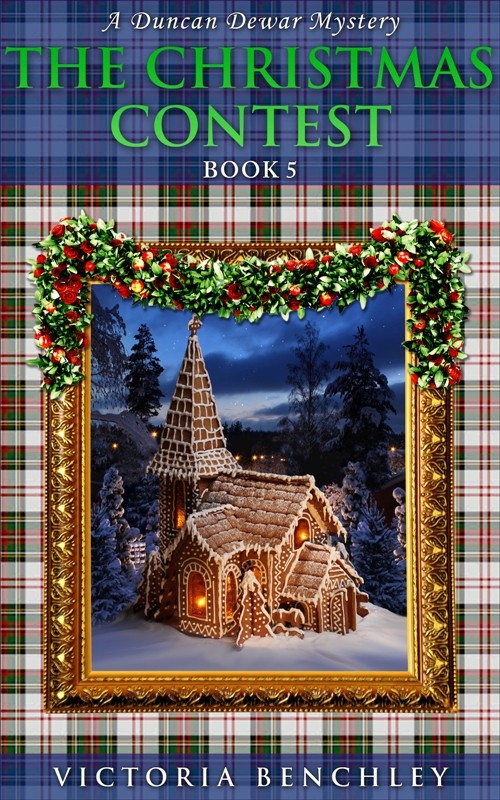
Victoria Benchley: The IAN Interview
V. Benchley: The Christmas Contest is available as an e-book.
Saturday, November 12, 2011
Keith McArdle: The IAN Interview


My name’s Keith, I love writing, always have, and probably always will I suspect. I’m Australian born, but both my parents are British immigrants, so whilst I’m an avid patriot of Australia, I also have a healthy respect for the UK. I have spent 3 years in the Royal Australian Air Force where I worked with the C-130 Hercules aircraft and in 2004 saw service in the Middle Eastern Area of Operations. Transferring to the Army in 2006 I saw Active Service in East Timor with the 5th Aviation Regiment’s Black Hawk squadron. In 2008 I saw active service in Afghanistan with the 5th Aviation Regiment’s Chinook squadron. I really enjoyed that deployment, it was certainly a once in a lifetime experience that brought my life back in Australia into perspective. Afghanistan showed me just how tough some people in the world really have it, and that I live in a very lucky country indeed. I’m currently a Paramedic with Queensland Ambulance Service and live with my wife in Queensland, Australia. Keith McArdle
IAN. Please tell us about The Forgotten Land.
KM. The Forgotten Land is an action/adventure fiction novel that casts a patrol of Australian SAS soldiers into the desert of Iraq. During their mission they stumble upon a time portal and unwittingly activate it. They find themselves in cold, wet, windswept 10th century Viking Denmark. The story throws the reader in amongst the Australians as they struggle not only for survival but to find their way home.
IAN. How long did it take to write the book?
KM. The book took 4 years to write. 3 years to complete a first draft I was happy with and a further year where I ended up writing a total of 5 drafts (as a result of some very helpful, but tough, critical readers, and I am indebted to them for their help). The 5th draft was then submitted to my editor (Anna Kassulke of Word Story).
IAN. What inspired you to write The Forgotten Land?
KM. I have always had two great passions, the Australian Special Air Service Regiment (SASR), and the Vikings.
The Vikings are a severely misunderstood race of people. Yes, some were violent, yes, some of them did undertake lightning raids on all and sundry. But that time of history was a violent time, a time where tribes, clans and countries were often at war with one another. The Vikings’ mark on our history is tainted mainly by the biased, literate Christian scholars that remember them in their writings. Today, modern historians and archaeologists are working very hard to shed light upon who the Vikings actually were. We know, for instance, that a Viking woman had the right to divorce her husband if she had grounds. We also know that the advice of a warrior’s wife was usually heeded and often sought. Women in some areas of the world in 2011 do not enjoy that level of respect! The Vikings were also very cunning and intelligent traders, so much so, that present day York, which in Viking times was called Jorvik (pronounced Yorvik (from which the present day name is derived)) was, during the Viking reign, the trade centre of the world. The Vikings were a very colourful, sophisticated and rich culture.
The Australian SASR (Special Air Service Regiment) are an elite group of Australian soldiers. When the war in Afghanistan started, people might remember an offensive called Operation Anaconda. When that operation commenced, the American hierarchy had specifically requested the assistance of the Australian SASR. The Aussie SAS moved well forward of the advancing allied troops and set up hides or observation posts (OPs) underneath the noses of the Taliban. They fed back all sorts of information to the American head sheds, including enemy number, weapons, level of morale, locations and so on. When the fighting began, the Australian SASR were in a position to guide in airstrikes and give grid references for artillery and mortar fire missions. In another instance in Afghanistan an Australian SAS soldier was shot by Taliban fire. Rather then bother his mates who were still in heavy contact with the enemy, he managed to make his way to the closest vehicle and knowing that he was losing enough blood that he may lose consciousness, wedged himself between the bulbar and the vehicle’s radiator. He tied himself to the bulbar and then continued to fire at the enemy.
There is something about these incredible soldiers that has always intrigued me. Every country in the world has a small elite group like the Australian SAS. They are for the most part, quiet, easy going, never consider themselves any better than the next bloke, but have the courage of a rabid lion. To date two Australian SAS soldiers have been awarded the Victoria Cross (the VC, which is the Commonwealth’s highest military award) for actions in combat. Both lived to tell the tale.
So in The Forgotten Land, I bring together the Australian SASR and the Vikings, my two greatest interests.
IAN. Talk about the writing process. Do you write at night or in the morning?
MK. I often listen to music while I write (a huge range, anything from Enya to Metallica or Tool). Music helps me delve into my own world. There is no specific time I like to write.
IAN. Did you use an outline or do you just wing the first draft?
MK. I definitely have an outline overall of where I want to go with the story as a whole. This outline is wedged firm and remains unchanged. The characters, however, are fluid and flexible as they negotiate their way through that outline. As long as the characters don’t stray too far from the path and into elements where their actions or dialogue detract from the progression of the story, I tend to just follow them on their merry way.
IAN. How is The Forgotten Land different from others in your genre?
MK. My book is different in some ways from the others in the genre. My soldiers are Australian, which is usually not the norm. I have tried to respect both the SASR and the Vikings, so in saying that, I have attempted to portray them in the most realistic way possible. They carry the actual weapons that today’s SASR carry (although that is in the process of change at the moment as a new weapon system is being brought in to replace the M4). I have tried to remain as parallel as possible to what we know today about the Vikings. I am not, however, a professional historian, so there will be elements where I may have deviated, but not by far I think.
IAN. Is your The Forgotten Land published in print, e-book or both?
MK. The Forgotten Land is currently in e-book format, but will be in paperback format before Christmas 2011.
IAN. What do you hope your readers come away with after reading your book?
MK. I won’t give too much away, but an important element of the book is that family is everything.
IAN. Where can we go to buy your The Forgotten Land?
MK. Amazon (.com, .co.uk, .fr, .de), Barnes & Noble, Smashwords, Diesel E-books, Apple iBooks. It will also be available on Kobo shortly.
IAN. Tell us about your next book or a work in progress. Is it a sequel or a stand alone?
MK. The Reckoning is a stand-alone novel unrelated to The Forgotten Land. Indonesia’s airlines (Garuda) is a government owned company, and having said that, it would be very easy for them to fly in Kapassus (Indonesia’s special forces) soldiers into every Australian capital city at the same time. This allows Indonesia to gain a foothold on Australian soil, where they can very quickly fly in more troops and equipment to begin the invasion proper. The Reckoning is about the struggle for survival of every day Australians and it may well see a fight to the death for the Australian Defence Force.
IAN. Any other links or info you'd like to share?
MK. If you’d like to keep up to date with The Forgotten Land or how The Reckoning is coming along, please feel free to visit either my website, or The Forgotten Land’s Facebook page, listed below respectively:
http://www.forgottenland.com.au/
https://www.facebook.com/theforgottenland
An Australian SAS patrol find themselves in 10th century Viking Denmark
The Forgotten Land by Keith McArdle
352 pages
Fiction (action & adventure)
A Sample of The Forgotten Land
Prologue
It was a disaster! An utter shambles that served only to tear a country apart. Following the terrorist attacks on America on that fateful day in September 2001, the United States military was determined to capture the mastermind behind it all. A man whose name the world would never forget. Osama Bin Laden.
Somalia, Afghanistan and Pakistan saw large numbers of U.S. troops deployed in search of the rogue. The President’s advisers had under their employ a veritable army of faceless, nameless men and women who fed them information and advice from around the world. Within ten days of the atrocity at the Twin Towers, the President’s advisers were convinced that it was possible Bin Laden may have fled to Iraq. Seven hours later Iraq was under increasing scrutiny and within twelve, the President had given the go ahead to begin operations.
Rather than send more troops into Iraq, the American Department of Defense began injecting enormous funds into the Kurdish community, asking them to hunt for Bin Laden. If they ceased their search, even for a day, the funds would be cut off. Kurdish Peshmerga Forces began purchasing high-tech weapons from America in large quantities. That was when the trouble started.
The Kurds had been persecuted by the Iraqi government ever since Iraq had become a country in its own right. Saddam Hussein was unrelenting in keeping with this historical “tradition”. During the Iran-Iraq war thousands of Kurds, including women and children, had been gassed under Hussein’s orders. The Kurdish people wanted revenge and it came in the form of US greenbacks.
Fierce urban warfare erupted in the streets of every major town and city. The Iraqi Army fought well, but was on the back foot from the beginning. In almost every fire fight they were forced to withdraw from the ceaseless Kurdish onslaught. Within four weeks the Iraqi Army was no longer a cohesive force. Pockets of Iraqi soldiers continued to fight doggedly, but they were quickly overwhelmed. Iraqi civilians were persistently slaughtered and that was when the fleeing began. Tens of thousands of people streamed from the cities, piled onto trucks, walking, travelling any way they could to escape the new threat. Some of these convoys were ambushed and people were slaughtered without mercy.
The country was beginning to fall apart. The UN announced it would restore peace and stability (or the little peace and stability Iraq had before the fighting), but they knew if they moved in they would not be a peace-keeping force. They would be a peace-making force and that went against everything for which the United Nations had been created.
However it was the only way to regain some semblance of order in Iraq.
Chapter 1
Geneva
“What can America offer this peace-keeping force?” the chairman of the UN spat, looking at the representative for the United States of America. The chairman’s voice was easily identified, with its heavy French accent.
“Unfortunately, we have our carrier groups tied up in support of our troops in Afghanistan and Somalia. 130,000 regular troops, 80,000 support personnel, 27 land based helicopter squadrons and 9,000 Special Forces soldiers are involved in the effort. We are way beyond our budget as it is, so unfortunately we cannot offer any assistance in this matter.”
The American representative leaned back in her chair. It was obvious America did not want to help, however they wanted Bin Laden and by stopping the Kurdish uprising, they would be working against themselves. After all, the Kurds had promised they would be on constant lookout for him.
Cameron Eves, a well-spoken Australian, almost smirked as he watched the chairman hold back a rebuttal. A tall, stocky man, Eves was clean shaven with dark curly hair, his eyes glinted with intelligence but his face gave away nothing. He wore a black business suit, a mobile phone resting near his left hand and a glass full of water stood by his right. In plain clothes, enjoying his weekend with his wife, he looked like a typical surfie. Very few people picked up on the fact that he frequently attended United Nations meetings, representing a well-established western country. Even fewer would think that someone who preferred to wear board shorts and old shirts on his days off could have that many letters after his name. Cameron knew as well as any of the representatives there, that America’s military budget was a bottomless pit. To them, 290,000 defense personnel, a carrier task group and 27 helicopter squadrons was a Sunday stroll in the park.
The Americans had managed to put half a million defense personnel and thousands of strike planes and attack helicopters into Iraq in the early 90s. The cost was probably somewhere in the vicinity of several hundred billion dollars.
“So far we have several very generous contributions, but we need more ground troops, specifically specialist soldiers,” the chairman turned towards a mahogany lectern. A well-built soldier was making his way up the dais as the chairman continued, “I shall leave that up to General Billiar to explain.”
“Good morning,” the General began, his accent one of a well-educated Englishman. What was also immediately recognizable, however, were the medals worn on his jacket, there was enough of them to sink a small battle ship.
“My name is General Billiar. Now, we have a situation here in Iraq and a very serious one I might add. A minority group, the Kurds, heavily persecuted for many generations have been given state-of-the-art weaponry… a lot of it.” The General’s eyes rested on the American representative for a moment before he looked away. “The Iraqi Army has been annihilated, and the Kurds, who are being trained and led by the Kurdish Peshmerga Forces, are now killing or shooting at any Iraqi person they come across. Not a good situation, the whole country has become destabilized and the civilian death toll has been estimated at 50,000 and rising by the day, in fact by the hour.”
Saturday, October 8, 2011
Nicholas A. Rose: The IAN Interview

Nicholas A. Rose is the author of the Ilvenworld novels and novellas. He enjoys everything to do with the sea, the outdoors and mountains, which he finds inspirational. Nicholas also enjoys the rather more sedentary pastimes of chess, reading, real ale and, of course, writing.
IAN. Hi Nicholas. Please tell us about your latest book.
NAR. Markan Empire is the sequel to Markan Throne and continues the story of Marcus Vintner's efforts to claim the throne. Problem for our hero is that somebody else has that throne and the Senate is reluctant to push that someone aside for Marcus.
As well as the Eldovans regrouping for a fresh attack on Marka, a new threat comes from an island kingdom called Re Taura. Marcus must find out exactly what Re Taura's intentions are, which means he must send spies. But spies have a habit of meeting a violent end when caught...
IAN. How long did it take to write Markan Empire?
NAR. From first draft to going online, just over a year.
IAN. What inspired you to write the book?
NAR. Completion of Markan Throne, which threw out more ideas, many included in Markan Empire.
IAN. Talk about the writing process. Do you write at night or in the morning?
NAR. I write whenever I can. Like most people, a busy schedule dictates when I write, rather than my own preferences.
IAN. Did you use an outline or do you just wing the first draft?
NAR. A mixture of both. The end is (nearly) always written first, so I know where I'm going, but there is a lot of winging. Which means much more editing of course, but it is the way I do it.
IAN. How is Markan Empire different from others in your genre?
NAR. Probably because I've weaved the "magic" part into the general philosophical and religious elements of the ilvenworld. Every other author keeps them separate in some way (nothing wrong in that btw, no criticism from me), while it's part of everyday life in my books - even if non-Gifted people try to pretend otherwise!
IAN. Is Markan Empire published in print, e-book or both?
NAR. e-Book only so far.
IAN. What do you hope your readers come away with after reading your book?
NAR. A feeling of satisfaction and a need to learn which plotlines are ended in the next book. I do not set out to tease readers, but when they turn the last page, I'm a very happy chappy if they want more.
IAN. Where can we go to buy Markan Empire?
NAR. Amazon Kindle and Smashwords are good places to go looking. All the links are on my #ian1 page of course!
IAN. Tell us about your next book or a work in progress. Is it a sequel or a stand alone?
NAR. The main WIP is Book III of the trilogy, Markan Sword. It sees the conclusion of the main plotlines in Book I, but it does end with a cliffmax.
IAN. Any other links or info you'd like to share?
NAR. It's all on my #ian1 page. Though there is a website coming very soon, for all the bits and pieces, such as background information, maps, sylph language. That'll be up as soon as I've got everything sorted!
Markan Empire by Nicholas A. Rose (A Sample Taken from the Prologue of Markan Empire)
She smiled wistfully at the huge pyramid dwarfing the city, a giant ruby light-crystal at its apex. Those seeing Marka for the first time stared more at this feature than any other and she overheard their awed murmurs. The city was impressive, but the pyramid overwhelmed it, dating from a time when much knowledge, now lost, abounded.
Mounted guardsmen rode down the line to break up a fight a little further along. One glanced at Silmarila; he eyed her walking staff and tried to see into the cowl of her cloak. Then he was past and she was forgotten.
Many fighting men eyed her walking staff with respect. They knew a quarterstaff when they saw one. She'd had no call for it on her journey, but these were troubled times.
"All right, that's enough!" One of the guardsmen tried to break the fight up. "Enough, or your time in Marka will be spent in a cell."
The queue surged forward before halting again after a few steps. Many were travel-worn family groups, drawn by the offer of free land. Some might even be farmers and their families.
Silmarila wondered how much "free" land was left and of what quality. Although for very different reasons, the rumors that lured these people were the same that brought her to Marka. She had no need of free land. She looked towards the city gates.
Marka had an emperor again.
Rumor that two claimants to the vacant Throne had been called to Marka caught her attention and stirred her to action a year before. She left her comfortable village to return home and hopefully reclaim her rightful place.
More rumors followed hard on the shirttails of the first. One claimant had defeated the other; one had murdered the other after the battle; a general had gone berserk and murdered both claimants... Silmarila could hardly wait to learn the truth.
There were always rumors, but these were many and too fast to be other than truth, even if embellished.
"Break it up, I'm telling you!" The scuffle had broken out again. "Any more and you're arrested. All of you!"
She was already on the road when she heard the whisper of a no longer vacant Throne. She had initially discounted what the rumor said; she had laughed at such a ridiculous notion. A sylph on the Throne? A sylph, ruling humans? But the nearer she came to Marka, the more persistent the tale and, now she was here, she had no alternative but to accept it as truth.
When stories of the siege reached her, she almost turned back. She had never flinched from advising it when necessary, but she hated war. All that suffering and pain and hunger and grief.
Then other stories came.
There was an ilven in Marka. She hadn't seen one of the sisters for, for... Well for longer than she cared to remember. But it was not the ilven who pulled her onward. There was also a young gwerin. A baby gwerin with no idea what was expected of her, alone and in need of schooling.
She shivered as the wind chewed through her cloak.
The city walls were more or less as she remembered them, with a repair needed here and there after last year's siege. Most buildings that poked their upper levels above the walls were different, but some familiar edifices loomed benignly toward her.
The only constant in life is change. She smiled as she recalled her tutor's words. Sometimes it came slowly and sometimes it seemed as though change had ground to a halt, only to rush forward like an avalanche in winter. It was inexorable, but blind and not all was for the better. She wished change would affect this damned wind. In early spring, the Markan winter clung tenaciously to its empire, spiting nature's attempts to drive it away.
She grimaced at the human remains hung in a cage above the gate, picked white by carrion and weather. The placard announced to the literate that these were some of the remains of Hingast, failed invader of Marka. He was not the first to fail to take the Jewel of the World and she doubted if he would be the last. Some rumors claimed Hingast was still alive.
She pushed the cowl of her cloak back to show her face to the guard at the gate. He gave her a once-over before nodding her through. He had no reason to deny her entry, even if he knew who and what she was. Especially if he knew. She passed through the gate and into the city.
She took a deep breath, she was home.
Though the trees that lined the center of the main road were new, the streets followed a familiar layout. The bustle of Marka at work was the same and she was certain of the way to the Imperial Palace.
Sylphs thronged the crowd, as numerous as ever. If any recognized what she was, they gave no sign of it, but Silmarila increased her pace anyway. She sensed the end of her journey while drinking Marka's sounds and scents, all so painfully familiar she knew she had missed them.
Another corner and she was there.
The Coronation Building was the same; she would be shocked if that had changed. She grimaced at the ugly warehouse, built a good time ago to judge from the state of it. That would never have been allowed in Emperor Evlander's day. She left Senate Square and the Imperial Palace was before her.
Monday, August 8, 2011
Meg Mims:The IAN Interview

Author Meg Mims celebrates the release ofIAN: Good morning Meg. Please tell us about Double Crossing.
MM. A murder arranged as a suicide … a missing deed … and a bereft daughter whose sheltered world is shattered.
August, 1869: Lily Granville is stunned by her father’s murder. The police believe it was a suicide but she knows the truth. Guilt plagues her, since she argued bitterly with her father about the family lawyer’s loyalty. And only that lawyer knew her father had possession of a valuable California gold mine deed—a deed vital to fight a court battle against another claimant in California. Now the deed and the lawyer are missing.
Determined to track her father’s killer and join her uncle in Sacramento to fight the court case, Lily heads west on the newly opened transcontinental railroad. After her baggage is ransacked in her Omaha hotel room, she realizes she is no longer the hunter but the prey. It seems her father’s killer believes she is taking the deed west to Sacramento. And as things progress from bad to worse, Lily is uncertain who to trust—the China-bound missionary who wants to marry her, or the wandering Texan who offers to protect her … for a price.
Danger, intrigue and a second murder turn this adventure west into true peril. Will Lily survive the journey and unexpected betrayal?
IAN. How long did it take to write the book?
MM. I wrote Double Crossing’s first draft one summer, and then revisited it several years later after earning my MA in Writing Popular Fiction at Seton Hill University. By that time, I’d learned exactly what I needed to do for revisions – adding more plot twists and characters’ emotions. I knew it was pretty solid after that.
IAN. What inspired you to write Double Crossing?
MM. The 1969 movie True Grit originally inspired me long ago. While researching another book, I came across the history of the 1869 transcontinental railroad, and decided to use the “Iron Horse” to twist the premise of a girl’s father being murdered and how she would act to track the killer. The Coen brothers’ version that came out last year helped me to realize that westerns are still quite popular and give a unique flavor to the historical genre.
IAN. Talk about the writing process. Do you write at night or in the morning?
MM. My freshest time is early morning. I tend to write scene by scene, with a fairly complete outline so I don’t stray from the path. My process is more of an “ocean wave” where the tide comes in and goes out, LOL. I like to end up with a full 2nd draft when I’m done.
IAN. Did you use an outline or do you just wing the first draft?
MM. I’m an outline writer. I’m too much of a control freak to wing it!
IAN. How is your book different from others in your genre?
MM. Double Crossing is a historical western romantic suspense, which makes it quite unique! It’s more focused on the suspense than romance – and has vivid imagery and history details infused within the heroine’s first person point of view.
IAN. Is your book published in print, e-book or both?
MM. Both, first an e-book and then in print. Astraea Press operates through PayPal, and Double Crossing will also be available through Amazon and B&N.
IAN. What do you hope your readers come away with after reading your book?
MM. A sense of history, since the transcontinental railroad’s debut changed so much after the tragedy of civil war, plus a sense of justice being served. In real life, we can’t always achieve that. In genre fiction, readers can enjoy the story characters’ journey and be certain that the villain will be overcome.
IAN. Where can we go to buy Double Crossing?
MM. http://www.astraeapress.com at first, and then Amazon and B&N’s websites. Print copies will be the same.
IAN. Tell us about your next book or a work in progress. Is it a sequel or a stand alone?
MM. Double or Nothing is the sequel to Double Crossing, and I’ll see how that goes if I need to expand to a trilogy. I’m revising Heaven Sent, a stand-alone historical romance with a suspense twist, and have finished a traditional mystery, FIRE POINT, which is being considered by another publisher. Lots on my plate!
IAN. Any other links or info you'd like to share?
MM. Book Website - http://www.double-crossing.com
Book Trailer - http://www.youtube.com/watch?v=2mDe17A5aF8
Facebook - http://www.facebook.com/authormegmims
Twitter - https://twitter.com/#!/megmims
Website – http://www.megmims.com
DOUBLE CROSSING by Meg Mims
CHAPTER ONE of Double Crossing, Meg Mims… Astraea Press, August 2011
Evanston, Illinois: 1869
I burst into the house. Keeping the flimsy telegram envelope, I dumped half a dozen packages into the maid’s waiting arms. “Where’s Father? I need to speak to him.”
“He’s in the library, Miss Lily. With Mr. Todaro.”
Oh, bother. I didn’t have time to deal with Emil Todaro, my father’s lawyer. He was the last person I wanted to see—but that couldn’t be helped. Thanking Etta, I raced down the hall. Father turned from his roll-top desk, spectacles perched on his thin nose and hands full of rustling papers. Todaro rose from an armchair with a courteous bow. His silver waistcoat buttons strained over his belly and his balding head shone in the sunlight. I forced myself to nod in his direction and then planted a quick kiss on Father’s leathery cheek. The familiar scents of pipe tobacco and bay rum soothed my nervous energy.
“I didn’t expect you back so early, Lily. What is it?”
With an uneasy glance at Todaro, I slipped him the envelope. “The telegraph messenger boy caught me on my way home.” My voice dropped. “It’s from Uncle Harrison.”
Father poked up his wire rims while he pored over the brief message. His shoulders slumped. “I’ll speak plainly, Lily, because Mr. Todaro and I were discussing this earlier. My brother sent word that George Hearst intends to claim the Early Bird mine in a Sacramento court. Harrison believes his partner never filed the deed. He needs to prove our ownership.”
“Hearst holds an interest in the Comstock Lode, Colonel.” Todaro had perked up, his long knobby fingers forming a steeple. The lawyer resembled an amphibian, along with his deep croak of a voice. “His lawyers are just as ambitious and ruthless in court.”
Father peered over his spectacles. “Yes, but I have the original deed. I didn’t plan to visit California until next month, but we’ll have to move up our trip.”
“Oh!” I clasped my hands, a thrill racing through me. “I’m dying to visit all the shops out there, especially in San Francisco. When do we leave?”
“We? I meant myself and Mr. Todaro.”
I stared at the lawyer, who didn’t conceal a sly smirk. “You cannot leave me behind, Father. I promised to visit Uncle Harrison, and what if I decide to go to China?”
“Lily, I refuse to discuss the matter. This trip is anything but a lark.”
“It’s a grueling two thousand miles on the railroad, Miss Granville. Conditions out west are far too dangerous for a young lady,” Todaro said. “Even with an escort.”
“The new transcontinental line has been operating all summer. Plenty of women have traveled to California. I’ve read the newspaper reports.”
“I’m afraid the Union and Central Pacific cars are not at all as luxurious as the reports say. You have no idea. The way stations are abominable, for one thing.”
I flashed a smile at him. “I’m ready for adventure. That’s why I’ve considered joining the missionary team with Mr. Mason.”
Father scowled. “You are not leaving Evanston until I give my approval.”
“You mean until you dissuade me from ‘such a ridiculous notion.’”
“Need I remind you of the fourth commandment, Lily?”
Red-faced, annoyed by being reprimanded in front of Todaro, I ignored the rest of the conversation. I’d always wanted to see the open prairie and perhaps a buffalo herd chased by Indians, the majestic Rocky Mountains and California. California, with its mining camps, lush green meadows and warm sunshine, the cities of Sacramento and San Francisco that had to be as exhilarating as downtown Chicago. I’d pored over the grainy pen-and-ink drawings in the Chicago Times. Uncle Harrison, who’d gone west several years ago to make a fortune and succeeded, for the most part, would welcome me with open arms. I plopped down on an armchair and fingered the ridges of the brass floor lamp beside me.
Somehow I had to persuade Father to let me tag along on this trip.
When Mr. Todaro’s bulky form disappeared out the door, Father glanced at me. “All right, my dear. Let’s discuss this business about California.”
Heart thudding, I stood up. “Why do you need Mr. Todaro, Father? I don’t trust him one bit. Uncle Harrison has a good lawyer in Sacramento.”
“He insisted on accompanying me. Emil has a quick mind in court.”
“Maybe so, but—”
“I wouldn’t be alive if not for his help. He pulled me out of a heap of bodies at Shiloh, remember. I know you don’t like him, Lily, but I will keep him as my lawyer.”
Frowning, I swallowed further protest. True, I disliked him. Something about the bulbous-nosed, oily man sent shivers up my spine. I crossed to the window, remembering the time I’d seen Todaro aiming a kick at my pet lizard in the garden. Telling Father about the incident now would make me sound childish and petty.
“Tell me about the Early Bird mine, Father. Is it like the Comstock Lode?”
“Quicksilver. Your uncle is set on new technology, hydraulic mining. It uses high pressure jets of water and is quite expensive. He knows more about it than I do.”
I chose a toasted point topped with cheese, tomato and spinach. “Then I’d better travel with you to California so I can ask him myself.”
“You need to stay here where it’s safe.”
After gulping some chilled lemonade, I set down the glass. I’d prayed on my knees every night and morning, waiting for some sign, but nothing changed. I didn’t love Charles, and didn’t share his missionary dream. If I rejected him, I might be stuck in a loveless marriage to someone else. If I married Charles, perhaps my inheritance money would come to good use once I turned twenty-one. But I’d be thousands of miles away from home, among foreigners, and might never see Father again. Neither choice led to happiness.
Tiny dust motes danced in a ray of late sunshine beaming through the window’s lace curtain. Cicadas droned outside among the trees. The mournful sound, buzzing low and then high, sent a shiver down my spine.