Pages

Tuesday, May 13, 2014

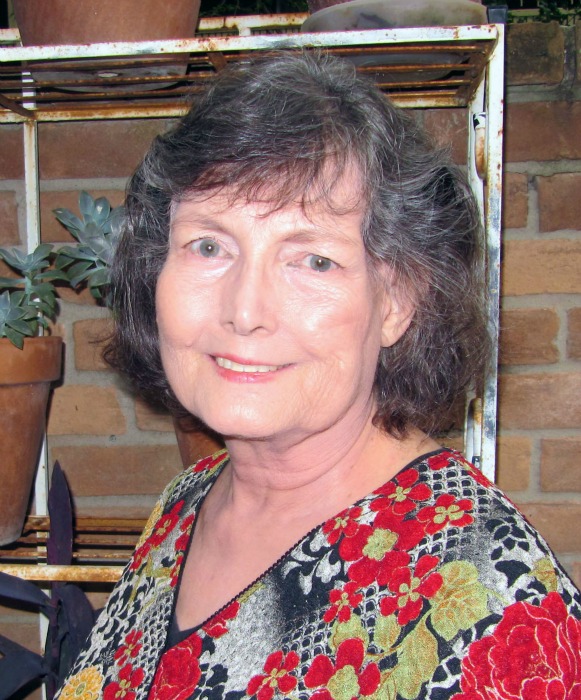
Connie Knight: The IAN Interview


I grew up in San Antonio, Texas. My father’s family lived in the country some miles away, in the DeWitt Colony area settled in 1825. We visited his family often, and I vividly remember my grandmother, my great-uncles and their wives, my cousins, and the places they lived, so different from the city.

Reading and writing were always my favorite activities. In college, I studied creative writing in San Francisco, journalism back in San Antonio, and then I worked in Houston as a journalist and magazine editor. I still live in Houston close to my family, and I visit my cousins in the country.

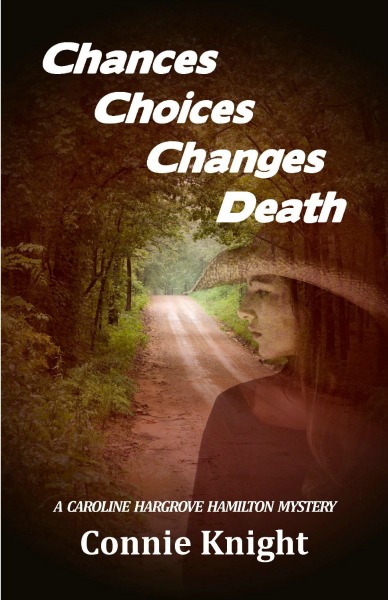
After leaving journalism, I found myself writing fiction. So far, two mystery novels have materialized. Chances Choices Changes Death follows Cemetery Whites in the Caroline Hargrove Hamilton Mystery series.

Independent Author Network: Please tell us about your latest published book.

Connie Knight: Chances Choices Changes Death is the second novel in a series-to-be of cozy mysteries set in Texas ranch land near San Antonio. I used the same heroine, amateur sleuth Caroline Hargrove Hamilton and her cousin Janet, in the events of the story.  
     
The group of initial book characters was enlarged with others: three bad guys in particular. Their portraits extend the cozy basis of the book. My writing style remains humorous, but there’s depth to the plot, just as there is to life. One bad guy, Brian Atkins, is really sleazy rather than evil. He causes the death of Myra but not on purpose. Trying to escape arrest, he tells some things to the police, but hides more. He was an interesting character to write about as the book developed.

So was the diversity between identical twin brothers, Donny and Danny. Earlier in life, they were alike, but they made different choices, and different changes occurred to them. One fell in love, and the other could not, as the book goes on.

IAN: What inspired you to write the book?

CK: I wanted to set a book on a big ranch. Generally, it’s a sequel to Cemetery Whites. In writing fiction, I chose to write a mystery, a genre novel, rather than a work of literary mainstream. I couldn’t think of a plot for a mainstream.

IAN: Did you use an outline or do you just wing the first draft?

CK: I used an outline, and pages written about events, or characters. The outline changed as writing went on, things changed, new people popped up. Still, I’d rather have an outline plan than wing it.

IAN: How did you come up with the title?

CK: That’s a good question. I’m not sure how I came up with it. I do know that the first title, Cemetery Whites, eluded many people, to my dismay. It’s the name of a white iris planted in graveyards. I thought it was common knowledge. Anyway, Chances Choices Changes Death indicates a stream of events. One leads to another, although death is not always the consequence.

IAN: How much of the book is realistic?

CK: The whole book is fictional, although it’s not a fantasy or set in outer space. The characters, the places, the events, could exist, but they don’t.
Except for the State of Texas, DeWitt County, Yorktown and Cuero. They really exist, but the exact cottages and ranches and characters in my book don’t.

I’ve read comments by authors about taking something they saw or heard and incorporating it into a book. Muriel Sparks wrote about seeing someone with beautiful, fragile hands that she gave to another character one day. The hands were real, but fictionally used.

IAN: Are experiences based on someone you know, or events in your life?

CK: I’ve tapped into some experiences, but they’re not always important to the story. For a few years, I took English riding lessons, and I gave that background to Caroline when she and Janet are taking Western riding lessons at Robinson Ranch. I gave her an old horse with an English history although he knew Western riding now. That comes in handy when Caroline needs to jump a fence later on.

Actually, I had a similar experience in my English riding lessons. A formerly Western horse mistook my English signals and started walking backwards. The more I tried, the worse it got, until someone took the reins out of my hands.

IAN: Name one entity that you feel supported you outside of family members.

CK: Going back to early days, that would be Mother Estelle-Marie, my teacher in the eighth grade. With her encouragement, I wrote a play for my class to perform and a poem for a contest. Also a short story that didn’t get published. I’ll always remember Mother Estelle. She got me started.

IAN: What was the hardest part of writing your book?

CK: The development of this book brought police activity into it more than I meant to. A police officer proofed it for me and made comments about accuracy of events, or changes to be made.

IAN: Did you learn anything from writing your book and what was it?

CK: I think you always learn something from anything you do. This was my second book, and I learned things additional to what I learned with writing my first book. It’s more complex, the characters vary, and I moved some pages from here to there. There was more flexibility in putting things together.

IAN: Is your book published in print, e-book, or both?

CK: It’s an e-book now.

IAN: Where can we go to buy your book?

CK: Both are available as an e-book on Amazon and Barnes andNoble.

IAN: Tell us about your next book. Is it a sequel or a stand-alone?


CK: It’s a sequel, and it’s in progress. There’s an outline, research material, some writing, and Chapter One. Caroline’s daughter comes to the country and—a subplot—decides to be a small farmer. She’s fun to think about.

Tuesday, April 22, 2014

Rik Stone: The IAN Interview


Do children born into poverty become impoverished adults? It happens; pitfalls and roadblocks to advancement are everywhere. Rik Stone grew up poor amidst the slum-lands of fifties North East England, leaving school at 15 without any academic qualifications. After working in shipyards and a stint in the merchant navy he worked quarries in South East England.

Life was without horizons until he studied for, and completed, a BSc degree in mathematics and computing. Taking a company pension at fifty, he was able to follow personal desires and began writing. Now, he is offering up his debut novel Birth of an Assassin, the first in a series.


Independent Author Network: Please tell us about your latest published book.
Rik Stone: Set against the backdrop of Soviet, post-war Russia, Birth of an Assassin follows the transformation of Jez Kornfeld from wide-eyed recruit to avenging outlaw. Amidst a murky underworld of flesh-trafficking, prostitution and institutionalized corruption, the elite Jewish soldier is thrown into a world where nothing is what it seems, nobody can be trusted, and everything can be violently torn from him.

IAN: What inspired you to write Birth of an Assassin?
RS: Birth of an Assassin came from a few stories I heard from Jewish relatives who had escaped the tyranny of the csars at the end of the 19th century. The final story that came to mind had a better fit in the cloak-and-dagger period of post-war Russia.

IAN: Did you use an outline or do you just wing the first draft?
RS: I started with a brief beginning, middle and end, and added the bones and flesh from that. Doesn't matter how brief these three elements are, they should be in place before you start in order to give direction to the story.

IAN: How long did it take to write Birth of an Assassin?
RS: The original draft only took a few months, but I have revisited and redrafted so many times in between writing other stuff, I genuinely have no idea how long this work took. The subsequent stories I've written are probably complete within a year.

IAN: Do you have a specific writing style?
RS: To hold my interest, the text has to have a fast pace.

IAN: How did you come up with the title?
RS: I've had several titles in the course of the writing, but the story itself dictated what it should be.

IAN: What do you hope your readers come away with after reading your book?
RS: An eager anticipation for the next one.

IAN: How much of the book is realistic?
RS: Like life, stories have coincidences, yet I like to believe this work is feasible.

IAN: How is your book different from others in your genre?
RS: I love to read this genre. However, I find a lot of the stuff is filled with gung-ho heroes. Birth of an Assassin follows the military dreams of a young Jewish boy, but it also absorbs his emotions, whether of love, deceit or betrayal. I also think the setting is very different to the norm. There are books out there covering cold-war etc., but they always have a western hero, US or European. I was, and still am, happy to follow my instincts and use a Russian Jew as my front man.

IAN: What books have most influenced your life most?
RS: The Carpet Baggers and The Adventurers. I was too young to appreciate the slower parts of these books, but the early action excited me such that it has stayed with me always.

IAN: Do you see writing as a career?
RS: I took a company pension when I was fifty. When I'm in the zone, I spend maybe sixty hours a week at the keyboard. I never worked that many hours in my previous life, so yes, I see writing as a career.

IAN: Who designed the cover?
RS: The cover was produced professionally, but the end-product came from my brief.

IAN: Is Birth of an Assassin published in print, e-book or both?
RS: Birth of an Assassin is available in paperback and ebook format.

IAN: Where can we go to buy Birth of an Assassin?
Amazon US: http://ow.ly/vMafx  Amazon UK: http://ow.ly/vMaHg

IAN: Tell us about your next book or a work in progress. Is it a sequel or a stand-alone?
RS: The Turkish Connection is a prequel to Birth of an Assassin. The work is complete and undergoing the final copy-edit. It should be available sometime during the summer months.

Wednesday, February 5, 2014

Robert Carter: The IAN Interview

As a child I lived in Sydney, Australia, returning to England aboard the P&O liner Orcades. I went on to study Astrophysics at Newcastle University where I read  a lot of science fiction, wrote my own stories and launched the university's first science fiction society.  

I worked in the oil industry in the USA,  and was posted to parts of the Middle East and  the war-torn heart of Africa. It was both dangerous and well-paid.  More than once I came close to being killed - and plenty of good men I knew never came home.

I travelled around Europe, China, Japan, took tea with the heir of the last king of Upper Burma near Mandalay, and on the road to Everest base camp I ran into Sir Edmund Hillary. After travelling around the Far East, I returned home and got a job with the BBC. Four years later, I left the BBC to write. Robert Carter


IAN.  Please tell us about your latest book. 
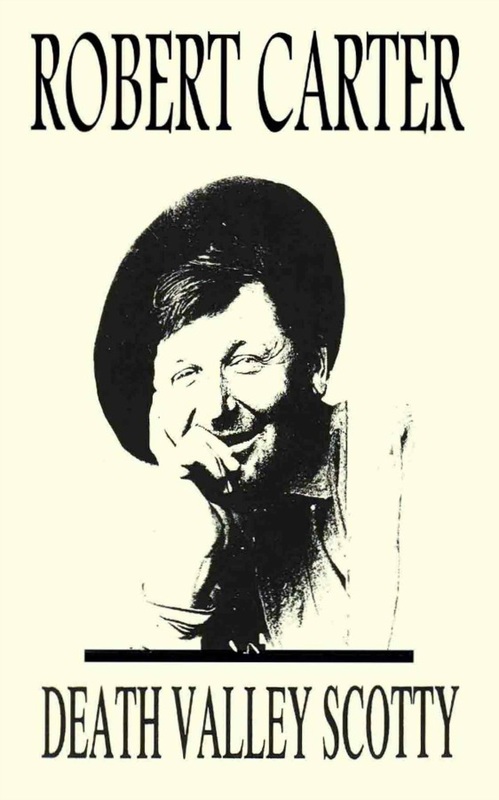
R. Carter.  Walter E. Scott - Scotty to his friends - was passing through Death Valley, California, when he happened upon a dead man. Beside the corpse was a dog dying of thirst, and in the man's pocket was a piece of rock glittering with pure gold ...

Scotty seized he day. He buried the body, saved the dog and worked out a plan that would change not only his own life, but that of many others. One of the lives Scotty changed was that of Albert M. Johnson, a wealthy but disabled Chicagoan who yearned for adventure. Johnson wanted for nothing in material terms, but he had suffered a broken back in the train wreck that had killed his father. Despite inheriting the biggest insurance company in the Midwest, he was not a happy man, until Scotty appeared, that is.

Scotty loved to have a good time and to be the centre of attention. He was a romantic soul, a natural-born showman with a talent for making things happen. He used whatever money that came his way to enjoy life and enhance his reputation as a gold miner, but he also enriched the lives of others in a way that was his and his alone.

"Death Valley Scotty" is reminiscent of "True Grit." It has the uplift of "It’s a Wonderful Life."   Set in a time when freedom seemed easier to find, this is a read that will surely make you smile.

IAN. Is Death Valley Scotty published in print, e-book or both?
R. Carter. Some of my backlist is available in print, depending on which book and which country, but now I have moved to indie, I am just concentrating on ebooks.

IAN.  Where can we go to buy Death Valley Scotty? (links)
R. Carter.  All my books are available on Amazon and here is a link to Death Valley Scotty. http://smarturl.it/DVS 

IAN.  What inspired you to write Death Valley Scotty?
R. Carter.  I was travelling through Death Valley on a trip that was chiefly inspired by my geographical interest (from my days in the oil industry) when I happened to see Scotty’s Castle.  It was a most unexpected discovery, and so I stopped to explore. The Castle is run by the US National Park Service http://www.nps.gov/deva/historyculture/scottys-castle.htm and so I took the tour.  I got a really good picture of the man – a most extraordinary fellow as it turned out.  When I got home to London, a screenplay and a friend of mine tried to sell it as a film.  It never got made, so I re-wrote it as a novel.

IAN.  Did you use an outline or do you just wing the first draft?
R. Carter.  I work in phases.  In Phase One I do general research.  I learn everything I can about the period in which my story will be set.  In Phase Two I prepare a detailed outline regarding story and characters.  Then in Phase Three, I do deeper research around the specifics that comprise the story.  It’s only when I’ve completed these three phases that I sit down and start the first draft.

IAN.  What do you hope your readers come away with after reading Death Valley Scotty?
R. Carter.  I hope my books have an extra dimension over and above most adventure or historical fiction books.  As I like to research the settings very closely, I want my readers to get a real sense of the period in which the story is set, and to know more about the feelings and emotions that were prevailing at the time.  Lord Reith, the first Director-General of the BBC said that the job of the BBC was to educate, inform and entertain.  I aim for my books to do exactly this – but not necessarily in that order.

IAN.  How much of Death Valley Scotty is realistic?
R. Carter.  I write stories set in exciting periods of history, in places and times where emotions run at their highest. These are periods of great change, uprisings and wars, in which the characters find themselves embroiled. I want my readers to feel as if they are going on a trip to a strange and different place. Today, you can book a trip to just about anywhere in the world and be there inside 24 hours, but my books take you to places you can't go, places that have vanished forever - the worlds of the past.

The only way I can really take you there is to create a world that is satisfyingly authentic. I feel I've succeeded if the world I've described is all-consuming, and that you are sorry to leave when come to the end of the book. I felt like this when I read James Clavell's "Shogun." What impressed me most was how mindful he was of his readers' pleasure. He really was a writer who wrote for his readers, and I was determined to do the same.

My hope is always to write about dramatic circumstances that have arisen in history, and to make them as factually correct as possible. This means that my books can take many months to put together because you can’t write about the opulence of Peking's Forbidden City in the 19th Century, or describe Queen Elizabeth I's court unless you know a great deal about it.  Many of my readers are experts in these fields and sometimes they write to me to congratulate me, which is gratifying, or to point out an error, which is also gratifying, but in a different way!

IAN.  Do you have to travel much concerning your book(s)?
R. Carter.  The old cliché that “travel broadens the mind” is true.  I was taken abroad as a child and that sparked an interest in maps. Later I  developed an ambition to travel on the entire Trans-Siberian railway, which I did while it was still Soviet.  I spent a good few months travelling to the more unusual parts of Asia, seeing the old ways before they vanished for ever, and making it to exotic places such as Komodo, Mandalay and Everest Base Camp.

I worked for a Texan oil services company, which took me to war zones and other places that are generally hard to get to like the Empty Quarter of Saudi Arabia and the Congo in Africa.  Very exciting and rather dangerous at times, but I’m glad I did it.

I like to write about dramatic and exciting events and I feel I owe it to my readers to have had some sort of first-hand experience.  When I wrote Barbarians which is set in 19th century China,  I had to go and take a look myself. Travelling in Manchuria in the depths of winter was no picnic.  I find it’s essential to visit the places I write about to pick up on the local culture and how people behave, to make things authentic. 

IAN.  Did you learn anything from writing Death Valley Scotty and what was it?
R. Carter.  For virtually all of my books I spent as much time researching as it takes to get a Bachelor of Arts degree, so I have become knowledgeable on a whole range of subjects.

IAN.  Tell us about your next book or a work in progress. Is it a sequel or a stand-alone?
R. Carter.  I am working on a big new project!  I am close to finishing the first volume of a quintet set in the early 20th century in the Great War.  It is 100 years since the war started in 1914, although the US did not enter the war until April 1917, and it was the start of enormous changes to the way people lived.

My tale encompasses espionage, romance, warfare and the world of the English aristocracy.  The first volume will be out soon, but I am looking for volunteers to read advance review copies and write reviews.  Volunteers should contact me on novelrob@gmail.com.

IAN.  Do you have any advice for other writers?
R. Carter.  Definitely.  Would be writers MUST apply discipline to the exercise of compiling 100,000 well-chosen words.  Without discipline, it’s almost impossible.  So the best help you can get is to develop a habit.  Set aside regular time when you do nothing else but write, and try to never, ever miss a session.  For people who can manage it every day, if you write 1,000 words a day for 100 days, each and every day you will have created the first draft of a novel in 4 months.  Then it is just a question of editing, and editing is much easier than creating.  A real good tip is to print your novel on paper and put it in a drawer for at least 30 days.  When you come back to it, you will find that household gremlins have re-arranged all the words and made it read like garbage.  You will find the second draft is so much better, and the third you can probably be proud of.

IAN.  Do you have anything specific that you want to say to your readers?
R. Carter.  I like to write about people who appear at the right time and turn that moment into a fulcrum of history.  Events turn turns on those points – if those individuals had not done what they did, then the world would be extremely different. Most people never get near to a fulcrum of history, and would probably rather not!  Others are never far from one – and that is what makes them different.


Thursday, January 30, 2014

Author L. R. W. Lee Releases Andy Smithson: Venom of the Serpent’s Cunning, Book 2


The wait is over! Book Two of this highly-rated fantasy series is now available in Kindle eBook and paperback at Amazon.

Venom of the Serpent’s Cunning is the continuation of L. R. W. Lee’s well-received debut novel Blast of the Dragon’s Fury and the next offering in this seven-book Andy Smithson allegorical, fantasy, adventure series for middle graders.

In Venom of the Serpent’s Cunning, Lee continues to weave a tale of mystery and intrigue as the main character, Andy Smithson, who is now 11-years-old, returns to Oomaldee to retrieve the second ingredient needed to break a 500-year-old curse enacted to punish the current ruler for murdering his older sister when she was 15. Not one to forgive easily, Imogenia’s spirit is bent on thwarting Andy to preserve the curse and naively aligns herself with the evil, scheming Abbadon. 

Things go from bad to worse when a creature Abaddon conjures from the darkest magic steals the Stone of Athanasia, the source of the ruler’s immortality, causing the king and his wizard, Mermin, to fall gravely ill. Andy is forced to choose between retrieving the stone to save those he loves or obediently going after the second ingredient. What will he chose? Will he be able to save the King and Mermin?

You won’t want to miss the non-stop action, drama and thrills on this adventure that is Andy Smithson: Venom of the Serpent’s Cunning, Book 2.

Book Three, Disgrace of the Unicorn’s Honor is due out Fall 2014.

Reviews:
“This series has everything a kid could want, action, adventure, magic, excitement and mystery!” - Erik Weibel, This Kid Reviews Books (Erik is 12)

"LRW Lee has constructed a wonderful world full of adventure, daring deeds, and remarkable action tempered with the right dose of humor. This wildly addictive series will entertain middle grade students, who, like I, will anxiously await the release of book three." - Sue Morris, Kid Lit Reviews

“There is a strong good versus evil theme underscoring the plot making it a clean story with no bad language but lots of exciting action and suspense. If you adore fantasy books with a medieval theme including knights and dragons, this story definitely fits that bill.” - Wayne S. Walker, Home School Book Reviews

Buy Book 2 – Amazon Paper: http://amzn.to/1eHKa4Q
Amazon Kindle: 
http://amzn.to/1j6sEKP
All other eBook versions: 
http://bit.ly/KlCycx

Book 1
Amazon Paper: http://amzn.to/17pu0ut
FREE eBook (all versions): http://bit.ly/Lk6yH5


If you have not yet had the opportunity to experience the Andy Smithson series, L. R. W. Lee has launched the serialized podcast of Blast of the Dragon’s Fury, Book 1 which is available for free at:
iTunes store - http://bit.ly/1l8u5YP


And there’s more! As part of L. R. W. Lee’s book launch tour, you have the opportunity to win 9 fantasy adventure ebooks from highly acclaimed authors. To enter go to the author’s website at
http://www.lrwlee.com/#!giveaway/chq4.


For a full schedule of Venom of the Serpent’s Cunning, Book 2 launch tour stops: http://www.lrwlee.com/#!media/c1big


For more about author L. R. W. Lee: http://www.independentauthornetwork.com/l-r-w-lee.html


Thursday, January 2, 2014

Lia London: The IAN Interview

Lia London began her writing career composing on-demand scripts for non-profit educational and religious organizations.  In 2011, she published her first novel, and has since then published four more books.  She hosts a book blog called Clean Indie Reads dedicated to bringing “Flinch-Free Fiction” to readers who are just discovering the independent author movement.  Many authors featured there also collaborate in marketing through a Facebook group of the same name.  London also has a writing coach blog which, until recently, also hosted collaborative fiction projects.  She enjoys spending time with her family, practicing taekwondo, and—of course—reading indie books.

IAN. Please tell us about your latest book.
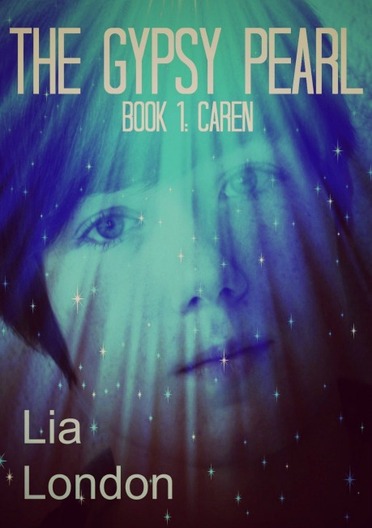
LL. THE GYPSY PEARL, released December 6th, 2013, debuted at the top of the Amazon Best-Seller list for “Children’s Action & Adventure Sci-Fi”.  Caz has spent her whole life on an interplanetary city station.  More than anything, she longs to explore the planets below her.  When one of her bursts of temper results in a sentence on the Surface of Caren, she sees the punishment as an adventure.  But an encounter with gypsies and their strange pet changes her destiny forever.  She is no longer just in search of some fun.  She is on a dangerous quest to seek out three worlds, three gifts, and three powers.  Finding them means finding interplanetary peace—and finding herself.

IAN. Is The Gypsy Pearl published in print, e-book or both?    
LL. It is currently only available in Kindle, but the paperback version will be out my March 2014 (along with the paperback versions of all my books).

IAN. Where can we go to buy The Gypsy Pearl?
LL. At Amazon http://amzn.to/1crKdRb

IAN. What inspired you to write The Gypsy Pearl?
LL. I actually dreamed the entire premise of the story, except that in my dream it was the more historical version of gypsies in a horse-drawn caravan instead of being set in outer space.  I woke up and told my son about it.  “Sounds like a good book idea, Mom!”  Boom.  When a member of the target audience speaks, I write.

IAN. Did you use an outline or do you just wing the first draft?  
LL.  Both.  I had the overall arc of the story with some key points defined, but the chapters came piecemeal based on input from my collaborative fiction website.  When participation died out, I retook the reins, switched out the POV from 3rd person to 1st person, and opted to break the story into a trilogy instead of a long stand-alone.

IAN. What do you hope your readers come away with after reading The Gypsy Pearl?
LL. A feeling that everyone can fit if we just make room.  There are many different cultures and belief systems, but they don’t have to be at odds with each other if we can look at a bigger picture.

IAN. How much of the book is realistic?    
LL. The space science is probably a little sketchy, but the people are real.  My key characters should resonate with readers as having genuine motives and personalities.  That’s always what matters most to me: the characters.

IAN. If you had to choose, which writer would you consider a mentor? 
LL. He’s gone now, I believe, but John Christopher.  He’s a sci-fi/fantasy author from England most famous for his White Mountains Trilogy.  He had great depth and world building skills.

IAN. Are there any new authors that have caught your interest?
LL. Michelle Isenhoff, author of Song of the Mountain and The Quill Pen, and Elise Stokes, author of the Cassidy Jones Adventures series are two that captured my reader’s heart this year.  They are both very gifted in their respective genres.  I also think Ford Forkum has a great talent for satire with his Alien Invasion of the Zombie Apocalypse short story.  All three are indies.

IAN. Name one entity that you feel supported you outside of family members.
LL. The members of my Clean Indie Reads group on Facebook were fantastic.  Some acted as beta readers, others helped swarm Twitter with promos or gave me cover design feedback.  They are great and talented cheerleaders.

IAN. Do you see writing as a career?       
LL. Oh, if only… I’d love that, but I’m not banking on it.  Like most writers I know, I do it because I can’t sleep at night if I don’t get the story down “on paper”.

IAN. Who designed the cover(s)?   
LL. I did.  The model on the front was a girl from my daughter’s taekwondo class.  She looked perfect for the part of Caz, so I asked her if I could take her picture and use it.  A few hours of putzing with PicMonkey resulted in the covers for the whole trilogy.

IAN. What was the hardest part of writing The Gypsy Pearl?     
LL. Caz has to experience life on a planet for the first time. Because of that, basic things like wind, dirt, or sunlight are freaky experiences for her.  The real trick was trying to explain the Surface life from her perspective in such a way that the reader could recognize each new thing as something familiar.  I wanted the readers to feel the newness she felt even when they were commonplace things like stairs, bugs, or rain.

IAN. Do you have any advice for other writers?   
LL. Don’t be afraid (or too stubborn) to revise your manuscript many, many times.  Editing is so much more than proofreading.  It’s choosing better verbs, and slicing the blah blah blah.  It’s catching those overused phrases and crafting that image just right.

IAN. Do you have anything specific that you want to say to your readers?      
LL. You have it in you to do great things, even if that hasn’t been your track record so far.  Keep looking for the ways you can make the best impact in the lives of others, not always the flashiest, but the most enduring for good.

IAN. Tell us about your next book or a work in progress. Is it a sequel or a stand-alone?  
LL. The next book in line is the sequel to The Gypsy Pearl.  Book 2: Craggy will see Caz on a new, much less hospitable planet.  The feel will be much like the lawless days of the Wild West, except set in arid mountain tops.  Caz will have to disguise herself as a young mining boy as she searches out timberline trees to extract a special syrup.  Along the way, she will discover what freedom means something different to different people, and she’ll have to reconcile her own conflicting opinions before she can rise to lead others.

Saturday, December 14, 2013

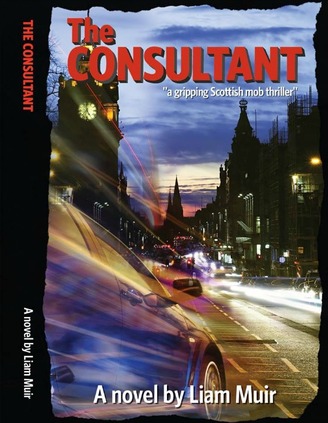
Author Liam Muir Releases The Consultant, a gripping Scottish Mob Thriller


On behalf of ORB Press Books, Liam Muir and Pubshelf, we invite you to the virtual book launch for Liam Muir's first novel, The Consultant, on December 20th, 2013. Click on the link below for details.  There will be giveaways as well as the long awaited availability of the book for sale.  


If you are not on Facebook and can't make the party but want to buy a hard copy or the Kindle version ahead of the North American release, which will take place in a few weeks, go to http://liammuirauthor.com/ or www.OrbPressBooks.com and click BUY to go to the Amazon e-store. It will be in select stores in the new year.

It's an exciting page turner and will make a great Christmas gift to put on someone's brand new Kindle.  

--I look forward to your valued readership. Liam Muir

Sunday, November 24, 2013

Award-Winning Author M.R. Mathias Releases Saint Elm’s Deep – The Legend of Vanx Malic, Book 3

The wait is over! Book Three of this highly-rated fantasy series is now available in Kindle eBook and paperback at Amazon.

Saint Elm’s Deep is the latest offering in the best-selling Legend of Vanx Malic series. Books One and Two reached the top of the Amazon Fantasy/Mythology bestsellers list shortly after they were released.

In Saint Elm’s Deep, Mathias continues to develop his main character Vanx, a half-zythian bard. After finding a map on a grueling hunt, Vanx and his new companions travel deep into the Bitterpeaks. There they search for the fabled Hoar witch's palace in a hidden valley of the treacherous and magical Lurr Forest.

The story expands as we explore Vanx's past and the future of this unlikely group of heroes. The journey and the strange creatures they encounter along the way make this an epic fantasy you won’t want to miss. Action, drama, thrills, and a barrel-keg full of adventure await readers in Saint Elm's Deep, The Legend of Vanx Malic, Book Three.

M. R. Mathias is the author of the international bestselling Wardstone Trilogy, the Locus Poll-nominated Dragoneer Saga fantasy series, and the Crimzon and Clover Short Story Collection. He is also the author of the award-winning horror thriller The Butcher’s Boy under the pen name Michael R. Mathias.

Book Four, That Frigid Fargin Witch is due January 8, 2014, and Book Five is scheduled for a June 2014 release.

Reviews:

“Once again Mathias has created another exciting masterpiece of a novel with the familiar captivating style that we have grown to expect.” –A “Top 500” Amazon Reviewer on The Legend of Vanx Malic
“We get a deep look at Vanx’s father Captain Saint Elm here, and the characters around Vanx are superbly drawn, complete with depth, emotions, and problems all their own. Especially, the Hoar witch.” -Digital Wizard

"The author's style is individual, but it has the flavor of a Tolkien novel, or possibly Robert Jordan. I must say that Vanx is quite a likeable rogue, and the way that the story begins certainly grabs the reader, pulling them into the story whether they like it or not." -Kindle Review

“I would recommend anyone who loves fantasy books to read this as you will be swept into this world!” -Avid Reader Reviews


Pre Order Book Four - That Frigid Fargin Witch http://www.amazon.com/dp/B00GP3KX9O

Saturday, October 5, 2013

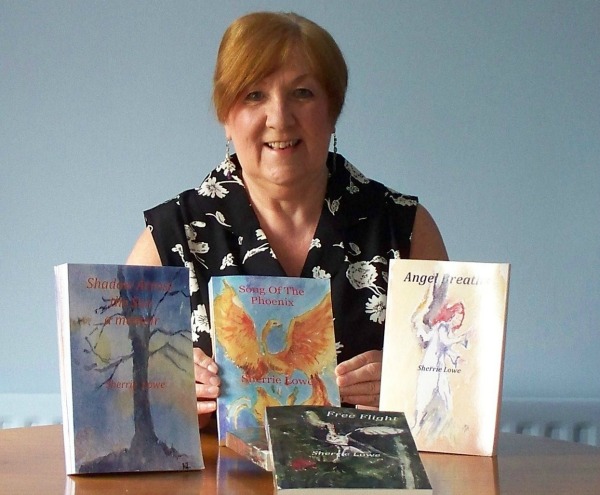
Sherrie Lowe: The IAN Interview


I think I can now call myself an indie author. I have sold both paperback and ebook copies of my books for which I’ve received royalties so I presume that means I’m on my way. I’d always dabbled with writing starting with children’s poetry books when I was in my 30s but only seriously when I became ill with M.E/C.F.S in 1995 and I was forced to resign from my job as learning support assistant in a mainstream high school. I was heartbroken. Writing has kept me sane throughout the loneliness and isolation that comes with any illness and it is my hope that one day it will give me my life back – or at least half of it!  -Sherrie Lowe


IAN. Please tell us about your latest book:
SL. ANGEL BREATHS is my latest publication. It is a story which links life on earth with life in the realm of the angels. Angelique has been robbed of ever having a life with her earthly family and of walking the earthly path with her soulmate. Instead she watches over them from her position in a higher realm.

Had she lived she would have had a comfortable life, her parents having reasonably well paid jobs, both with prospects. What is heartbreakingly lacking in their life though is a family. Her soulmate by contrast is the son of a homeless drug addict and his start in life is a lot more difficult. Although they haven’t met on the earth plane their souls are connected and each is aware of the other as they run parallel in their complimentary realms. 

IAN. Is Angel Breaths published in print, e-book or both?
SL. Both
  
IAN. Where can we go to buy Angel Breaths?


IAN. What inspired you to write the book?
SL. ANGEL BREATHS was inspired by a news item on abortion laws which asked the question, ‘At what point does a baby have a soul?’ It made me wonder that if it was as early as an embryo, how would that soul feel it if were to be aborted or miscarried?

IAN. Did you use an outline or do you just wing the first draft?
SL. I usually have a rough idea of where I’m going but my stories evolve often into something quite different to what I’d originally planned.


IAN. How much of the book is realistic?
SL. I’d say about half and half. As no-one has ever truly passed into the afterlife and then returned we cannot know what it is like, we can only form our ideas by what we read, see and experience. I have had experiences with it as I write about in my memoir SHADOW ACROSS THE SUN and my interest in it stems from them. This is my own perception.

IAN. What book are you reading now?
SL. The Clairvoyant’s Handbook by A.L.Hale. I don’t wish to hone my psychic skills specifically I am just fascinated by the afterlife, a fact which I think is reflected in several of my books.


IAN. Are there any new authors that have caught your interest?
SL. Since becoming an indie author myself I have read many other indies and in truth I have found some of them to be far superior to some traditionally published authors. These are the ones that come to mind: Maureen Turner, Bev Spicer, David P. Perlmutter, Terry Tyler, Brooklyn Hudson, Peggy A. Edelheit, Geoffrey West.

IAN. Name one entity that you feel supported you outside of family members.
SL. FeedARead.com

IAN. Do you see writing as a career?
SL. I’d like to. I was forced to give up the career in education that I’d trained for because of my health. Writing is something I can do at my own pace and I’d love nothing more than for it to earn me a living.

IAN. Who is your favorite author and what is it that really strikes you about their work?
SL. I have lots of favourite authors and have been influenced by many but to choose one of them I’d say Frank McCourt for his memoir Angela’s Ashes. I was struck by his honesty and humour, even in the most difficult times of his life.

IAN. Who designed the cover(s)?
SL. An artist friend from my creative writing group called Mary Bennett paints original watercolour paintings for my covers.

IAN. Do you have any advice for other writers?
SL. The advice I’d give to other writers is to keep at it. The advent of the ebook has given authors the opportunity to achieve what they aimed for when they wrote that first word, to have it read.

IAN. Do you have anything specific that you want to say to your readers?
SL. To my readers I want to say a huge thank you. I am humbled that you have spent your hard earned money to buy my books. I really hope that I haven’t disappointed you and that if you’ve enjoyed one of my stories that you will try another title.

IAN. What were the challenges (research, literary, psychological, and logistical) in bringing it to life? 
SL. My main challenge is always my health. The writing aspect I enjoy but if I were well enough I’d love to go out physically to do my research as I did with FREE FLIGHT, that was a wonderful experience. Since discovering FeedARead.com who have published my paperbacks and KDP for the ebooks it has taken the pressure off that massive challenge of getting published. All I need now is that lucky break to sell millions!

IAN. Tell us about your next book or a work in progress. Is it a sequel or a stand-alone?
SL.The book I am working on at the moment is a sequel to my memoir. I’m thinking that the title will be JUST TWO MIRACLES but that could change. I’d had an idea to do it but it was friends and family who’d read the first book who encouraged me to make a start. Although it is essentially for friends and family I think that many people will relate to my life experiences. Lots of us go through the same joys and troubles but we all react differently. I’ve found by writing both fiction and non-fiction that even in the darkest hours there is humour.