Pages

Wednesday, August 22, 2012

February Grace: The IAN Interview

February Grace is a writer, artist and poet who lives somewhere that is much colder than she would like most of the time. She sings on key, plays by ear, and is more than mildly obsessed with colors, clocks, the Perseids, and science fiction. 


She's done a few more or less interesting things in her life, not the least of which include working for Disney, getting kissed by a Klingon (it was unprovoked) and going blind, though she wouldn't personally recommend the latter. She would however highly recommend the doctors who helped partially restore her sight after a long series of surgeries between 2009 and 2011. 


Her poetry, prose, and/or flash fiction have appeared in The Rusty Nail Literary Magazine, Vine Leaves Literary Journal, and Rose & Thorn Journal. Her work can also be found in the recently released anthology Poetry Pact Volume 1.


IAN. Please tell us about your latest book.

FG. Godspeed is the story of a courageous doctor who risks all by breaking the law to use his technological inventions to help special patients. It is told through the eyes of one of those patients, a young woman with a failing heart that he snatches from the jaws of Death after his oldest friend, Schuyler, finds her collapsed on the street.

She is a curiosity to them both; refusing to reveal her name or where she’s come from (something the reader understands but the characters do not.)

The book is, at its heart, a love story; as the young woman falls for her savior even as she tries to unravel the mysteries surrounding him and his covert practice. At the center of that mystery is a secret beyond her imagination.

Godspeed’s true intentions and motivation for his work come into question as we meet his other patients, all of whom are teenagers. The question of the value of prolonging, or ‘improving’ life at great cost and suffering to the patient is one that is raised by the book but not answered by it.

IAN. How long did it take to write Godspeed?

F.G. Almost two years.

IAN. What inspired you to write your book?

F.G. I had been very ill and was actually recovering from surgery at the time (I had fifteen surgeries between 2009 and 2011, six of which were to restore some use of my eyesight, which I had lost.) I was awakened in the middle of the night when my pain medication wore off, and I was trying to focus on something, anything, that could anchor me in the moment until I got my bearings and could get some help.

I was in a room that held my favorite clock; one with three faces. The only sounds I was aware of in that room were that of my heart racing and the ticking of those three clock faces in perfect unison.  The thought, ‘What is a heart if not the ultimate clockwork’ came to me, along with ideas for a story much darker than Godspeed turned out to be. I was so weak all I could do was grab a pen and the notebook where we’d been keeping track of my medication doses and jot down a few lines, then somehow I fell back to sleep.

From there on came the thought of a doctor using technology beyond his time to save lives…merged with comments my own doctors had made about how my  body had set back what they could do for me, medically, by about a hundred and fifty years, and the story went from there. I had wanted to write something with Steampunk influences for a long time, and this book just demanded to be written.

IAN. Talk about the writing process.

F.G. I used to do all of my writing at night and during the day (meaning I didn’t sleep much) as my health has changed over the past few years everything about my schedule is different, and now the answer is I write when I can. I am hoping that one day soon I will be able to return to a much more everyday schedule.

IAN. Did you use an outline or do you just wing the first draft?

F.G. I am hopeless with outlines, because my writing is all character driven. It’s not like I’m creating the story or the characters, to me it’s like being introduced to people who already exist and being told a story that already happened. I am merely taking their words down, and crafting them as carefully as I can to be sure to present their story in the best possible way. Of course there comes revision and revision and more revision until it’s as perfect as I can make it.

IAN. How is Godspeed different from others in your genre?

F.G. This is a difficult question to answer because I consider Godspeed to be a hybrid: a literary romance with what I call ‘Steampunk embellishments’. It’s not as mechanical or fantastical as other Steampunk books, but then it’s not without that something extra that makes it more than just a literary romance. All I can ask is that people check out the sample chapters on Amazon, and decide for themselves what sets it apart. I think they’ll be pleasantly surprised.

IAN. Did your own struggles with your health impact how you portrayed Doctor Godspeed’s patients in the book?

F.G. Definitely. I am a stroke survivor, among other things, and have spent years going through unthinkable amounts of medical testing and surgeries for other conditions. That gave me a lot of experience to draw from to authenticate some of the experiences Godspeed’s patients went through. Additionally of course my struggles with my vision were drawn upon to describe Marielle’s loss of sight in the novel.

IAN. So would you consider any part of this book to be memoir?

F.G. A few people have commented that it must be, but I truly don’t consider it so. It is a work of fiction, and I just did what any writer tries to do; to use their personal experiences and hardships to their advantage when it comes to getting the right words down onto paper.

IAN. You had six eye surgeries between April of 2009 and March 2011. How did you actually write the book if you couldn’t see for long periods of time during its creation? Did you dictate?

F.G. I am sadly not a writer who does well dictating. I certainly used my iPod to make a few voice memos when a thought would occur to me about a plot inconsistency I needed to fix and didn’t want to forget or a quick plot turn would come to my mind and I didn’t want to lose it. But I did a great deal of typing for this book with my eyes closed.

When I was unable to see at all after a surgery in 2011 but couldn’t get the book off my mind, I got giant Sharpies and sticky notes and I would blindly scrawl notes down that I wanted to add to the book later. I stuck them all in a giant notebook then later when I could read them I laid them all out and took stock. To my surprise, I used almost every single one.

IAN. Writing the book in bits and pieces over time between surgeries like that must have been frustrating, especially when you weren’t working to an outline. How did you pull it all together in the end?

F.G. I wrote most of the book in two segments, in fall of 2010 and fall of 2011. By the end I’d started using Scrivener when I could see to put down scenes, and I organized them as best I could in there. Then I printed the entire thing out, every scene, every line, and I assembled them all, deleting what was not needed and streamlining.

What amazed me was how it fit so well together, seamlessly, as if written from beginning to end without stopping. I can only put it down to the strength of the voice of the narrator character, Abigail, and how consistent, and insistent, the personality of my hero, Quinn Godspeed was.  He demanded to be heard, his story had to be told and there was only one way to do it. Looking back, I don’t think that it could be the book it is if it hadn’t been written exactly as it was.  I fought for this book; I put every ounce of my love, heart and soul into it through all the surgeries and pain and other setbacks that tried to prevent me from finishing it.

I am grateful to my amazing copy editor, Jennifer Gracen, my cover artist Paul Brand and my best friend (who formatted the book for me) Matthew Irvine. Without them, Godspeed would still be a file on my computer.
  
IAN. Is Godspeed published in print, e-book or both?

F.G. Both. I almost went exclusively with e-book but I wanted print for myself and had enough people request copies be made available in print that it was worth doing. The book is beautiful in print, the back cover always makes my own heart skip a beat or two.

IAN. What do you hope your readers come away with after reading Godspeed?

F.G. An appreciation for life, and their health, if they are healthy. If they face disabilities as I do or other health problems I hope it will help them feel that they’ve been heard and perhaps even understood. I’d like them to fall in love with the characters, as I did, and hold a little piece of them in their hearts ever after they’ve finished the last page.

IAN. Where can we go to buy your book?

FG. It is available as an e-book from Amazon and Barnes and Noble, and in print from Amazon and Lulu.com.

IAN. Tell us about your next book or a work in progress. Is it a sequel or a stand alone?

F.G. I have always considered Godspeed a stand alone, so there is no sequel planned. I’ve been working on a collection of short stories, and would like to complete a book of poetry at some point as well.

IAN. Any other links or info you'd like to share?
F.G. If you’re looking for me, you can most often find me on Twitter (@FebruaryGrace). I also have a page on Facebook (http://www.facebook.com/FebruaryGrace) and a personal blog www.februarywriter.blogspot.com where you can find out a lot more about me and also read some of my short stories and things.


Godspeed by February Grace
395 pages
Literary Romance/Steampunk


     I studied him with rapt attention for some time, thinking that he had no idea until the moment he turned to me, loupe still in place, and nodded in my direction.
     “My father was a clockmaker,” he declared, without my having to ask. “He was… sort of a business partner of Schuyler’s father. He built timepieces, restored antiques for the shop on a regular basis. I learned everything I know about clock repair and watch making from him.”
     He closed the case on the back of the watch he’d been working on and set his tools aside. Last of all, he removed the loupe and put it away. “I find concentrating on the task of repairing such a thing helps me to think.”
     I marveled that work so intricate, requiring such meticulous attention, could help anyone think about anything else. It just served as evidence again of the unusual mind at work here, someone so brilliant that clockworks were no challenge at all, and only in the mysteries of the inadequacies of the human body could a true challenge be found.
     “Your mother?” I asked softly. Hearing how dry my throat was, the doctor rose from his chair and brought me a glass of water.
     “I do not remember.”
     He did not elaborate as to whether she left him by choice or by chance, taken in death or had abandoned him when he was a boy. “Before you ask, no, I have no siblings. Well, none that are not… convenient fabrications.”
     I left the comment alone for now; I did not want to stop him talking. If I risked asking the wrong question in this moment he may never be willing to approach this topic again.
     I wondered that he was willing to approach it now. Again, I was too afraid of breaking the spell to question too mightily.
     “Schuyler’s mother, I remember. She was a very kind woman. Gifted,” he continued. “A musician. All the musical instruments you find around this place originally belonged to her. She tried to teach me them; violin and piano, but I had no natural talent for music.
     “So off to my father’s workshop I went, usually ferrying back and forth from it the items from Ruby Road that needed to be repaired. Very early on he had me assisting him, handing him this tool and that, never once behaving as if he believed I didn’t understand. No matter how young I was, he always used the proper terms for things and explained to me exactly their purpose inside the clockworks.” He got a distant look in his eye, and shook his head as he paced past his workbench and moved toward the cabinet across the room.
      He opened up a panel, procured a bottle and glass, and poured himself a drink. “I didn’t realize then that the greatest gift he would ever give me was faith in my own mind.”
    He downed the dark, pungent liquid in one long gulp and nodded approvingly at the taste. He pivoted on his heel and turned back toward me. “Still, you refuse to tell me about yourself.”
     I looked away.
     “Even so much as your name.”
     My eyes remained focused on the opposite wall.
     “I am a fairly resourceful man, you know.”
    I felt the urge to laugh at the magnitude of his understatement. To say he was fairly resourceful was to say that the sea, roaring and endless with advancing and retreating tides, was vast and tasted slightly of salt.
    “I’ve done some investigating,” he said, pacing again as he spoke. “There have been no reports of a young woman your age, anyone even close to your description, going missing in the last year, and I highly doubt you were on the street more than a day before Schuyler plucked you from it. Otherwise you would not have survived.”
     He looked me over with carefully critical eyes, almost as one considering purchase of a piece of used merchandise. “Why is it a girl with such… who has been at least somewhat carefully kept and cared for over the years, would not be reported missing?”
    I summoned all of my strength to speak, because I was driven to answer. “To be reported missing, sir, one must first be missed.”
     He inclined his head, accepting my explanation. He clearly understood how much speaking those words, words tied to such difficult emotions, took out of me. He pressed me no further.
      He returned to the workbench behind the surgical table, where I now sat with my legs dangling over the side.
       He opened the top drawer, procured a small wooden box, and held it up on display.
      “A gift.”
    My eyes widened when I saw what at first appeared to be a brilliant silver-tone locket; antique, and fashioned in the arcing shape of a heart.
    “This, like most things in life, is more than it first appears.” He removed it with one hand and set aside the box with the other before moving within reach. “This is the means by which we will free you from the torment of harsher treatments.”
    I watched with absolute amazement as he unlatched the clasp on the charm and revealed its complicated interior. Gear upon gear, lever upon lever, all churning and clicking away in musical, clockwork time. He leaned in so close now that I could feel the warmth of his cheek against mine.
     “Here.” He dangled the necklace in front of me, where it danced and flickered in the light.       “This is your new heart. It’s rare, and young, and made of pure white gold.” For an instant he looked upon me with an expression I could not possibly put emotion to. “Exactly, I am certain, like the one it will repair.”
He lowered the chain around my neck, and as he did so, tears I could not deny wound their way down my cheeks and onto his gifted, powerful hands.


Wednesday, August 8, 2012

Gary Starta: The IAN Interview

Gary Starta is a former journalist who studied English and Journalism at the University of Massachusetts in Amherst.

His love for science fiction compelled him to write his first novel What Are You Made Of? published in 2006. Inspired by Isaac Asimov, the science fiction novel focuses on intelligent artificial life and whether sentient androids should possess the same rights as humans. The androids in Starta's novel are created as hybrids - part machine, part human - further blurring the line between human and machine. Starta foresees a near future where humans will be forced to decide if intelligent machinery is indeed a life form. Possibly, in this near future, some humans will possess computer enhancements to overcome disabilities becoming hybrids themselves. The line between biological life form and mechanical life form continues to be examined in 2010's Gods of the Machines.

Demon Inhibitions along with its preceding Caitlin Diggs (series) novels, Extreme Liquidation and Blood Web are reminiscent of the The X-Files television/movie series. Contemporary authors Laurell K. Hamilton, Rachel Caine, Jim Butcher and Kelly Armstrong also fuel his aspiration to create paranormal suspense.

Starta's crime novella ' Murder By Association' blends mystery with forensic investigation. It is a departure from previous books because it contains no science fiction or paranormal elements. Its follow up is 2012's Kindred Killers. Additionally, Starta foresees his 2008 novella ' Alzabreah's Garden ' - a fantasy romance - as another out-of-the-box effort.


IAN. Please tell us about your latest book
GS. Demon Inhibitions continues a series of investigator Caitlin Diggs. I wrote it in a fashion where the reader does not need to read the previous books, Blood Web and Extreme Liquidation – although I would be quite pleased if one did! I changed the third person narrative to the first person, hoping to incorporate the investigator’s firsthand observations in a more immediate manner for the reader. I am always thinking of the reader and in fact, I think this is how I perceive the actual writing process. What would the reader want? I hope to have provided some twists and turns along the way. Agent Caitlin Diggs will leave her FBI position for Salem, MASS where she hopes to become a private eye. Her recent acquisition of paranormal abilities has stymied her with the Bureau. She cannot alert them of her supernatural abilities which makes field reports a challenge.
  
As Caitlin grows disturbed by the paranormal circumstances of murders in Salem, she comes to suspect a real estate broker who just happens to be an incubus according to her Wiccan neighbor Briana McFadden.

 Solving the case isn’t quite satisfying for Caitlin as the suspects flee via teleportation. Caitlin is then contacted by an old friend in the Boston PD who alerts her that a fugitive with ‘otherworldly’ abilities has escaped. It is code talk for Diggs and her friend, Stanford Carter. Carter is open-minded and considers a being capable of murdering via thought suggestion might be plausible.

Her ‘manhunt’ takes her through a wormhole where she finds a parallel universe. She not only has a double but her Wiccan friend is an FBI agent. When the fugitive kills the ‘other’ Diggs, Caitlin must assume her role as an FBI agent working for the preternatural division. This is strange in itself as demons are commonplace here. They are also the target of hate crimes by humans. It is this prejudice which leads Caitlin to consider if her fugitive demon may have been created for a sick purpose. When she meets a scientist who supposedly is the demon’s father, she learns science may have lent a twisted hand to this purpose. 

IAN. How long did it take to write Demon Inhibitions? 
GS. About six months. The beginning portion was written prior and I left it for a while before resuming.

IAN. What inspired you to write the book? 
GS.  I love the weird, especially when it involves unproved science. I wondered how I could incorporate science into a novel which might also be considered urban fantasy. I also incorporated an idea from one of my short stories about a girl whose singing could heal. Her talent is able to inhibit demon violence, at least temporarily. 


IAN. Do you write at night or in the morning?
GS. I prefer midday. I do some banal tasks then settle down at the computer for the afternoon. 

IAN. Did you use an outline or do you just wing the first draft? 
GS. I write a loose outline. After that, I fly by the seat of my pants so to speak, or write. 

IAN. How is Demon Inhibitions different from others in your genre?
GS. I find it is a hybrid genre. I call it fiction on the fringe of genre. One can find suspense, romance and mystery in it in addition to fantasy/science fiction. 

IAN. Is Demon Inhibitions published in print, e-book or both?
GS.  It is currently ebook. Hopefully, a print book soon. 

IAN. What do you hope your readers come away with after reading Demon Inhibitions?
GS. I would like people to consider the fantastic might have plausibility. That science fiction might become science fact. I also like to leave them with some morality and/or a sense of the character’s inner struggle. No one is either black or white. We are all grey. 

IAN. Where can we go to buy Demon Inhibitions?
GS. Please find it here:


IAN. Tell us about your next book or a work in progress. Is it a sequel or a stand alone?
GS. If we skip past the unplaced books, my next book was just completed. It is a story of UFO and ghost hunters. I wanted characters who weren’t authority figures to have to deal with some strange circumstances. I also wanted characters who might be at odds with the other’s beliefs. 

IAN. Any other links or info you'd like to share?
GS. Yes, please visit me on Facebook and see my book at Champagne Books.


Demon Inhibitions by Gary Starta
245 pages
Science Fiction 
Publisher: Champagne Books 


I knew this would quickly tire Mollini; eventually he would work some mojo to escape with his hostage in tow. At this instant, I saw Diggs from the corner of my eye. Perhaps, she knew this as well and had been only trying to stall the inevitable. That’s when I began to panic. I tried to stop her from doing the unthinkable. It’s what I should have done from the beginning.

She began to walk towards Mollini, heading straight for the creek. Her right hand dug into her jacket and retrieved a pistol. She promptly tossed it into the creek as my hand lunged for her. I caught the lapel of her jacket, but instead of impeding her progress, I came away with only her ID badge in my quivering hand.

“Agent Diggs, no!” Now would have been a good time to practice my telekinesis, I realized. I willed her to return to me, to rescind her foolish offer. How many demons had she dealt with before? Did she think Mollini would honor a trade—herself for the hostage? I didn’t have another second to ponder this because my eyes were too busy focusing on the river which had transformed from murky brown to obsidian black. Diggs’s body tilted, backwards. I pursued her, fearing the bastard would drown her, but I heard a stern no in my head. He warned me to back away. I railed at him in my mind. What makes you think I will? I remember our last meeting. It seems you had little or no hypnotic powers over me.

He countered in thought. Don’t test me. Not unless you want to witness my first kill in this world.

I stopped. Frozen with dread, I watched Diggs float horizontally across the creek.

Would Mollini play fair? I nearly shouted it in defiance, but stifled when I saw Mollini release his hostage, sending him on a similar course, floating him horizontally across the creek toward me. I could feel deception, despite his allegiance. Why would he relinquish this man so easily? What could he possibly want with Diggs? Bad feelings conspired in my stomach. I felt sick. My mind raced for options. Pull my gun as a last resort. Maybe it wouldn’t kill Mollini, but perhaps it might disrupt his magic. This had to be magic. No world operated as such.

Then I felt an eerie silence. A calm… before the storm.


Saturday, August 4, 2012

Author Steve Poling Releases Finding Time


Science Fiction


In 2280 EarthGov is desperate when aliens destroy their first colony. They’ll even comb through the wreckage of the aliens’ UFO that crashed in 1947—where one man claims he’s found a time machine. Now the race is on to scour history for the treasures and talents EarthGov needs.

Sid Feynman just wants a government grant. His hopes for a quiet academic life are dashed when EarthGov thrusts the beautiful historian Nell Playfair upon him and expects Sid to actually use the time machine.

Soon Sid and Nell are rocketing across light-years of interstellar space and millennia of history—seeking that which is lost and finding time.


Amazon


Steve Poling lives in West Michigan. He’s a geek with advanced degrees in Mathematics and Computer Science. He’s a poet in several computer languages, but confines his natural language compositions to senryÅ« and prose. This includes Science Fiction, crime stories, fractured fairy tales, and steampunk mysteries starring Mycroft Holmes—whose brother, Sherlock, you may have heard of.

Thursday, July 12, 2012

The Seventh Soul by M.L. Harveland Wins 2012 Indiereader Discovery Award For Paranormal


On June 3rd, 2012, the winners of the first annual IndieReader Discovery Awards (IRDAs) were announced at BookExpo America (BEA), a major trade show in New York City. “The Seventh Soul” by M.L. Harveland won in the Paranormal category. 

IndieReader (www.indiereader.com), the essential consumer guide to indie-published books and the people who write them, launched the IRDAs to help worthy indie authors get the attention of top indie professionals, with the goal of reaching more readers.  Noted Amy Edelman, founder of IR, “The books that won the IRDAs this year are not just great indie books; they are great books, period.  We hope that our efforts via the IRDAs ensure that they receive attention from the people who matter most: potential readers.”  

Judges for the awards included notable publishers, agents, publicists, reviewers, authors, bloggers, and producers. In USA Today’s “Happy Ever After” blog, IndieReader reviewer Keri English writes, “This tale of chilling suspense takes the reader on a voyage through the macabre and will keep the pages turning and lights on as you read into the night. Definitely a stunning start to a series, Harveland begins with the unknown, develops characters and plot smoothly, and leaves us wanting more. ‘The Seventh Soul’ is paranormal suspense at its creepiest.” (http://books.usatoday.com/happyeverafter)


“The Seventh Soul” focuses on seventeen-year-old Lenora Kelly, who moves to Cambridge, England with her father and soon discovers that not only is her new apartment haunted with a sinister entity, but that she also has powerful psychic abilities. She joins the secretive Cambridge Society for the Paranormal, who try to help save her from the life-threatening entity. The investigation darkens as it explores the entity’s chilling past, into the early 1900s and the life of a young orphan turned murderer. Lenora’s outlook is bleak as she grapples with her abilities, newfound love, and her own mortality.

M.L. Harveland is a member of the Independent Author’s Network. Visit her page at: http://www.independentauthornetwork.com/ml-harveland.html  


Friday, July 6, 2012

Jeff Whelan: the IAN Interview


Jeff Whelan was born near Chicago and did his growing up in the smallish town of DeKalb, Illinois.  Taking time to travel up and down the east coast with a carnival in his teens and spending a good part of his 20s living and working in San Francisco, Jeff returned to DeKalb and, to his surprise, found himself settling down and starting a family.  Jeff worked 20 happy and fulfilling years in the field of special education.  Then, thanks to the high cost of day care, he became a happy and fulfilled stay-at-home parent.  Now that his children are both full-time schoolers, he has made his triumphant return to work by day as a special education paraprofessional and remains, by night, a home-based medical transcriptionist.

From an idea born in 1982, Jeff's first full-length novel was finally completed in 2001.  Ten years later, he discovered the wonders of e-book self-publishing and is delighted to have a way to share his story with readers hungry for a departure from adolescent wizards and teenage vampires.  Matters of life and death, it turns out, don't have to be so serious all the time.

IAN. Please tell us about your latest book. 

JW. Space Orville, a young Earthman of 16, is relishing his new life as an independent "grown-up".  He has just been accepted as an apprentice with Morphean Gaming Systems and has moved into an Earth-orbiting apartment with his companion, NeutroFuzz, to test holographic video games.  As a result of a questionnaire he answered in the back of a magazine, Space Orville finds himself recruited by the Universal Protection Service to rescue a brilliant inventor who has been kidnapped by a group of diseased refugees seeking a cure for their malady.  But these exiled aliens may have more nefarious plans for this inventor's device.  Initially perplexed, Space Orville becomes thrilled at being recruited for this dangerous mission.  He is therefore bummed to find himself partnered with a warrior dwarf.

Meanwhile, two agents from the OmniCosmic Alliance are in pursuit of a dangerously powerful and deranged scientist, one Bizmo the Inconceivable, who has escaped from prison with a device that can alter reality and enslave every living mind.  When these two missions collide, Space Orville must find a way to work with this new team of real "grown-ups" while maintaining a hold on his newfound independence. 

"Space Orville" is not only a rollicking, interstellar adventure loaded with mind-altering concepts and wordplay, but an exploration of how learning to work with others is a large part of learning to be one's self.


IAN. How long did it take to write the Space Orville?

JW. About 18 years. A very early version was started in high school, back in 1982.  The story continued to grow in the back of my mind until, around 1999, I decided to take a crack at finishing it. Two years later, there it was.


IAN. What inspired you to write the Space Orville?

JW. I was originally inspired by the brilliant writings of Douglas Adams, most notably his "Hitchhiker's Guide" series. I also found inspiration in the sci-fi concepts of Doctor Who and the zany comedy of Monty Python. I was inspired to polish up and finish the book by my beautiful wife, who always believed I could do it.

IAN. Talk about the writing process. Do you write at night or in the morning?
JW. Oh, I am most definitely a night writer. That seems to be when my mind turns on. I don't work well at the computer, though. First drafts are done in longhand. Revisions begin at the keyboard. 

IAN. Did you use an outline or do you just wing the first draft? 

JW. A little of both. What passes for an outline is usually a page or two of incoherent notes and non-sequiturs scrawled down as they occur to me in notebooks or on whatever scraps of paper I have handy in my back pocket. Mostly, however, after staring at those notes for a minute or two, I put them away, pick up the pen and let the story take over.

IAN. How is Space Orville different from others in your genre?

JW. I think that the humor, the inventive language and philosophical concepts and, especially, the young adult protagonist help to set it apart from traditional science fiction.

IAN. Is Space Orville published in print, e-book or both?
JW. Currently it is only available as an e-book.

IAN. What do you hope your readers come away with after reading Space Orville?

JW. My biggest hope is that they come away with a smile on their face, a new idea or two and a desire to read more.

IAN. Where can we go to buy your book?

JW. Space Orville is available through Amazon US (http://amzn.to/GP7Eps), and UK (http://amzn.to/QRN75H), Barnes & Noble (http://bit.ly/H95HR4), Smashwords (http://bit.ly/GSUSVJ) and Lulu (http://bit.ly/KVEVkX). 

IAN. Tell us about your next book or a work in progress. Is it a sequel or a stand alone?

JW. There is definitely a "Space Orville" sequel in the works with the working title "Methuselah's Cradle". I have also been asked to expand on an autobiographical short story I wrote called "Greyhound", which concerns the year I left home and found myself travelling with a carnival for 8 months. "Greyhound" is about the night I left. People who have read the story on my blog have been asking what happened next.

IAN. Any other links or info you'd like to share?

JW. I do have a Wordpress blog at http://bit.ly/H2U4cH which has many excerpts from Space Orville as well as some of my short stories and poetry. I have a Facebook page at http://on.fb.me/H435Ia and Space Orville has one at http://on.fb.me/HIgvVB (visits and likes are appreciated). My Twitter profile can be found at http://bit.ly/LQUTON and I have a page at Goodreads at http://bit.ly/K7qF4F.  Also, Lia London recently asked me to guest blog on the use of nonces and inventive language at http://bit.ly/Nc4pG3. Finally, I have had two other author interviews, one with Joey Pinkney at http://h1t.it/MwLb10  and one with Kevin Rau at http://bit.ly/Hhw3Pu. Reviews of "Space Orville" can be found at Amazon or on Goodreads.


SPACE ORVILLE by Jeff Whelan
About 237 pages (Kindle edition)
Humorous, young adult, science fiction adventure


       A sudden chirping whistle from behind him on his right made him whirl around in surprise.  It was the VisoPhone.  Not a sound he actually heard very often.  Contact with the outside had been mostly limited to reports to Morphean on his gaming research and the obligatory calls home.  But rarely did the VisoPhone ever ring on his end.
Hmm, thought Space Orville.
“Hello?” he said, his voice silencing the ring and activating the screen.
A wholly unfamiliar face came slowly into view.  It was a man; quite possibly what one might call a gentleman.  His face was rather dark and hawkish with a sharp, angular nose beneath unusually large, widely set eyes.  A pencil-thin moustache traced his thin upper lip and his jet-black hair lay plastered back on his round skull.  His clean chin came to a severe point.
Space Orville thought: Now who on Earth is this?
“Space Orville,” the man addressed him in a neat, British tone.  “And NeutroFuzz.”
NeutroFuzz zippled quizzically.
“My name is Dr. Lunchwrap.”
Well, Space Orville thought, that explains everything.
“Dr. Who?”  Space Orville asked.
“No, no.  Dr. Lunchwrap,” the man replied, peering from the VisoPhone into Space Orville’s Digimatic kitchen.
“I’m terribly sorry to interrupt your breakfast, but we must speak at once.  It’s a matter of universal security.”
Space Orville looked at NeutroFuzz.  “Am I still dreaming?  Why am I feeling less and less coherent about all this?”
Dr. Lunchwrap continued.  “If you’ll allow me, Space Orville, I can explain.  But I must do so quickly.  The clock is watching.  First, I’ll have to secure this line.”
The image of Dr. Lunchwrap faded for a moment.  Then, there was a bright flash from the VisoPhone screen accompanied by an ear-splitting, eye-flinching snap.  Dr. Lunchwrap now appeared nearly three-dimensional, a quality standard VisoPhones didn’t normally allow.
“Now then,” the doctor began.  “You have no idea who I am, do you?”
“I’m really trying to get there,” Space Orville said.
“I am Preeminent Yoo-Hoo of the Universal Protection Service.  We are a covert agency whose sworn duty is to keep the universe safe for all life forms.  We have agents in every layer, most acting as emissaries to promote peaceful conflict resolution.  Sometimes, however, we do encounter crises.  That’s where you come in.”
“Oh I do, do I?”
“Based on your more remarkable attributes, you have been selected as our newest agent.  Your first assignment involves considerable risk and concerns nothing less than the safety of the entire universe.”
The doctor paused for dramatic effect while Space Orville stood slack-jawed and frowning at the screen.
Dr. Lunchwrap went on.  “The Candy-Apple Weezle Bums have kidnapped the noted Novean inventor and philanthropist, Miles O’Teeth.  O’Teeth is the owner and inventor of the universe’s only Irreplaceable Fog Napkin, a device capable of stopping whatever it comes into contact with.  These Weezle Bums are afflicted with Mylorrhea and have been exiled from their home planet, Brox.  Our sources indicate that the Weezle Bums have kidnapped Miles O’Teeth, along with his Fog Napkin, in an attempt to halt their own decrepitude.  However, should the Weezle Bums misuse the Fog Napkin, the results could be catastrophic.  And, if their minds have already begun to rot, they may have more nefarious plans in mind.
“Space Orville, will you rescue Miles O’Teeth and retrieve the Irreplaceable Fog Napkin from the sticky and uncertain clutches of the Candy-Apple Weezle Bums?”
Space Orville’s jaw now hung closer to the floor and his brow was one huge knot over his wide, unblinking eyes.  Even NeutroFuzz could only hover silently in the air.
Dr. Lunchwrap politely cleared his throat.  This got Space Orville’s eyelids working again.
“Waitaminute,” he said, pushing up his glasses.  “Is this some new Morphean game?”
“It is no game, Space Orville.  We recently received . . .”
“You’re spouting off about candy coated fruit and some guy with big teeth who has a magic hankie.  I’m supposed to take this seriously?”
“It is very serious, Space Orville,” Dr. Lunchwrap said.  And then something quite odd began to happen to the VisoPhone.  A solid square of iridescent purple slowly replaced the doctor’s image.  Odder still, the bright purple color began to ooze from the screen in a luminous blob.  It spilled down off the counter and onto the floor, where it made a beeline for Space Orville’s G-boots.  Behind the purple came a layer of pink, followed by orange and then green.  The colors began to form translucent bands that proceeded to crawl up Space Orville’s legs.  He scooted and danced around the kitchen, but the liquid light followed, enveloping Space Orville from the boots up.  Dr. Lunchwrap’s now disembodied voice continued.
“As I was saying, we recently received your application and we found you to possess many ideal qualities.  You have volunteered for duty, Space Orville.  The universe now depends on you.”
As the liquid light, now in bands of brilliant yellow and white, crept up toward Space Orville’s neck and shoulders, the doctor concluded.
“We’ll discuss further details of your assignment at Morova.  The Lethelight coming from your VisoPhone will see you safely there.”
Lethelight, Space Orville thought.  Why not?  He felt tingly and strange all over; ticklish pins and needles vibrated along his entire body and his head began to feel hollow and floaty.  And what about my breakfast, he thought, sleepily.
NeutroFuzz was slowly spinning in place, also wrapped in the Lethelight’s seeping glow.  The numbing bands soon closed over them both and, as the voice of Dr. Lunchwrap had vanished, so too did Space Orville and NeutroFuzz.


Saturday, June 30, 2012

Win a Kindle Fire or a Kindle Touch by M.R. Mathias

 M.R. Mathias


Hello I.A.N.


I just wanted to pop in and tell you about a chance to win a Kindle Fire or a Kindle Touch from me and Fantasy Book Critic. The contest post is here: http://fantasybookcritic.blogspot.com/2012/06/indie-day-giveaway-ii-win-kindle-fire.html

My Wardstone Trilogy is finally complete. “The Wizard and the Warlord – The Wardstone Trilogy Book III” http://www.amazon.com/dp/B008E71GY0 has been released in all eBook formats. In celebration of the 4th of July paperback release, I am offering Book One, “The Sword and the Dragon” http://www.amazon.com/dp/B0085SG1YI  FREE July 2nd, 3rd, and 4th. Of course Book Two is available as well, here:http://www.amazon.com/dp/B005465JO2 

A lot of you know me as @DahgMahn on Twitter. I am also @BookReTweeter, @Michael_Robb, and the ornery @MrStubbsSays is my dog/familiar. If you are not on Twitter, then get on Twitter. Any member who needs starting out tips can email me @ michael@mrmathias.com. I will get you a FREE copy of The First Ten Steps and answer any questions I can. 

If you want a book, blogpost, or review/interview tweeted by @DahgMahn, then put @DahgMahn in the tweet and I will retweet it. The same goes for @BookReTweeter and @MrStubbSays. I get 500 DMs a day and I DO NOT read them anymore. Putting @DahgMahn in a tweet is about the only way I am guaranteed to see it.

I don’t have much else to say, other than thank you to those IAN members who bother to tweet and retweet each other.  Oh, and any IAN member bloggers willing to review any of The Wardstone Trilogy, or Dragoneer books, will not only get free copies, but also the review-post will get tweeted extensively.

Don’t forget to get The Sword and the Dragon FREE over the holiday. And I would be honored if some of you check out my newly completed Wardstone Trilogy. From the moment I started writing it in that Texas prison cell in ’08 until now, I have put my all into that grand epic. So I can only hope you enjoy reading the books as much as I enjoyed writing them and bringing them to fruition.


Indie Rules!  M. R. Mathias aka @DahgMahn  www.mrmathias.com


Tuesday, June 19, 2012

Alle Wells: The IAN Interview


Alle Wells writes Southern Fiction set in specific time periods. Settings for her Human Interest stories may range from the early 20th century to present day. Each story is based on the life of one person and the effects of society, beliefs, and culture have on the outcome of that character’s life. In addition to writing, Alle dedicates her lifelong love of reading to Indie Authors in a book review blog entitled “Alle’s Five Star Reviews”. 

When she’s not writing or reading, Alle spends her time in the kitchen preparing and preserving fresh fruits and vegetables to sustain a complete, organic vegan lifestyle. Other interests include trekking through protected forests, with binoculars in hand, searching for Pileated Wookpeckers, and practicing Kundalini yoga.  Alle lives in North Carolina. 


IAN. Please tell us about your latest book. 

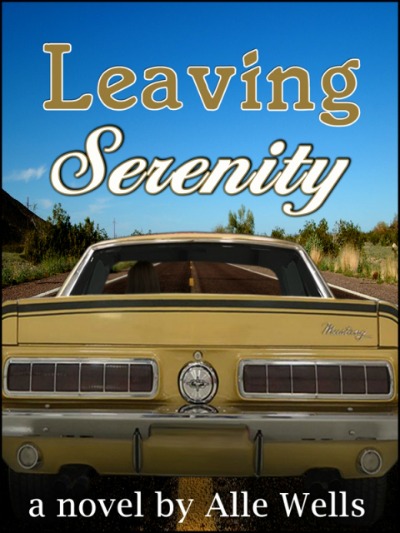
AW. My latest book is entitled, “Leaving Serenity”. Based on the life of Annette Bevels, “Leaving Serenity” takes the reader back to the quaint atmosphere of main street America in the 1960’s where everyone speaks the same language and success is measured by conformity. At an early age, Annette is dubbed a misfit, an ugly duckling, and the last child. Self-consciousness and insecurity make her feel different and unwanted by her mother, her siblings, and her peers. As a young teen, Annette seeks nonconformity and dreams of escaping the confines of small town life. At sixteen, she falls in love with Jack Harris, a romantic hippie with an unsavory past. She and Jack leave Serenity looking for the imaginary pot of gold that lies beyond the horizon. Annette changes her name and dodges pitfalls along the way. But she never looks back as she takes charge of her life and creates her own destiny.

Twenty-five years later, Annette (now Nikky) returns to Serenity to visit her dying father. Nikky is glamorous, successful, and unrecognizable to her family.  She takes a run through Serenity and relives the events that made her Nikky. The story of Nikki’s life and her journey to success is both inspiring and empowering. 


IAN. How long did it take to write the Leaving Serenity?
AW.  95 days 

IAN. What inspired you to write Leaving Serenity?
AW. Growing up in a small town under the eyes of close-knit family and peers.

IAN. Talk about the writing process. Do you write at night or in the morning?
AW. My stories talk to me early in the mornings when I’m walking in the woods, driving, or while taking long showers. I enjoy writing on my front porch from 11 a.m. until 4 p.m. 

IAN. Did you use an outline or do you just wing the first draft? 
AW.  Since I know my characters, the beginning and the end of the story set the    stage. Then I begin to work through the details.

IAN. How is your book different from others in your genre?
AW. I hope that the heart and soul of my characters shine through my work.  Each time I write a story, I feel as if I’m sharing the soul of my characters with readers. Normally, this is accomplished in memoirs. Each story I write is someone’s memoir.

IAN. Is Leaving Serenity published in print, e-book or both?
AW. At the moment, my books are only available in e-book format. I plan to produce print copies for all of my books over the summer.

IAN. What do you hope your readers come away with after reading Leaving Serenity?
AW. I hope they can say, “I know that person.”

IAN. Where is Leaving Serenity available for purchase?
AW. Amazon.com

IAN. Tell us about your next book or a work in progress. Is it a sequel or a stand alone?
AW. Each story, each life stands on its own. I have two stories in mind, but I haven’t decided on which to write next. I plan to publish at least three stories a year.

IAN. Any other links or info you'd like to share?
AW. Thank you so much for taking the time to visit with me. 
Please stop by http://allewells.com/ to read excerpts from my books, and http://allesreviews.blogspot.com/ featuring five-star Indie Book reviews. 


Leaving Serenity by Alle Wells
140 pages
Genre: Human Interest


Chapter 1

1996

My heart quickens as the black Mercedes-Benz comes to a stop. The 1960s’ ranch-style house looks shabbier than I remember, like Daddy’s old Lincoln sitting in the driveway. There’s an orange four-by-four pickup on monster wheels and a faded, black Volvo parked in the front yard. I slide my car snugly behind the smashed bumper of a blue Chrysler minivan parked on the street.

I flex my tingling hands and listen to “Happy Days Are Here Again” introduce the morning stock report on NPR and pick up the phone. I scroll to my broker’s number. “Hey, Bernie…Yeah, it’s a long way from Nashville, but I made it…Yeah, I heard. Buy all of it…I know you’ll take care of me. You always do. Bye.”

Deals worth millions of dollars don’t faze me. It’s just another day’s work. Sitting in front of this house that’s seen better days paralyzes me. After all this time, a stinging pain still lies deep in my heart. My anxiety level threatens to wipe out years of therapy. But I couldn’t get here fast enough, driving straight through the night after receiving Jeff’s call.

“How did you find me?” I’d asked.

“We do have satellite TV down here. Anyway, I called to tell you that Daddy had a stroke. It looks real bad. They don’t expect him to make it. He asked for you. Mama said that you should come home.” 

“Oh, God! Well, I’ll have to rearrange a few things, but I’ll be there as soon as I can.” 

I hung up the phone, still reeling from hearing my brother’s voice after all these years. The thought of my father lying helpless and calling for me brought tears to my eyes.

Headed eastbound on I-40, I called my assistant, my producer, and smooth-talked three major clients into rescheduling to visit a man I hardly know. I drove two hours to the state line, another hour through the Blue Ridge Mountains, and seven more hours to a dead town in the middle of nothing. Every hour, I asked myself why I’m doing this. The answer rang back, loud and clear. They want me, they finally want me.

Now that I’m here, I can’t get out of the car. My mind races through dozens of possible scenarios that I may encounter inside. Remembering my life in Serenity makes me feel like I’m spiraling downward into a bottomless pit. I tell myself to get a grip and throw my latest Coach bag over my shoulder. 

Two children playing in front of the glass door run inside as I approach the front door. A freckle-faced little boy yells, “Mom-ma! Some fancy lady is here.”
A heavy set woman with a mound of thick, dark hair steps around the gaping children. She reaches over them to open the front door. I haven’t seen my sister in over twenty years. Looking at her now, I wonder what happened to the young beauty queen I knew.

She swings the door open. “Annette? Is that really you?”

Her voice is sweet and recognizable underneath the years of added weight she carries.

“Hello, Beth.”

Beth wipes her hands on her red polyester pants and shoos the boys away. “Excuse my young’uns. Little Earl, you and Little Jeff go out back and play in the empty swimming pool.”

She motions to me. “Come on into the house.”

My sister’s careless dialect and the word, “howse,” remind me that I’m back in my hometown where everyone speaks the same language. Years of practice and expensive speech therapy have corrected my diction and inflection so that others can understand me. I remind myself that I have invested too much time and energy to fall back now.

The children run through the foyer ahead of us. Family portraits cover the gold flocked wallpaper. In one, Daddy’s athletic shoulders hover over Mama’s small frame as she holds a strained smile. Cloaked in Carolina blue and clenching a scroll to his chest, the corners of Adam’s lips turn up smugly. Jeff kneels on green turf, hugging a football. Curly, golden-brown locks frame his boyish face. Beth looks angelic, her face shadowed behind Mama’s rosette appliquéd wedding veil. Twelve-year-old, pimple-faced Annette stares straight ahead a little bit cockeyed.

Beth holds an arm out and guides me past the formal living room that’s hardly ever been used. “Come on into the den. They’re all visiting Daddy in his room. Who would have thought that a strong man like Daddy would have a stroke? It just don’t seem possible.”

She bustles around, fluffing flattened, needlepoint pillows before we sit on the velour wraparound couch. “I just know that Mama is dying to see you.”
My heart jumps with anticipation. My relationship with Mama has been a major part of my therapy and recovery. My therapist said that I’m ready to see her. I hope she’s right.

“Is she, really?”

Beth hesitates, holding a pillow to her chest. “Well, it’s been such a long time since you were here. Sure, she’ll be happy to see you.”

I manage to nod and smile.

Beth examines my face closely. “My word! You have the whitest teeth I ever saw!”

Beth throws the pillow on a lumpy couch cushion and fidgets uncomfortably. “And that hair, well, you just look so different, is all. Why, Mama might not even recognize you.”

I nod again but keep my mouth closed.

Beth calls down the hallway, “Mama! Annette is here!”