Pages

Friday, June 28, 2013

Writing and Selling an eBook With Kindle Direct Publishing

By Michael S Mitchell
The traditional route to getting published was to create your book, and then find an agent to work with you, who will finally get a publisher interested enough to publish it. The problem with all this is that your chances of landing an agent these days are remote, and even if you do, they may not be able to get a publisher for you. Both agents and publishers are inundated with unsolicited proposals and manuscripts, and they therefore reject nearly everything. If you haven't put much effort into your book, then this is fair treatment, for example if it's full of spelling errors. But we'll assume that you have worked hard, and in your opinion, and maybe that of your friends, it's ready to publish.
EBooks have changed the publishing world, and now offer you new options to publish. Of course, you can still go the traditional route to get a book published as a hardback or paperback, as well as in electronic form. However, if you just want to get to market as fast as possible, you can publish electronically yourself, at no cost, and without an agent or publisher in sight.
There are several eBook readers, but Kindle is the reader we're focusing on here. It's the best selling product on Amazon, and it looks set to dominate the market. But the principles are the same for other readers.
Putting it all together for publication
Writing your book for electronic publication is no different than for paper form. For example, a novel needs an effective plot and characters that the reader can recognise. A non-fiction 'How-to' book needs to be laid out in a way that readers can easily follow, with images as appropriate.
The first 10% of your eBook will be viewable on the Amazon site, as a sample, so make sure this is especially good, and tempts the reader to want to read more. In a novel, it's good to have some mystery in here, which the reader will want to unravel. In non-fiction, make sure you have a good topic early on, and in the TOC indicate some other tempting topics later in the book.
If you have it, use Microsoft Word, as this is the easiest to convert later to Kindle's format. But you can certainly write with other software. If you don't have a good word processor already, you can download a superb free one from OpenOffice.org (and get a free spreadsheet and other software with it).
You'll need to design a cover page at some point. If you were going the traditional route, the publisher would do this, but now it is you who are the publisher! There are free images that you can use for this at publicdomainpictures.net or you can take your own photos. Use Paint or similar programs to create an overall image about 600 wide by 900 high, pasting in any pictures you have, and finally putting your title and author name on there.
You'll also need what Amazon calls the 'product description'. Amazon say: "Write a compelling description of the book. The description of your book gives customers an opportunity to learn about your book before they make a purchase, so this is an opportunity to convince readers to buy your book." This is yet another task usually done by the publisher, and is what goes on the back cover. The ideal length is about 100 to 140 words. Not too short, as the reader won't feel they know enough to make a purchase. And not too long to be boring!
Amazon also recommends that you include a Table of Contents at the front of the book, after the Title page and copyright wording. For non-fiction this is usually straightforward, but novels often only have chapter numbers without titles. So consider splitting your novel into 4 to 8 major parts or sections, with titles, to make the TOC look good. NOTE: use the built-in TOC facility in the word processor - don't type your own, as it won't work in Kindle.
If you have kept things straightforward in your Word document, than that can be uploaded directly as your manuscript, and Amazon will automatically convert it to Kindle format. However, if it is at all complicated, or you want to monitor the whole process, you can convert it yourself, step by step as follows:
  • In Word 2003 or later save the document as Web Page Filtered. (If you have Word 2000, you can download free the 'Office 2000 HTML Filter 2.0' from Microsoft's site, and install it. Then in Word you can use File-ExportTo-CompactHtml

  • Next you need to download free software called MobiPocket Creator from MobiPocket.com, and use this to convert the HTML file to the upload format 'PRC'.

  • Yet another free download (from Amazon) is the Kindle Previewer. This lets you view the PRC file exactly as a Kindle would.
So now you are ready to publish.
Becoming a Publisher on 'Kindle Direct Publishing'
You should have your cover image ready to upload, as well as your 'product description' ready to copy and paste, and your manuscript either in Word or PRC format.
Your first step in publishing is to get an account at Amazon.com, if you don't already have one. Then you need to register as a 'publisher' with Kindle Direct Publishing at kdp.amazon.com. You can use your own name as the publisher, unless you've set up a company for this purpose. You can choose to publish to the Amazon.com site of course, but also in the UK, Germany, Canada, India, France, Italy, Spain, Japan, and Brazil. You'll need to set up how you want to be paid your royalty, either by bank transfer or by check.
Now you are a publisher!
Publishing your eBook
Now it's time to actually publish your first book. So in your home page in KDP, you click the button 'add a new title'.
After that, you follow the guide to upload your manuscript, cover page and to past in the product description.
There are some other things they'll ask you, as follows:
  • What commission do you want? 35% or 70%? This sounds like a no-brainer, but if you go for 70%, your minimum selling price has to be $2.99. As a new author, you might want to sell at 99c, in which case you have to settle for 35% Of course, if suddenly you become very popular, you can raise the price later. But it has to be said that most of the best-selling 'Indie' books (from independent authors) are priced at 99c

  • So choose your price. You can set prices too for the UK and German sites if you wish to sell there.

  • Confirm that you own the copyright.

  • Digital Rights Management. Yes or no? Basically do you want to restrict people from copying your eBook or not. It's your choice.
Finally, you 'Save and Publish', and that's it. In about 24 hours, your book will be on sale on the Amazon site. And if you're lucky, it might get featured on their special section Amazon.com/kindleindiebooks.
Otherwise, any publicity is up to you. Tell friends, use Facebook or whatever you can.
And the best of luck as an author and publisher!
Copyright Michael S Mitchell

Wednesday, June 26, 2013

Self Publishing With CreateSpace


By Claretta T Pam
Do you want to self-publish and distribute your books? Definitely, self publishing is the most alluring endeavor for every author. However, many authors just fail in their quests. There may be numerous reasons for their failure but choosing a correct platform for self publishing is one of the most essential aspects.
CreateSpace is one of the renowned companies that will help you out in your quest. Being a member of the Amazon group of companies, CreateSpace offers one of the most economical, easiest and fastest ways to get millions of potential customers. CreateSpace supports Media formats including Amazon MP3s, books, CDs, DVDs, video downloads, etc.
Do you know that you need not to make an up-front investment in inventory with the CreateSpace? This is so as CreateSpace features manufacturing-on-demand model. Therefore, your products will be produced as customers order. In addition, CreateSpace ensures the order fulfillment along with customer service. Thus, you can easily focus on promoting your titles.
Benefits of Choosing CreateSpace As Your Publishing Partner
  • No title set-up or membership fees.
  • A non-exclusive agreement - It helps keep your future distribution and publishing options open.
  • Opportunity to be a part of the growing community of passionate musicians, authors and filmmakers sharing tips and resources for success.
  • Flexible royalty model - Get royalties on the basis of the list price you set.
  • Free CreateSpace UPC or ISBN if you do not have one yet.
  • Topnotch Support: Get committed support from the CreateSpace team of experts all through the publishing process
  • Broad Distribution: Opportunity to make your book available for 'n' numbers of wholesale outlets and retail across the U.S.
  • Affordable Publishing Options: Select from a complete range of marketing, book design, and editing services that suit your budget and needs.
  • Low Member Book Pricing: Get low prices, when you order copies of your own book
Numerous self-publishers are choosing CreateSpace over all the other options available on the virtual world. With this online publishing platform, you can publish your work easily and within a short time span too. However, it also needs you to be internet-savvy to avoid the technical issues. If you want to avoid confusions, then here are some tips to make the process easy -
Edit your work before uploading- Editing is the most essential aspect of publishing your book. Many times, some misspelled or misused words remain unnoticed. It is better to get someone to do this job for you. If not, then forget about your work for a week or so and then edit the content. What it means is to read it with a fresh mind and you will notice errors quickly. Print your work on a paper and read it loudly to spot the flaws, spelling mistakes and grammatical errors. After making the necessary changes, correct the electronic copy too. Now, it is ready for uploading.
Get the file into an upload-ready formatCreateSpace needs particular formats for uploading a book to the system. You can do the conversion of Word documents to portable document format with free programs. However, you can hire the services of book-making professionals to ease your task of file conversion. 

Good cover designDefinitelyyou are a good writer with great creativity. But let your creativity be with words only. Never take the risk of creating your own cover design. Some writers do have the artistic talent, they can try it. But it is always a smart decision to have some professional aid to create cover page. Besides the texts and images, file formatting can be another important aspect of rejections. You can avoid all this stress, by hiring the professionals do the things. Keep in mind that budget will not be much of a problem as you can seek for those providers offering high quality services for less.
All in all, CreateSpace is comparatively easy to use. Many authors like this self publishing platform due to its multiple benefits. CreateSpace is a user-friendly option to ease your quest. Today, self-publishing has caught the interest of aspiring authors. You can join this trend easily with CreateSpace to get the job done.


Thursday, June 20, 2013

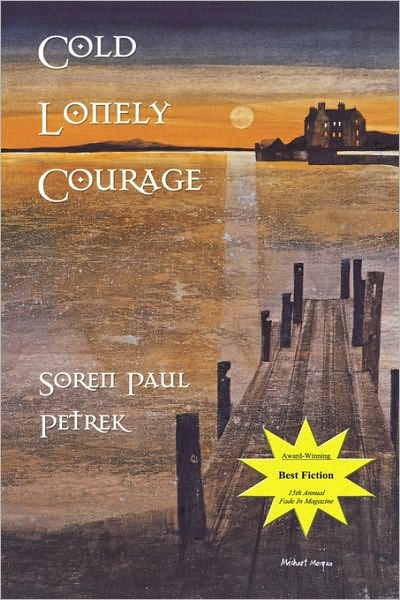
Cold Lonely Courage by Soren Petrek


Cold Lonely Courage is a Historical Thriller


Madeleine Toche races to the front only to find her brother mortally wounded during the German Blitzkrieg attack on France at the outset of World War II. His death and her rape at the hands of an SS Stormtrooper cast Madeleine down a path of death and violence as her desire for revenge reaches a crescendo. Joining the BritishSpecial Operations Executive and on Churchill's command she returns to France to "Set Europe ablaze."

CLC has 43 5 star reviews on Kindle US, more on Kindle Uk and a 3.92 for 97 ratings on goodreads.

"Cold Lonely Courage is a compelling tale of bravery and daring. Petrek creates powerful characters. The combination of fine storytelling and people you care about will suck you in from page one and glue you to the book through to its climactic ending."- James Thompson Penguin author- Inspector Vaara Series, multiple nominations for awards

Picture
COLD LONELY COURAGE will be free on kindle Friday June 21 - Sunday June 23rd.

Sunday, June 9, 2013

Indie Press, Small Press, Independent Publishing - What Does it All Mean?


There has never been a better time to be an author and seek publication of your latest novel. The internet has leveled the playing field and allows authors to sell books to fans with no geographical limitations. The challenge though is how does you publish your book. There are so many different publishing terms such as: traditional publishing, self-publishing, print-on-demand, independent publishing, small press, indie press, etc. What do they all mean?

This article is going to explain three of these terms: indie press, small press and independent publishing.

Indie Press - this type of company is independent of any of the major publishing conglomerates and generally focus on a particular niche. These companies take the financial risk in the publication of your book. They pay for all the production costs. These costs include the editing, proofing, interior layout and design, cover design and printing. They may also pay the author a small advance, up to about $2500. The author receives a royalty of about 8%. However, the author will not receive any royalty until the advance and all production costs have been repaid to the publisher. The author then assigns all the rights of the book to the publisher.

Small Press - these companies generally publish 10 or fewer titles per year and have annual revenue of less than $50 million. These companies offer traditional contracts to authors just like the major publishers. They also assume all the financial risk of publishing your book and take all the rights to your book as described above in the indie press description.

Independent Publishing - this is one of the most confusing terms. It is often confused with self-publishing as well as traditional publishing through an independent press. It is really a blending of self-publishing and traditional publishing. The author takes all financial risk but retains the books rights and also the bulk of the profits from selling the book. The publisher provides book production expertise which helps the author produce the best possible book. The publisher is responsible for choosing the printer and editing, proofing, interior design and layout and cover design if the author needs these services. As mentioned before, it is the author's responsibility to cover the costs of these services. The author uses the publisher's knowledge, expertise and connections to get these production services professionally done and reasonable prices.

If you choose to use an Indie Press or Small Press, make sure you have an attorney read through the contract to help you understand which rights you retain and which rights you are assigning to the publisher.

You have written a great book. It is now time to publish it and make it available to your fans all over the world.

by Bill Walker 


Thursday, May 16, 2013

Paul Morgan: The IAN Interview


Paul was born 1954 in Pontypridd, South Wales, which is also the home town of Sir Tom Jones. He currently lives in (the original) Washington in North East England. He read law at Jesus College, Oxford and after a spell in private practice in London spent most of his career in Industry.

He has written for most of his adult life and published works include poems and short stories. He has also written a stage play and a screenplay (which received development funding from Northern Film & Media and was long listed for an Orange prize in 2000).

He is opposed to the death penalty except in the case of users of the word ‘awesome’.


IAN. Please tell us about your latest book.
P.M. The Slipkin Papers. Eric Slipkin is not a superhero or master criminal. He is an ordinary young man living in London who generally prefers to just go with the flow. He does however have a job which is rather unusual. He works for an organisation called the Animal Rescue Service, run by a Mr Greenberg. His work involves rounding up exotic animals that have arrived mysteriously at the homes of clergymen and taking them to his contact Mr Redhead at London Zoo. Occasionally, in the middle of his animal collection duties, he gets an overwhelming compulsion to deliver cakes of all sorts to distant locations, including on one memorable occasion a cheesecake to the lower slopes of the Matterhorn. 

Other than that nothing much has ever happened to Slipkin, except for the time he was run over and the other occasion on which Mr Holyoak, his
adoptive father, blew himself to pieces in his garden shed.

One day Slipkin has just retrieved a strangely cooperative penguin from the home of a vicar in Pimlico when he is compelled to head to Northern England, his little white Citroen car laden with seventy-five boxes of chocolate éclairs. He does not know exactly where he is going or who the cakes are for; he just drives. He will know the right place and the right person when he gets there. On a high and dark Cumbrian moorland road Slipkin has an unfortunate accident: his car skids and leaves the road.

What happens from that point on demonstrates to Slipkin why it is that, when asked to explain the nature of reality, Nobel Laureate physicists laugh and shake their heads. He takes a very surprising journey in his little white Citroen into a world where the living and the dead mingle together. There he meets not only present and deceased members of the British Royal Family but also such fellow dinner guests as John F. Kennedy, Marilyn Monroe, Humphrey Bogart, Joan of Arc, Cleopatra and V. I. Lenin. This would be a disturbing enough turn events even if Adolf Hitler was not the butler.

Soon Slipkin, who has acquired a heart-bursting girlfriend, a huge fortune and some unexpected allies, including Winston Churchill and Laurel and Hardy, has to go on a hazardous journey through time and space in an effort to prevent Hitler from leaving domestic service and returning to the real world, even though Slipkin is no longer sure that there is a real world to return to. 

IAN. What inspired you to write The Slipkin Papers?
P.M. I wanted to write a full length work and as challenge I took the oddest premise I could come up with at the time. Slipkin’s animal collection job and his cake-delivery obsession were the starting points I chose.

IAN. Did you use an outline or do you just wing the first draft?
P.M. I winged it. I originally published the first draft a chapter at a time weekly on the www.ukauthors.com website so I could get some initial reaction.

IAN. What do you hope your readers come away with after reading The Slipkin Papers?
P.M. The realisation that maybe reality is a little more complicated than it may appear to the naked eye. As Mr Heisenberg said “Not only is the Universe stranger than we think, it is stranger than we can think.”

IAN. How is The Slipkin Papers different from others in your genre?
P.M. It fits into the very broad category of comic fantasy but is set firmly on Earth and is a bit lacking in vampires, spaceships and zombie babes.

IAN. What was the hardest part of writing The Slipkin Papers?
P.M. The re-writes and the abandoning of cherished episodes and ideas that in the end didn’t fit in to what passes for the plot. The re-writes took longer than the original draft.

IAN. What books have most influenced your life most?
P.M. Like most folks I guess, a strange mixture, ranging from Orwell’s 1984 and Kafka’s The Trial to Tolkien’s The Lord of the Rings and most books by Douglas Adams and Terry Pratchett

IAN. If you had to choose, which writer would you consider a mentor?
P.M. Douglas Adams. His Hitchhikers books are the funniest I’ve ever read. I would dearly love to be a quarter as funny as him.

IAN. Do you recall how your interest in writing originated?
P.M. I’ve been a constant reader since childhood and eventually I realised that writing was the only medium through which I could be creative.

IAN. Who is your favourite author and what is it that really strikes you about their work?
P.M. It’s a close call, but it has to be Terry Pratchett. He has invented a completely off the wall fantasy world which makes you think almost as much as you laugh.

IAN. Tell us about your next book or a work in progress. Is it a sequel or a stand alone? 
P.M. I am currently working on a short parody of the Janet & John books so beloved of generations of British children learning to read. Following that I think Mr Slipkin wants to take me on the next stage of his adventures.

IAN. Is The Slipkin Papers published in print, e-book or both?
P.M. It is available in all e-formats but not in print.

IAN. Where can we go to The Slipkin Papers
P.M. It can be found on Amazon at http://www.amazon.com/dp/B00BEYEFAW   
and on Smashwords at https://www.smashwords.com/books/view/293177

Sunday, April 7, 2013

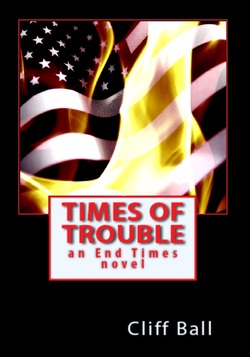
Times of Trouble and Times of Trial by Cliff Ball


Times of Trouble: a Christian fiction novel


In the near future, the U.S. government has turned into a tyranny as the government agencies known as the EPA and TSA grow with ever more power, taking away the liberty many Americans had known for over two hundred years. They’re joined by a government agency, the Health Administration, which was put together in the mid-2010′s to regulate healthcare.

Told in first person point of view, Brian Atwood, our main character, is a field agent for the FBI in Omaha. His work involves mostly cyber terrorism and actual cases of potential real world terrorism. Eventually, his wife gives birth to their third child, who has Down’s Syndrome, which does not please the Health Administration because there are rules and regulations set-up in cases like these to prevent “genetic freaks” as they like to call them, from sucking up a lot of Health Admin money. Because the Atwoods are born again Christians, they never considered aborting the baby, so now the Health people have to take him away to deal with the problem later.

Meanwhile, the Secret Service decides to recruit Brian to be the personal agent of POTUS due to his great work involving a case that dealt with terrorism that would’ve involved Offutt Air Force Base. Brian’s faith is tested every day as he deals with a man that has no morals from what Brian can see, and is tested even more when his wife finds out that she’s dying from a fast growing form of breast cancer. Trouble in the rest of the world occurs as Iran attempts to nuke Israel, which fails spectacularly, so Israel takes care of the problem. This brings condemnation from everyone, including the US, which takes the side of Iran.

When the re-election of POTUS doesn’t turn out the way he wanted it, he and his people declare the election nullified because of supposed “irregularities” with the ballots. POTUS claims that the new President-elect may take the seat sometime in the middle of next year, if everything looks to be sorted out. POTUS purges his staff of what he considers unloyal people, including Brian. At the same time, he loses his wife, but regains the son he thought he had lost.

Brian moves back to his family home in Nebraska, where we follow what happens as the country slowly falls apart. Events play out as Brian and his family sees the End Times approach. 

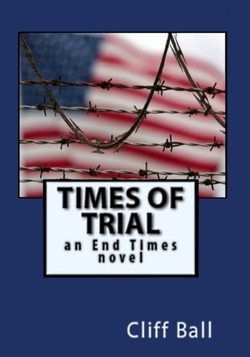
Times of Trial 


This novel is a parallel novel to Times of Trouble, but can be read as a stand-alone novel. 

A preacher and his family, the Tyler's, have a church that is dying in Arizona. They take care of the remaining senior citizens of the church, including the ones in nursing homes and in hospice. The only other family in the church, the White's, leave the same church and head to Wyoming where others are so they can attempt to escape the increasing persecution of Christians. 

Meanwhile, President Collins orders the activation of Camps across the country that will house believers who he thinks are a threat to his rule. His patron, Michael Collins, manipulates events in the Middle East and continues to manipulate events as the End Times approach.

Times of Trouble and Times of Trial at Amazon


Cliff Ball lives in Texas, born in Arizona, is a Christian and is Baptist. Has two BA's, and a Certificate in Technical Communications. Has published eight novels and 2 short stories so far. Won third in high school for a short story written in Creative Writing class for a young adult magazine. 

Tuesday, March 12, 2013

Richard Guidice: The IAN Interview


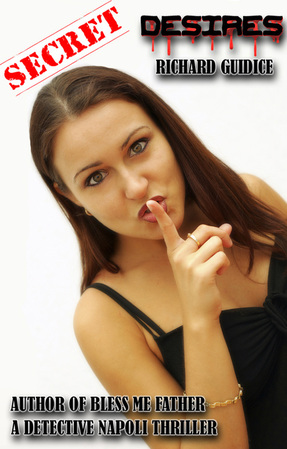
    Richard Guidice is a New York City native. His first book featuring Detective John Napoli, Romance is Dead, was a Finalist in the 2011 National Indie Excellence Awards. Writer's Digest Book Awards said, "Richard Guidice has written a well crafted murder mystery. The writing is quick and easy and makes for a fast, enjoyable read. A good book to read at night to wind down from the day." Secret Desires is the eighth novel in the Napoli series. The romance stories, Wrong Impression and Stolen Glances are also available as well as the suspenseful, Higher Education. The next Napoli book, Captured, is scheduled for a May release. Richard is also currently working on a horror story, a crime caper, and the next Napoli installment.

Richard Guidice is a New York City native. His first book featuring Detective John Napoli, Romance is Dead, was a Finalist in the 2011 National Indie Excellence Awards. Writer's Digest Book Awards said, "Richard Guidice has written a well crafted murder mystery. The writing is quick and easy and makes for a fast, enjoyable read. A good book to read at night to wind down from the day." Six novels in the Napoli series have been released. In addition, the romance stories, Wrong Impression and Stolen Glances are also available as well as the suspenseful, Higher Education. The next Napoli book, Secret Desires, is scheduled for a March release. Richard is also currently working on a horror story and the next Napoli installment.
Visit www.suspensetales.com or e-mail at richmg711@gmail.com.

IAN. Please tell us about your latest book.
RG. High school teacher Laura Gilbert begins a crusade against men who like young girls. She enters chat-rooms and engages in steamy conversations before meeting the perverts. Using the name Britney, a sixteen-year-old beauty, she lures unsuspecting older men to their demise. A victim of abuse as a young girl, Laura remains enraged at those who prey on innocent kids. When she encounters them, she metes out her own form of justice.

As the murders continue, Detectives John Napoli and Terry Franklin investigate the crimes. All of the badly mutilated bodies share a common feature, the letter P written in blood on their foreheads. Unfortunately, no common bonds between the victims are established. The detectives continue to work on the frustrating case as more men are killed.

Can Napoli and Franklin stop the killer, or will she keep claiming victims who deserve punishment?
Secret Desires is a psychological thriller that will have readers racing toward the dramatic conclusion.


IAN. Did you use an outline or do you just wing the first draft?
R.G. I write my ideas on post-it notes. From them I write each chapter in longhand in notebooks. When the novel is completed I type it up and then edit it many times. Some might think it’s a longer process, but it’s how I like to do it.

IAN. How long did it take to write Secret Desires?
R.G. Secret Desires took about 4 months. Some have taken longer and others have been quicker. It depends on the length of the book and if the writing flows continuously. I try to write a chapter every day in order to keep the story fresh in my mind.

IAN. Who designed the cover?
R.G. Most of my covers, including Secret Desires, were done by my cousin, Jerry Parrino. He did a terrific job with all of them and I’m looking forward to his future creations.

IAN. If you had to choose, which writer would you consider a mentor?
R.G. I would pick Ed McBain because he was a master with the police procedural. I’ve read all of the 87th Precinct novels as well as his other works. I think I learned from his way of introducing characters in a series and having the reader relate to them. He wrote many short novels, which is something I also do.

IAN. Name one entity that you feel supported you outside of family members.
R.G. Independent Author Network is a great support group for new writers. It helps them make contacts and receive exposure through social media. Knowing others in the industry is vital and IAN is a strong, growing community. I have also read many of the fine authors that belong to it, including John Betcher, Larry Enright, and William Potter.

IAN. Do you see writing as a career?
R.G. I would love to make writing my full-time career. Unfortunately, selling enough books to make a living is a difficult task. I think only a few independent writers have achieved high sales and made big money. The market is crowded and most writers realize making enough money to pay the bills is daunting. However, I believe success is measured not only in sales. If I reach only a few people who enjoy my books, I am happy because I have done my job to entertain others.

IAN. Do you recall how your interest in writing originated?
R.G. I used to write song lyrics when I was younger. Since I couldn’t write music and had no talent playing any instruments, nothing further came of it. Record companies want a complete song: lyrics and music, while singers who don’t write their own material won’t accept lyrics from individuals outside of the industry. As a result, I stopped writing song lyrics. Still, I felt the need to write creatively.

One night I thought of a story and wrote the first chapter in a notebook. I continued it for about a week then stopped. Writing a novel seemed too difficult and time consuming. I kept the notebook in a drawer and didn’t think much about it. A year later I moved and when I packed up my stuff I brought the notebook with me. I read what I had written and decided to continue the story. After 6 months I finished writing the book which became my debut, Romance is Dead.

IAN. Do you have any advice for other writers?
R.G. The best advice I could give other writers is to have perseverance. Never give up hope and always write the story you want to. Believe in yourself and your abilities. Whether you sell 2 copies of your book or 2 million, be proud of what you have achieved and consider yourself a success.

IAN. Is Secret Desires published in print, e-book or both?
R.G. My first 3 novels are available in print and e-book format. The last 8 have been e-book only.

IAN. Where can we go to buy your books?

R.G. They are available at Amazon.com, Barnes and Noble.com, and the print books are also available at Author House.

IAN. Tell us about your next book or a work in progress. Is it a sequel or a stand alone?
RG. My next book is also a Detective Napoli thriller, but this time it’s Maria Napoli who is the main character, not her husband, John. The title of it is Captured. It’s about a man who kidnaps young women because he wants a special angel. When they disobey him, he kills them and searches for the next woman. Detective Napoli and her partner investigate the crimes and search for the madman before he strikes again.


Sunday, March 3, 2013

VT Vaughn:The IAN Interview


VT Vaughn is the March Featured Author at The Independent Author Network


I wrote my first book between the ages of 15 and 18, over a course of two and a half years between August 1996 and January 1999. Seemingly every agent and publisher in London rejected it. I was young, it didn't matter. So I got very drunk through the 2000's. In 2009, I wrote another book. A thriller. I have neither attempted through an agent nor self-published. The same happened in 2012, with an adventure thriller. These are two books very close to me, and I intend to go forward with them at some stage in the future, more than likely under a pseudonym.
          As Fifty Shades of Grey changed the market, copies of the trilogy were thrust into my hands by my beautiful girlfriend. The criticism it received seemed steeped in jealousy, so I wanted to make my own mind up. I believe I was equally surprised, disappointed and impressed. It wasn't as bad as I'd feared, nor as good as I'd heard. More than anything, I just didn't think it was that graphic.
          So I resurrected a series of erotic chapters I'd published online in 2009-10, rewrote them and added to them to make my first self-published novel, The Uncertain Cuckold. The sales have staggered me. I quickly followed it up with The Christmas Exhibition, a prequel, and The Unwilling Cuckold, a sequel.


IAN. Please tell us about your latest book:
VTV. The Unwilling Cuckold is the 123,000 word follow-up to The Uncertain Cuckold. It picks up immediately where the last story left off, so it's difficult to say much without giving away spoilers of the first. The early part of the novel explores the darkened inner natures of Matt and Jill, the couple who comprise the main characters, and reveals more of their pasts, explaining how they got to a situation where Jill was given Matt's permission to sleep with another man, Gary, throughout The Uncertain Cuckold.


IAN. How long did it take to write the book?
VTV. Two months. I began writing The Unwilling Cuckold at the end of November 2012. The first draft was finished at the end of January 2013. The novel was planned out in advance, with a clear beginning, middle and end. Except the finished article is quite different from what I had seen in advance.

What changed? Jill changed. Or rather, I realised that Jill has a mind of her own. It doesn't matter what I plan out for her, she decides. I had seen her jumping at the chance to sleep with Gary again. Instead, Jill insisted on inflicting cuckold training on Matt. No matter what I wrote next, it seemed that nothing would appeal to her compliance.

It made for an exciting write, as Jill shaped the story. I hope the reader finds it as unpredictable as I, the writer, found it. There were sentences I started writing that I wouldn't know where they were going next, especially in Jill's dialogue. But somehow they finished seconds later, often with surprising – and sometimes disturbing – consequences.

The harlot has a mind and a heart of her own. I felt a little sorry for Matt. But it's his bed, he chose – and chooses – to lie in it.

Where will he lie next in The Undefeated Cuckold?

IAN. What inspired you to write The Unwilling Cuckold?
VTV. God knows! My girlfriend says I must be a pervert. I don't know about that. I just have an imagination that never stops. My ideas start small, but once I get in front of that laptop I hammer out hundreds, and then thousands, of words in a short space of time. I suppose more than anything, I was compelled to find out, after all these years of writing alone, if anyone actually wanted to read anything I wrote.

IAN. Talk about the writing process.
VTV. I try to write 6-7 days a week, starting every morning after I have caught up with a little tweeting to rouse my mind. I aim for a minimum 1,000 words a day. It isn't always possible, but on particularly productive days I can write 4,000-5,000 words (that is literally all day). So if I don't get the same freedom on subsequent days, so be it. I have found it very easy to write the characters of Matt and Jill. They almost write themselves. Never before have I found it so simple. It's as if they really exist, and I merely transcribe.

IAN. Did you use an outline or do you just wing the first draft?
VTV. I outline, always with a beginning and an end. That, at least, is essential. I have ideas for the middle, but I've learnt to leave plenty of room for the characters to have adventure in between. I've written novels which were entirely plotted and it just isn't as much fun. Also, I believe that if I'm not sure what is going to happen next, the chances are my readers will be just as in the dark.

IAN. How is The Unwilling Cuckold  different from others in your genre?
VTV. It's uncompromising. It makes no apologies for language or subject. If you choose to read my erotica, you must be prepared for a read which is as mentally stimulating as it proposes to be physically. I try to write as best I can, hoping my work is as good as other genres (hopefully better). My characters have been praised by readers for their three dimensions. I just hope more people read my books and enjoy them.

IAN. Is your book published in print, e-book or both?
VTV. Just e-book, for now. I intended to bring them out in paperback, but I've simply been too busy with writing, re-writing and promoting. I've been contacted by readers asking for paperback editions, and it is something I intend to do soon.

IAN. What do you hope your readers come away with after reading your books?
VTV. An intention to read the next one! Seriously, though, I just hope they are satisfied, and that the story remains in their mind for a long time to come.

IAN. Where can we go to buy your books?
VTV. My books are available on Amazon, Smashwords, Apple, Kobo, Barnes and Noble and more. The usual outlets, and of course on my #IAN1 page.

IAN. Tell us about your next book or a work in progress. Is it a sequel or a stand alone?
VTV. I'm writing two books simultaneously. Both involve Matt and Jill. One is called Sensual, Intimate & Explicit Swinging. It's a prequel, but also a stand alone novel. For each novel I write outside The Uncertain Cuckold series, I write it so it can appeal to anyone who hasn't read any of the series. These books can also serve as an introduction to the characters and their lifestyle. In Sensual, Intimate & Explicit Swinging, we explore a night of clubbing, and a couple of occasions when Matt and Jill entered the swinging world with married couple Gary and Jen.
          The other book I'm writing at the minute is Jill's Dirty Bedtime Stories, an anthology of short stories. Some are tales from Jill's past, others the present (whenever that may be). Various erotic subjects will be explored, such as bondage, threesomes, lesbian, oral, anal, adultery, voyeurism, dressing-up, spanking, masturbation and many, many more. I think it'll prove a scintillating read, especially in the modern world where readers may not have the time for long novels. This collection can be read one at a time, or several in a sitting. It's up to the reader.
          After that, I'll be knocking out the third book in The Uncertain Cuckold series, The Undefeated Cuckold.
          It's all systems go!

Q. Any other links or info you'd like to share?
A. My Amazon Pages at
Amazon.com and Amazon.co.uk

Thursday, February 21, 2013

Cliff Ball: The IAN Interview


Cliff Ball lives in Texas, born in Arizona, is a Christian and is Baptist. Cliff has two BA's, and a Certificate in Technical Communications. He has published nine novels and two short stories so far. Cliff got his start when he won third in high school for a short story written in Creative Writing class for a young adult magazine. You can find his website at http://www.cliffball.net


IAN. Hi Cliff. Please tell us about your latest book.
C.B. Beyond the New Frontier is a combination of the novels New Frontier and Final Frontier, this is the story of alternate timelines, partial political thriller, and time travel, in which President Kennedy is kept from being assassinated, but there are other unintended consequences as a result.

In 1976, Ronald Reagan becomes President of the United States, declares the U.S. will plant a base on the moon by 1980 and a base on Mars by 1989. The Iranian Hostage Crisis occurs, but Reagan issues a stronger response by rescuing the hostages within two weeks of it happening. As a result, Osama bin Laden rises to power earlier than he normally would have in the prime timeline. Meanwhile, The Soviet Union decides to build a starship that will travel to the stars because they want to one-up the United States. The ship launches, but soon becomes lost, while the Soviets pretend it isn't.

In the early 1990's the U.S. and the Russians join forces to find the Soviet starship, which leads the joint venture to the other side of the galaxy by means of a wormhole. When they attempt to return to Earth, they find themselves in the past, where they try to fix certain events in the past while they wait to re-route the Soviet starship and for history in general to catch up to where they launched the joint mission to begin with.

Things go wrong as events do not play out as planned and numerous cases of unintended consequences result from the multiple attempts at fixing the timeline.

IAN. What inspired you to write Beyond the New Frontier?
C.B. I’m into alternate timelines and I wanted to write a novel where the U.S. keeps going with the Moon landings and creating bases on the Moon and Mars. It really saddens me that the U.S. currently has no way of getting into space without relying on another country.

IAN. Did you use an outline or do you just wing the first draft?
C.B. I used an outline, because I found that just winging it doesn’t work for me all that much.

IAN. How did you come up with the title?
C.B.I chose New Frontier for the separate novel because JFK talked about a “New Frontier.” When I combined New Frontier and Final Frontier, I decided to name it Beyond the New Frontier, because it sounded interesting. At first, I was going to choose “To the Stars,” but I don’t think that worked as a title.

IAN. How much of the book is realistic?
Since it’s alternate history, it’s based on stuff that happened, but I fantasize it and twist it around.

IAN. What book are you reading now?
C.B. I’m currently reading three books at the same time: reading a biography of Andrew Jackson, trying to get through 20,000 Leagues Under the Sea, and catching up on the Wizard of Oz series because I didn’t read them as a kid.

IAN. Are there any new authors that have caught your interest?
C.B. There’s a lot of indie authors I’ve read that I would’ve never heard of before if we didn’t have the opportunity to publish ourselves. Authors like K.C. May, M.R. Mathias, JC Phelps, to name a few.

IAN. Do you see writing as a career?
C.B. In this economy, I’m kind of stuck with writing as a career.
IAN. Do you recall how your interest in writing originated?

C.B. My parents bought me a lot of books as a kid, most of them were young adult and above when it came to reading comprehension, and I thought I could do it too one of these days, so I began writing random stories when I was ten.

IAN. Is there anything you find particularly challenging in your writing?
C.B. Writing dialogue that doesn’t seem stiff and stilted.

IAN. Is Beyond the New Frontier published in print, e-book or both?
C.B. Both, but only on Amazon since Beyond the New Frontier is in KDP Select

IAN. Where can we go to buy Beyond the New Frontier? (links)
C.B. Please follow this link to Amazon.com

IAN. Tell us about your next book or a work in progress. Is it a sequel or a stand-alone?
C.B. I actually have two works in progress. One is a prequel to Times of Trouble, which explores the Evans family and how they came to power, while a secondary storyline is about the Atwood’s, who come into contact with the Evans’ in the early 1970’s, and then the story will go until around the beginning of Times of Trouble. The other work in progress is about a young Christian who sings only in church, gets discovered by a producer of a national talent show, he wins, and we see him go through the ups and downs as a result of the consequences of wanting to be rich and famous. This is also set in the same period as Times of Trouble and Times of Trial, but won’t be political in nature.

Monday, February 11, 2013

Daniel Saynuk: The IAN Interview


Daniel Saynuk


Legally blind writer Daniel Saynuk has a special fondness for guide dogs. His own beloved guide dog helps him more easily live his life in his home town of Baltimore, Maryland. Daniel began writing stories while pursuing his Business Administration degree, and established his own company to bring the book Guide Doggie to life. He is passionate about educating others about the valuable services guide dogs provide to the visually impaired.


IAN. Please tell us about your latest book.

DS. Being visually impaired I had been around people who used guide dogs in order to gain more independence. Fairly recently I decided I would like one of these wonderful working animals for myself. After being accepted into a guide dog school and going through the process of learning how to work with my new guide dog, I began to see other people had questions and wanted to pet the dog while he was working on guiding me. This was a problem since the dog needs to concentrate on guiding while working not playing. In my opinion the guide dog schools do all they can to teach the public but to me people still have questions. I didn’t know anything about these dogs prior to being trained on how to use one so I know how people feel because I had many questions during training. I’d never even had a dog much less one that was trained to guide.

So as a result of all this I wanted to make a book that not only could teach people about what a guide dog does and things they should know when they see one, but also a book that was fun. So I added illustrations to make the book more entertaining.


Then I figured I may as well ad some word games too. And the illustrations should be able to be black line drawings so the reader can color in the pages how ever she or he wants. So as a result Guide Doggie was born.

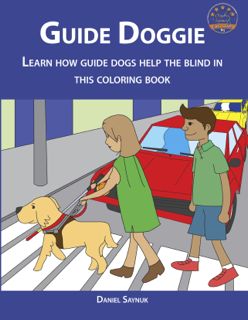
Its Guide Doggie: Learn How Guide Dogs Help The Blind In This Coloring Book. It's a 8.5 by 11 inch paperback that tells the story of a dog becoming a guide dog and the chores he completes on a daily basis. Each page of the story can be colored in. There is also a fill-in-the-blank portion where you use the previous pages to see what words are missing for the blank spots. That section also has coloring pages as well. A crossword puzzle, word search, and word jumble word games are also there. The games use information on guide dogs for the clues and answers. If you don’t know the answer its no big deal because each word game has an answer page also to help answer the games.

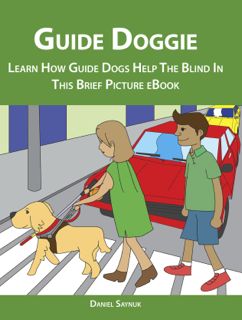
The ebook version that is just the story of the dog with no word games or coloring pages but the ebook does have the same illustrations as the paperback and in full-color. That ebook is called Guide Doggie: Learn How Guide Dogs Help The Blind In This Brief Picture eBook.

IAN. Did you create the drawings and the puzzles?

DS. No, I had someone else do the drawings for me. The puzzles were created with software I purchased. I looked into using free options online but I preferred the puzzles produced from a software.

IAN. How long did it take to write Guide Doggie?

DS. The writing took maybe a week or so. I did a draft of a bunch of ideas. Then I had to decide how to weave it all together. For instance it the book starts with the dog as a puppy, moving through guide dog school, getting matched with a person the dog will guide etc.

IAN. Talk about the writing process. 

DS. I found it better to write down things in the evening. I think about what
I’ve got so far during the day. Then I try to add a little to it in the evening
while also rereading what I’d wrote already.

IAN. Did you use an outline or do you just wing the first draft?

DS. I just wrote down a bunch of ideas at first. Then I kept looking it over
thinking about what else could go in the story. I wrote some of the page titles
and wrote a description of what should be happening in the picture. Then I
wrote the sentence on each page under the headings of the pages based on
what I wanted to have in the picture for that page. That way the picture and
the heading of each page matched up perfectly.

IAN. How is your book different from others in your genre?

DS. As far as I’m aware there’s only been a few other books like Guide Doggie put out to teach the public about guide dogs. I don’t know of any that are told
from the dogs perspective that also include pages to color and activities other
than my Guide Doggie coloring book.

IAN. Is your book published in print, e-book or both?

DS. There is both a print and ebook version The print version is called Guide
Doggie: Learn How Guide Dogs Help The Blind In This Coloring Book. The
ebook is called Guide Doggie: Learn How Guide Dogs Help The Blind In This
Brief Picture eBook. The paperback has the activities and pages to color as
where the ebook is is the story of the dog only. But its pictures are in full-
color.


IAN. What do you hope your readers come away with after reading Guide Doggie?

DS. I hope readers learn that interaction with a guide dog should be avoided
while the dog is working. Also know that when a guide dog is not working he
acts just like any other dog. There are some toys and treats that need to be
avoided but in general a guide dog acts like any other dog when it is not
guiding someone.

IAN. Where can we go to buy your book?

DS. The paperback can be purchased at Amazoncom

It is also for sale on Barnes and Noble’s website as well as can be ordered
through Ingram.

The ebook can be purchased on Amazon.com/Kindle 

IAN. Tell us about your next book or a work in progress. Is it a sequel or a stand alone?

D.S. I’d like to write a fictional story. I began writing it a few years ago and have a few chapters of it already.

IAN. Any other links or info you'd like to share?

DS. You may visit my website at:
http://www.danielsaynuk.com