Pages

Thursday, December 15, 2011

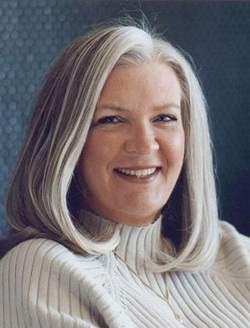
Lori L. Otto: The IAN Interview


After an exhilarating, collaborative writing project, Lori L. Otto had an idea for an original novel. The characters and their rich stories would keep her awake at night, and even with barely any sleep, she felt more alert and alive than she had in years. Her days off were spent in cafés, sandwich shops and bookstores, feverishly trying to get all of the details out of her head and onto paper.
In early 2009, after a few months of writing, Lori decided to tweak one chapter from the novel-in-progress and enter it as a short story in the 78th Annual Writer’s Digest Writing Competition, where she was awarded Honorable Mention in the Mainstream/Literary Short Story category.  This recognition encouraged Lori to pursue her true dream to become a writer.
Two years later, she completed three novels in the Emi Lost & Found series.  Anxious to deliver her stories to the world, she decided to self publish all three books in spring of 2011.
IAN. Please tell us about your latest book:
LO. Originally, the three books in the Emi Lost & Found series were going to be one book.  When the stories of Nate, Emi and Jack simply couldn't be confined to the pages of one novel, I decided to break the book up into three smaller (but still quite large) novels.

Lost and Found (book one): When artist Nate Wilson falls in love, he falls hard. The problem is, he’s only been in love once, and the girl of his affections is his best friend, Emi Hennigan. In high school, the two bonded over painful breakups, and swore off a relationship to save their friendship. Thirteen years later, Nate has had more than his share of emotionally-unfulfilling, sexual relationships with beautiful women to distract himself from his true romantic feelings.

When a once-in-a-lifetime opportunity takes Nate away from his friend and his comfortable lifestyle, he is forced to reflect on the distinct void that Emi’s absence leaves in his life. To Nate’s surprise, Emi has a similar experience; but as the friends embark upon their journey toward happiness together, destiny reveals other plans for Emi.

Time Stands Still (book two): Depression threatens all the relationships in Emi Hennigan’s life after a near death experience leaves her injured and feeling alone in a world she barely recognizes. On a night that is supposed to signify a new beginning in her life, she loses everything she loves.

It’s on that very same night, though, that Emi has a chance meeting with a man from her past who has the power to bring her more happiness than she’s ever known. Jack Holland is on a mission to rescue Emi from the pain that’s been consuming her, but his patience is tested as Emi holds on to the memory of the only man she’s ever truly loved.

Never Look Back (book three): Jack Holland finally has everything a man could want. After a lengthy courtship that has required persistence and self-restraint, Emi Hennigan– the woman Jack has been fantasizing about since college– has fallen in love with him. Together, the couple sets out to create their own happily-ever-after.

It’s only when Emi delivers some unwelcome news that Jack begins to question everything about the woman he loves. It will take a considerable amount of understanding and sacrifice for Jack to accept the future Emi can offer him– a future he never imagined for himself.

IAN. How long did it take to write the books?
LO. It took about two and a half years to write all three books in the Emi Lost & Found series.

IAN. What inspired you to write the books?
LO. I read another popular series and I felt like I could do a better job at writing a love story that was realistic, relatable and romantic.

IAN. Talk about the writing process. Do you write at night or in the morning?
LO. I write whenever I can.  Over the past few years, I've had crazy work hours, with shifts starting as early as 7am and going until midnight.  I try to carve out a little time every day to write and/or brainstorm.  On my days off, I like to start my day with a muffin at a local cafe and a few hundred words.

IAN. Did you use an outline or do you just wing the first draft?
LO. For the Emi Lost & Found series, I had a detailed outline that I stuck to for the first draft.  When that was complete, I filled in plot holes and wrote some new scenes to better develop the characters.  The process has become more fluid, though.  With the series I'm working on now, I have a general idea of the beginning and end and a few high/low points along the way, but the characters have derailed me plenty of times. 

IAN. How are your books different from others in your genre?
LO. Well… they're different in that they really don't have a genre.  Are the books romantic dramas or dramatic romances?  The books were meant to be women's fiction, but some of the more adult situations make them encroach on the romance genre a bit… but I wouldn't consider them true romance novels.  They're simply romantic fiction.

IAN. Is your book published in print, e-book or both?
LO. It's published in print by CreateSpace, and in ebook format pretty much everywhere ebooks are sold.

IAN. What do you hope your readers come away with after reading your books?
LO. I want the readers to have an emotional connection to the characters.  I want readers to care about them at the end of the day.  I want them to see these people as friends.

IAN. Where can we go to buy your books?
LO. Amazon.com, iBooks, the Nook store, the Amazon Kindle store, Smashwords, Sony eReader

IAN. Tell us about your next book or a work in progress. Is it a sequel or a stand alone?
LO. I'm working on four other books right now.  Three of them are somewhat of a sequel to the Emi Lost & Found series.  The second series follows a character the reader meets in the first series, and sort of mirrors the same format as Emi Lost & Found.  The fourth book is my 2011 NaNoWriMo novel.  It will be more of a young adult, coming of age story.  I've been winging this one, but I really am pleased with the progress.  I will probably continue writing this novel until it's finished, and then go back to the second series.

IAN. Any other links or info you'd like to share?
LO. http://www.loriotto.com


Lost and Found: Book One of the Emi Lost & Found series by Lori L. Otto
402 pages
Women's Fiction

  
Nine years is a long time to hold on to a feeling– one that I felt for only ten seconds of my life. Logically, I know it was twenty seconds at most, but the impact it left made it seem like forever.  If I allow myself to think about that night– and I never do– I can remember how the air in my lungs felt completely effervescent, how my chest tightened around my racing heart, how my skin seemed to feel everything around me.  Hands.  Lips.  A cool, fall breeze.  I even thought I could feel the stars sparkling above, prickly and scintillating in their luminescence. 
Nine years is a long time, but with a feeling like that, I doubt I’ll ever let it go completely.  It’s a shame I don’t have a good sense of what actually caused that feeling, but my imagination has filled in the blanks left by the drunken oblivion of that night.
I chose stupid ways to rebel in college.  Of course, drinking was the norm for most students at school, but my actions back then lingered more toward self-centered and inconsiderate.  Had I known I’d see Nate at any time that evening, I never would have consumed as much as I had.  To this day, I mostly drink in moderation when we’re around one another.  A better friend may give up drinking entirely, but even he has a little alcohol every now and then.  And he doesn’t have any friends better than me, nor do I have any that rank above him. 
As I wait for Nate, hurriedly getting ready for a night out with his current love interest, I wonder if he makes all women feel the way I felt for those ten glorious seconds.  That would explain the long string of girlfriends.  But maybe that feeling was fleeting.  Maybe it was only meant to happen once, to stir up those emotions and questions for those brief seconds.  Maybe other women acted on that fleeting feeling... and then maybe it just resulted in fleeting relationships.  After all, they’re just emotions.  By nature, emotions are not stable, nor are they reliable.  They come and go.  Just as his girlfriends do.  In quick succession.  They come and they go...
Does it make any sense at all to continue to search for that feeling?  I shrug my shoulders as if I’m answering my own question, having my own conversation with myself.  Whether it makes sense or not, I’m on a mission to find it again someday, with someone.  I just hope that my pursuit doesn’t keep me from seeing things in the periphery.  From seeing that what I’m looking for is actually right in front of me.
“Well?” he asks, my eyes focusing on what I would call a blouse on any day.  It almost doesn’t compute.  Men don’t wear blouses.  Nate does not wear blouses.
“You’re not wearing that.”  I can’t contain my laugh.
“What?” he asks, lingering in the doorway to his bathroom.
“That... that... is it a shirt?” I ask, cringing at the light pink button down with... are those ruffles?  I take a few steps closer to confirm the strange quarter-inch of fabric peeking out from under the center hem.
“Yes, it’s a shirt,” Nate argues, his voice not as confident as it was only seconds before.
“Who picked that out?”
“My personal shopper,” he defends his clothing choice.  “It’s Italian... or French, I don’t remember.”
“Wait, your personal shopper.  Is she a jilted lover?” I ask him.
“She wasn’t at the time,” he confesses as he takes a long, hard look at himself in the mirror.
“Well, I think it’s safe to say she didn’t want any other women hitting on her man.  You can’t wear that.  Seriously.  I don’t know what kind of man would wear that sort of thing.  Gay men have much better taste.  And straight men would run screaming.  Wait, why aren’t you running, or screaming?”
“Damn it, Emi,” he says, frustrated, practically tearing the monstrosity of a shirt off of his body.  “I don’t have time for this.”  He walks quickly back to his closet and takes a look inside, stretching his back subtly.  I hate it when he walks around without his shirt, and decide to tell him so.
“I hate it when you walk around without your shirt on.  It... bothers me.”  And yet, I can’t tear my eyes away.
“I know you do.  But did you not just tell me ten seconds ago that I couldn’t wear that shirt?  You asked for it.”  He throws the pink thing at me playfully.  “What should I wear then?”
“A regular American dress shirt, Nate.  Don’t you have anything like that?”  I push aside t-shirt after t-shirt in his closet until I find a pressed white button-down shirt, still in the plastic bag from the cleaners.  “Here.”
He takes it from me and walks back into the bathroom.  “You need a belt, too,” I remind him, catching a glimpse of the waistband of his light blue boxers underneath his loose-fitting jeans.  “And you’ll probably want to wear an undershirt with that,” I yell to him.
“What else, Mom?” he teases me, crossing the room to his dresser and pulling out a thin, white t-shirt.  “And I’m not wearing jeans, don’t worry.  I’m wearing that.”  He points to a hanger holding a pair of black pants and a matching jacket.
“Wow, slacks and a coat.  Looks suspiciously like a suit...  This must be getting serious.  Did you get her a corsage, too?”
“Shut it,” he warns me with a smile.  “Well at least my wardrobe choices are keeping your mind off of... what’s his name?”
“David,” I remind him for the twentieth time, watching him pull on the tight undershirt as he goes back into the bathroom.

Monday, December 12, 2011

Justin Dennis: The IAN Interview

Justin Dennis is currently attending Whittier College and majoring in Creative Writing. He was born on February 14, 1993 in Virginia but was raised for most of his life just outside of Seattle in a city called Sammamish.

He grew up playing soccer and absolutely loves the sport, but reading and writing also top the list of his favorite hobbies. He has always seen fantasy stories as a powerful way of portraying real world issues, and hopes to provoke thought and inspire good morals through his writing.


IAN. Please tell us about your latest book.

J.D. My latest book, Through the Portal, is a fantasy in which the main characters—Jem, Oliver, and Sierra—explore a fantastical new world called Callisto. In this world, magic is possible but is heavily suppressed by the evil Veroci Regime. There is also a legend about the Red Dragon which dwells deep within the cave.

On their quest across Callisto, the heroes are hunted by the Dragon and by the Regime, although they don’t understand the connection between all of it. Something much more sinister is at work though, something that will lead them across all six regions of the world and force them to confront all their worst fears.

IAN. How long did it take to write Through the Portal?

JD. About a year. I began in September 2010 (although I’d been keeping notes of ideas for a novel for months before that) and published at the end of August 2011. All the writing took me about 9 months, and then editing, revising, and writing about 3.

The crazy thing is that this actually started out as my senior project in high school. I’d always wanted to write a novel, and I’d given a few weak attempts at some stories, but never really committed to a book. When I had to decide on something for my year-long project… I figured a novel would be perfect!

So really I have my high school to thank, because without the senior project I may have never found the time/dedication to write out my novel. It became so much more than a senior project though; I lost track of the hours I spent on it, and even after I passed I put in countless, countless hours on it. I really do love this series, and I’m glad I had the opportunity to get it all out on paper.

IAN. What inspired you to write the book?

JD. I just had so many ideas floating around in my head, you know? There was no specific instance where I was like, “THIS is what I want to write about!” Instead it was more of a gradual process: “Well, I want to incorporate this, and I think this is important, and this would be a great twist…”

I knew though that I wanted my book to take place in a completely made-up world, because I wanted to opportunity to design creatures and develop rules for society and so on. Like the roxnoar. Think of a bear with an exoskeleton. The outer spine runs down its back and forms a spikey tail, with sharp bones extending down its arms and out into claws. Ferocious, right? That’s only one of the many things I had a really fun time creating and naming for my book. So I guess it was also my drive to create and imagine new and fantastical things that inspired me to write.

IAN. Talk about the writing process. Do you write at night or in the morning?

JD. Morning writing has never worked out for me. I’ve tried, really! But I just can’t. I’m too sleepy; I can’t focus. For some reason though, I’m generally wide awake in the middle of the night and can pump out some of my best writing. I don’t really understand why I’m semi-nocturnal.

IAN. Did you use an outline or do you just wing the first draft?

JD. Definite outline. Since my book is the first in a trilogy, I wanted a clear plan of where I was going to go and what was going to happen at what point. So it began as get from point A to point B. Then I added point C, then D, then F… I think I went through the entire alphabet about 836 times, and eventually my plot had grown into a complex, wonderful tale with all these characters I cared so much about.

I have noticed though that my outline changed drastically as I went along. For Through the Portal, I probably rewrote the outline as I went through it at least 4 or 5 times, not including all the edits I made to those 4 or 5 rewrites. It’s just that right when you think you know where you’re going with a story, you start to write it and realize that that’s not right at all. What looks good in an outline, as pieces to a puzzle, doesn’t always match up perfectly in character dialogue and story progression. So while there was an outline, it was constantly changing.

IAN. How is Through the Portal different from others in your genre?

JD. The thing that always catches people with my book is the, “Oh, just another made-up fantasy world?” But it’s so much more than that. There’s a real connection between Earth and Callisto (the world they travel to) and Kelados (a world that is hinted at in Through the Portal but which becomes more important in book two). It brings together these worlds in a way that has never been done before.

Not to mention the magic is different. I always thought it was strange that magic could only be used through wands. (Sorry Rowling! I still love Harry Potter!) I mean, real magic would be accessible at any time, right? And it would require a fair bit of energy? So that’s what I started with. In Callisto, magic requires energy unless you conjure sylph, a flexible semi-physical-liquid blob that is controlled telepathically and can do almost anything the conjurer’s desires. Imagine the possibilities! Many Callistonians use it to drive their quads (cars) with minimal energy by wrapping it around the wheels.

And finally, the division of Callisto is unique. There are six regions, and each region seems to think they are the best. There is a lot of hatred between regions, and the Argonians (Argo is the first region Jem and Oliver visit) even deny the existence of the other regions. A main theme I try to portray through my book is acceptance, and the six regions of Callisto offer a starting reality of how confrontational and non-accepting our own world really is.

IAN. Is Through the Portal published in print, e-book or both?

JD. Currently it is offered in e-book, but the print version will be ready for order on December 13, 2011. I’m very excited to be having the print edition released!

IAN. What do you hope your readers come away with after reading your book?

JD. I hope they can see that it is important to help people in this world. One of my favorite characters is Oliver, because even though he is so much unlike me, he is a very gentle-hearted person and always has to help shy kid, or the one being picked on. I hope people can learn from Oliver and be accepting and helpful too, because being apathetic to a bad situation is just like contributing to it.

IAN. Do you incorporate anything from your real life into your writing?

JD. In Through the Portal, much of it is simply a product of my mind, but parts of course are drawn from my experiences. Jem is like me, an introvert, but other than that we aren’t very similar. His experiences with his parents and grandparents are nothing like mine. But the bickering between Oliver and his little brother, Jordan, are similar to how my brother and I argue, although I’m nothing like Oliver.

Near the beginning of the story, the burning down of a building (can’t tell you which!) marks the start of the trio’s adventures across Callisto. This was inspired by my own house burning down when I was in the 8th grade. It was a reality check for me, just like it is for the heroes in Through the Portal.

IAN. Where can we go to buy your book?

JD. Depending on your e-reader, you may want to visit one of these retailers:

Smashwords: www.smashwords.com/books/view/84302

Barnes and Noble: www.barnesandnoble.com/w/through-the-portal-justin-dennis/1105128562

If you can’t stand e-reading, I will have a print edition of my novel out by December, 13, 2011 available through Amazon, which should be linked to the Kindle edition mentioned above. In the meantime, stay connected with me on Twitter (@JustinDennis4) and I’ll let you know when it is released.

IAN. Tell us about your next book or a work in progress. Is it a sequel or a stand alone?

JD. My next book is a sequel to Through the Portal, and is so far unnamed. I’m working diligently on it, but my writing time is scarce with all my schoolwork. I’m really excited about it though, because it takes all the unique aspects of Through the Portal and really steps up the action. Not to mention all the secrets from the first book that are revealed! Also, Through the Portal is told entirely from Jem’s point of view, and book two will be told from several different point of views, giving the reader their first look at the worlds of Callisto and Kelados through other eyes.

IAN. Any other links or info you'd like to share?

JD. I would be honored if you would visit my blog: http://justindennisofficialblog.blogspot.com/p/my-book.html

Or follow me on Twitter: https://twitter.com/#!/JustinDennis4

Through the Portal by Justin Dennis

246 pages. Young Adult Fantasy

“You must go into the cave to get home,” said Atychis plainly.

“I don’t really wanna go home yet,” said Oliver. “I want to explore!”

“But Olive,” said Jem, “you remember what Atychis said about the Regime! Do you really want to die here?”

Oliver turned to Sierra as if she would hold all the real answers, “Is there really a thing called the Veroci Regime that will kill us if they find out we aren’t from Argo?” he asked her.

“Y-yes,” said Sierra delicately. “I’m sorry, but that is definitely true. The Regime is very… oppressive.”

“So you must go home,” spat Atychis, turning and walking towards the cave entrance. “Follow me!” he yelled.

“No!” cried Sierra, but she did not move from her spot. “If you go in there, the Red Dragon will kill you!”

“Lies!” came Atychis’ voice from inside the cave.

“It’ll kill him?” said Oliver. “Then I can’t let him go in there!”

With that, Oliver took off running into the cave.

“Olive! Wait!” yelled Jem, who then took off after him. He didn’t really care if the Red Dragon killed Atychis, but if it killed Oliver… that wasn’t an option. Behind him, Jem faintly heard Sierra yelling at them to stop. But he wasn’t going to stop until Oliver was safely out of the cave.

He ran deeper and deeper into the cave, until there was absolutely no light to see by. His bare feet were smacking against cold hard rock and he bumped into the walls a couple times, bruising his shoulders, but he just kept yelling for Oliver to come back. He wasn’t going to catch him though, and he was seriously wondering how Atychis had run so fast through the cave.

Then, a powerful growl shook the entire cave and Jem was forced to stop. A dark red glow was coming from the end of the cave. He couldn’t see anything down there, but it illuminated the wall beside him, which had a few lines written on it in swirly red ink:

Be cautious if you must enter this cave beyond the hills,

Because deep inside it lays the Red Dragon who kills.

If you are reading this now,

It might not be too late.

But if you hear the Dragon’s growl,

It has decided your fate.

“Oliver!” yelled Jem. “We have to get out of here!”

And that’s when he saw the big, fiery red eyes of the Dragon light up from the end of the cave, and Oliver came running straight past him yelling, “Let’s get the hell out of here!”


Saturday, December 10, 2011

J.P. Kurzitza: The IAN Interview

I’m a procrastinator by nature, so when I took on the responsibility of being a Stay-At-Home-Dad (SAHD), I was forced to “grow up” and learn to keep things organized. I have no doubt that this was a major contributing factor to me becoming an author.

In my spare time I enjoy scrubbing toilets, washing dishes, and changing diapers (it’s funny what types of activities give you enjoyment once you become a SAHD). I also enjoy all major sports, I’m a huge movie buff, and I like messing around with Photoshop—sure helps with designing book covers.

One thing about me that will probably make other authors cringe is the fact that I really don’t like to read. I know it sounds sacrilegious or counter-productive to being a writer, and I realize that the #1 piece of (erroneous) advice successful authors always give is “read, read, read”, but I just don’t believe this at all. And I’m the perfect example that you don’t have to be an avid reader in order to become a successful writer. Don’t get me wrong, I do read, just not excessively. I simply don’t find it very entertaining. Writing, on the other, is something I find extremely entertaining and fulfilling, and would gladly spend hours a day doing it.


IAN. Hi J.P. Welcome to the IAN blog. Please tell us a bit about the J.A.S.O.N. D. series.

JPK. I’ll begin by summing up the J.A.S.O.N.D. book series with one synopsis sentence: 6 teenaged boys, mysteriously connected to each other and to mythological folklore, must rid the world of an untold evil.

The first book in the J.A.S.O.N.D. series (an acronym for the last 6 months of the year, July – December) is aptly title July, and covers events that transpire during this month. The story begins with a boy with a tragic past—Jason Dee—who, while attending the funeral of his late great-grandfather, discovers that he is more than what he appears to be, and that his name is no ordinary name. Jason recently lost his father and one of his arms in a freak accident that left him depressed and questioning his own worth. He soon discovers that the most profound worth usually resides from within, rather than on the exterior.

The story continues with Jason discovering another boy sharing the same name and last initial as him, and together they are thrown into a mythical world of mystery, danger, and adventure. As events begin to unfold that affirm the slow rising of an absolute evil, Hell-bent on reigning over both the real world and the Myth realm, Jason realizes that each month another Jason D. must be found, and that only through their combined powers, attributed by their respective astrological signs, will they ever have a chance at victory.

IAN. How long did it take to write July?

JPK. I always tell people that this first book was my “learn-as-I-go” book. I had no concept of pace, or organizational skills, or writing voice, or even how to type properly. So all that, coupled with the fact that I needed to come up with the entire series story before beginning each individual book, took about 4 years. I am thrilled to say that since finding my writing voice and learning to type much faster, my following books will be churned out much quicker.

IAN. What inspired you to write the the JASON series?

JPK. Two things. The first: my boys. I always noticed while I perused the YA section in bookstores that almost every book—according to the book covers—seemed to deal with themes relating more to young women. That frustrated me and still does, so I wanted to write books that not only anyone could enjoy, but particularly boys. Enough with the video games, lets get them reading more!

The second thing was my name. It’s Jason, and at a very early age I saw a pattern with the last several months of the year. If you abbreviated July through November just using the first letters of each, it spelt JASON—me. I though that was so cool growing up, and was convinced that this must have meant something special. So when I started developing the idea for my book series, I figured I’d tighten things up a bit and include the month of December in with the rest, and use it as the initial for the last names. Everything sort of ballooned from that point on.

IAN. Talk about the writing process. Do you write at night or in the morning?

JPK. Because I’m a SAHD, the evenings are always more productive. But now that I’ve figured things out as for as how to write and publish, I’ve also begun writing in the early mornings, too. This way I’m hoping to double my output and therefore release more novels quicker.

IAN. Did you use an outline or do you just wing the first draft?

JPK. Oooh yeah—I’m a huge outline guy. In fact, you might say I’m a bit fanatical about it. When I plan, I usually plan 3 chapters at a time before I continue writing. Each chapter is broken down into roughly 3 scenes that I develop before even attempting to write. My goal for each chapter is generally between 3000-3700 words.

I even wrote a free e-book for aspiring and seasoned writers alike on how to organize a taut fiction story using two proven story templates I developed. If it weren’t for such organizational techniques as well as some great free authoring software that was extremely handy, I’d probably still be working on chapter 1!

IAN. How is your book different from others in your genre?

JPK. It’s totally original. I know everyone says that, but it is. Although the mythological and astrological themes may have been written about already, my months-of-the-year idea and how I incorporate that and intertwine it all with the other themes is truly unique and, frankly, a bit complicated.

Also, I don’t know of many protagonist heroes with a handicap or obvious physical deformity. I wanted to put my character behind the eight-ball right off the hop, and make him very sympathetic. That’s not to imply that amputees are not capable, contributing members of society, but when you’re facing a giant at the gates of Hades, or trying to scale Mt. Olympus with one arm, things get a bit tricky. You truly do wonder how this boy could ever get through some of the circumstances he gets into in the book.

IAN. Is “July” published in print, e-book or both?

JPK. It is currently only available as an e-book. To be honest, I’ve never even tried to submit my manuscript to an agent or publishing house. The way the publishing world is shifting and with the ease and speed that I’m able to develop, publish, and distribute my books, not mention all the control I have, I don’t know that I’ll ever go the traditional route. But let’s be frank, money does talk…

IAN. What do you hope your readers come away with after reading your book?

JPK. A sense of excitement and an insatiable appetite for more. That’s ultimately what we as writers want from our readers—we want them wanting more. We want them to want to keep reading and find out what happens next. I don’t want my readers to have to put down my story when they take the bus, or go to the school concert, or go to the bathroom. I want them wanting more!

IAN. Which writers have influenced you the most?

JPK. No question J.K. Rowling and Stephenie Meyer, not so much for what they’ve written, which itself is amazing, but more for who they were before they became successful.

I can relate to Meyer a bit better, simply because of her life as a stay-home-mom with 3 boys and me being a dad to three boys at the time. She was a huge inspiration to me during those early days when maybe I complained about not having enough time to work on my craft.

And J.K. Rowling, because she literally had nothing at one point in her life, other than an extraordinary idea, and the unyielding will and desire to see it through. There’s no way she could have foreseen her stories pulling her out of poverty and making her hugely successful. She obviously had a passion for writing and creating rich characters and stories as evident by her famous writing marathons in coffee shops and at her flat. She is an extreme example of what perseverance can do.

IAN. Where can we go to buy “July”?

JPK. My website, www.jpkurzitza.com and follow the links.

IAN. Tell us about your next book or a work in progress. Is it a sequel or a stand alone?

JPK. My next book is the sequel to July—book #2 in the series—and I am currently writing Ch. 6 of the first draft. Following the theme of J.A.S.O.N.D. and the months of the year, it’s aptly titled August, and should be out sometime in 2012. My goal is to have both August and September finished in 2012. If I can spew out 3000 words/ writing-day, I don’t see that goal being unrealistic.

IAN. Any other links or info you'd like to share?

JPK. Please become a follower of me on Twitter @JPKurzitza. Also, please become a fan and “Like” me on Facebook.

July J.A.S.O.N.D Book 1 by J.P. Kurzitza

YA Fantasy

Purple Punk Publishing

Ch. 8 – The Hooded Man

I rolled over, burying my face in what I thought was my pillow, then sat up instantly, spitting and coughing out sand. I gasped for a breath that was half sand, half air, and tried to gain a sense of what was going on. The side of my head throbbed painfully, and I ran my hand over a large bump that stuck out through my hair.

‘I must have fallen…’ I murmured to myself, struggling to get my bearings.

I was huddled up against the base of a large sand dune, underneath a flat-rock that was protruding from the center of it. The sun was gone and the sky was now a deep navy blue that gradually blended into a light pink on the east horizon.

What time was it? How long had I been out?

I looked at my watch and saw the date and time frozen on the face—11:36 am, with yesterday’s date—about the time I had transported from the mansion to the Acclamo.

My chest felt like an extreme pressure was crushing it, and finding a good breath was becoming more difficult. How far had I walked? Was I even going in the right direction? As hard as I strained, I couldn’t remember anything. I glanced at my throbbing feet; dark red stains on the soles of my socks were caked with sand and grit. Yet when I tried to stand up, it wasn’t my feet that made me lurch with pain, but rather my neck, face, and arm.

I ran my hand gingerly over my neck and face and felt the raised blisters and peeling skin caused by over exposure to the desert sun. The pale light of dawn made my skin look a deep sickly purple, and I tried not to think about how badly I was burnt.

I stuck my hand in my pocket, feeling the coin that the Hailer had given me, and the need to keep going was re-kindled. It was becoming imperative that I find another whistle before the sun came up, because I knew my body was in no condition to withstand another assault from the desert sun.

I limped out from around the dune, looking around me, trying to recall the heading I was on yesterday. The sun was at my back for most of yesterday, and now the ever brightening pink sky was ahead of me, so I continued toward it. The wide open landscapes and panoramas of yesterday were long gone, as the sand dunes gradually gave way to mountain valleys and narrow, rocky passageways.

Going around any rocky embankment would surely slow me down, which I could not afford, so I continued along a sandy trail that led directly between two large hills. Each step my feet took made me shudder. It felt like my heel bones were wearing through the skin. And the constant gusts of sandy wind against my tender burns felt as though I was being flogged with pins.

When I reached a tight passageway, the winds slowed and everything went dead quiet. I stopped halfway through and stared ahead, uneasy about the sudden stillness. With towering mounds of sand and rock flanking me and the morning sky still an hour away, I had no choice but to continue through.

As I approached the end of the trail, I could see a crude sign fashioned out of a plank of wood that stuck haphazardly to a dead tree trunk.

Bartering Bridge—1 mile.

The trail opened up to a vast expanse with nothing around except small dunes and scattered rocks along the horizon. Ahead in the distance I could see two orange lights flickering in the wind. I tried to quicken my pace but my feet wouldn’t cooperate. As the orange lights drew closer and the sound of voices grew louder, I started to run, despite my raw feet. The lights were in fact torches, and suspended between them some ten feet up was a large sign carved in bold letters: Bartering Bridge.

Sunday, December 4, 2011

A Serial Killer Plagues an Island Paradise in Dark Mind by Award Winning Author Jennifer Chase

Dark Mind

Vigilante detective Emily Stone continues her covert pursuits to find serial killers and child abductors, all under the radar while shadowing police investigations.

Emily searches for an abducted nine-year-old girl taken by ruthless and enterprising slave brokers. Following the clues from California to the garden island of Kauai, she begins to piece together the evidence and ventures deep into the jungle.

It doesn’t take long before Emily is thrown into the middle of murder, mayhem, and conspiracy. Locals aren’t talking as a serial killer now stalks the island, taking women in a brutal frenzy of ancient superstitions and folklore. Local cops are unprepared for what lies ahead. In a race against the clock, Emily and her team must identify the killer before time runs out.

The Author

Jennifer Chase holds a bachelor degree in police forensics and a master’s degree in criminology. In addition, she holds certifications in serial crime and criminal profiling. She’s a member of the International Association of Forensic Criminologists.

She is a freelance writer, award winning author, and a criminologist. She has published four thriller novels and one screenwriting workbook. She currently resides in California and is working on her next book.

5 Stars for DARK MIND

Reviewed by Rita V for Readers Favorite

“Jennifer Chase does not disappoint in this remarkable mystery murder novel. The plot is well thought out and the chapters flow nicely from one subject to the next. The descriptive words and the use of imagery immerses the reader directly into the story among serial killers and evil perpetrators. The tension build-up blew me away as I could not put down this novel because I was so entwined in the mystery and suspense. I felt as if I was right by Emily and Rick’s sides as they put the puzzle pieces together in tracking down a sadistic serial killer. This book had me on the edge of my seat in fear and contains many twists and turns that I had not seen coming. I absolutely love a great mystery murder novel and could easily see this novel turned into a television series or motion picture movie. I highly recommend this book for all avid mystery readers and am greatly looking forward to the next novel written by Jennifer Chase.”

Praise for the Emily Stone Thriller Series:

“A top notch mystery-thriller of a read.” Midwest Book Reviews

“The tension, twists, and turns are perfect!” G.A. Bixler, IP Book Reviewer

“A deftly crafted piece of writing!” Simon Barrett, Blogger News Network

“Chase is at the top of my author list!” Readers Favorite

“Comparable to the likes of Lawrence Sanders’ Deadly Sins Series” Bengal Book Reviews

“A fascinating story of serial murderers, pedophiles, and the one amazing woman who is able to bring them all to justice.”

http://www.authorjenniferchase.com

Tuesday, November 29, 2011

An Open Letter on Behalf of the Dyslexia Foundation UK

Dear Reader,

Although I am not a Trustee, paid employer or member of Dyslexia Foundation UK, I am a supporter of their desire to improve the reading abilities and educational skills of those suffering from dyslexia. To that end, in 2012, this registered charity, here in the UK, are commencing an audio library centred in the Liverpool and Manchester area of North West England.

My work, The Fragile Peace, has been made into the Foundation’s first audio book and will feature in the library being prepared for 2012. The book was recorded, edited, and engineered at the Foundation’s expense in a professional recording studio in Manchester and the narration was completed by a BBC producer.

I am writing to you to ask you to consider donating one of your printed books to the Foundation so that they may consider making the book into an audio version for their library. The conversion will be completed by the charity and sold by them to their members. The proceeds of the sale will go directly to the Foundation. Once a book has been recorded for the library the author may well be asked to sell copies of that book to the Foundation so that the library may be enhanced to sufficient levels.

A printed book with an audio tape is provided so that members of the Foundation might read the book whilst simultaneously listening on an audio tape. Such a procedure is beneficial to those suffering from dyslexia and others who may also be partially sighted.

I invite you to support the charity by indicating whether you are able to donate at least one book for audio recording. Subsequent copies for use in the library to be negotiated on a one to one basis between the library and the Foundation.

You cannot make a donation unless your book has a printed edition. Ebooks alone are not valid.

In order to assist in this project -

1) You will need to have both copyright and distribution rights in the work that you intend to donate.

2) Be able to provide a copy of the copyright page relevant to the work to be donated at the time of submission.

3) And be able to provide a link to your published work where a description and the book cover is available for inspection.

If you are interested in making a book donation for audio production and subsequent library development, please contact Paul Anthony in the first instance on email address tscougal@uwclub.net

Paul Anthony is a member of the Independent Author’s Network.

Kind regards

PAUL ANTHONY


http://www.dyslexiafoundation.co.uk

Saturday, November 26, 2011

Marsha Canham: The IAN Interview

Born and raised in Toronto, Ontario, I have one son, three beautiful grandchildren, a dog and five birds. I've been print published since 1984, hit the USA Today lists with most of my historical romances and won numerous awards for "Best Book of the Year" from Romantic Times.


Hello Marsha. Please tell us about your latest book.

The newest book is an anthology, Masters of Seduction written with five other authors with whom I've shared daily emails for the past 12 years or so. We fondly call ourselves the Loopies, and came up with the idea to release a book with 6 original short stories, all of them linked by a jeweled antique pendant that travels down through the centuries from Medieval England (one of my favorite time periods) to present day Texas (Julie Ortolon's sub genre) In between we have Virginia Henley, Jacquie D'Alessandro, Jill Gregory, and Sherri Browning Erwin writing in their own sub genres, which should make for an interesting progression through the ages.

IAN. How long did it take to write your story for the book?

MC. What the Heart Sees is my first ever short story, and to be honest, I found it harder to write than a full length book. My historicals usually take a hundred pages or so to set the scene, introduce the characters, get the plot twists going. I had under 40 pages to set the scene, intro the characters, have them fall in love, arrange a battle, resolve a plot line... and... set the jeweled pendant off on the first leg of its journey *whew*

IAN. What inspired you to be a part of an anthology?

MC. It was a mutual inspiration, passed back and forth via emails when a couple of us Loopies first ventured into the brave new world of indie publishing. We'd had the idea years ago of writing an anthology together, but the hassles of multiple publishing houses, multiple agents getting involved...was just too much to overcome. When Amazon and Smashwords opened up the world to self publishing, the problems vanished. We even have the first (as far as we are aware) stepback digital cover.

IAN. Talk about the writing process. Do you write at night or in the morning?

MC. I tend to write whenever I get that tingle at the back of my neck and whenever I'm in the right frame of mind. I can't force myself to sit and write ten pages a day. On the other hand, I don't even try to stop myself when it's 3am and I'm still scribbling away.

IAN. Did you use an outline or do you just wing the first draft?

MC. I wing everything. A new editor who was unfamiliar with the way I worked... no outline, just a finished manuscript handed in on deadline...insisted I send her an outline of a book. So I did. I slapped a paperback down on a piece of paper, traced around it and wrote my title on the "cover" and sent it to her. And yes, she was laughing when she called me and said okay, okay, no outline needed.

Q. How is Masters of Seduction different from others in your genre?

A. I have often been criticized for being "too realistic", sometimes "too graphic" when it comes to the violence and brutality of war, but when you love history and you love medieval knights and Scottish Highlanders and pirates...violence and brutality were part of every day living. Publishers Weekly has recommended several of my books to readers who don't just want the history to be wallpaper in the background. I try very hard to make the history as important as the characters rather than have characters who just change their clothing to match the time periods.

IAN. Are your books published in print, e-book or both?

MC. Three of the books currently at Amazon...my Scottish trilogy...are still available in print. The other 14 are ebook only. The anthology will be ebook only, as will my next new release, The Following Sea.

IAN. What do you hope your readers come away with after reading your books?

MC. A sense of having experienced an adventure vicariously through my words. I try to write each scene as if I am living through it, not just writing about it as a narrator. In the words of Willy Wonka, "Come with me and you'll be in a world of my imagination." I hope my readers enjoy it there. *g*

IAN. Where can we go to buy your books?

MC. All of my books are available at Amazon, Smashwords, Barnes and Noble, and Apple.

IAN. Tell us about your next book or a work in progress. Is it a sequel or a stand alone?

MC. The Following Sea is a direct sequel to The Iron Rose. The book opens, in fact, the same day The Iron Rose ends. Many, many readers have written to ask me when and if I was going to be writing more of the Dante adventures and, after being retired for 6 years, what better way to return to the career I loved than writing Gabriel Dante's story.

IAN. Any other links or info you'd like to share?

MC. I often blog over at www.marshacanham.wordpress.com, sometimes even about books *g*. I'm on Facebook and Twitter as well as @marshacanham. My website has information about all of my books as well as upcoming projects. www.marshacanham.com

Masters of Seduction: What the Heart Sees by Marsha Canham

(Historical Romance)

Thomas's smile was a little crooked. "And does the grand-daughter of this Saxon nobleman still regard us as invaders?"

She offered no immediate reply and he smiled again. Walking over to his escritoire he searched amongst the papers for a moment until he found the one he wanted. The wax seal had been broken and the page smudged through various attempts to cipher the words.

"As much as you find Latin and French to be a test of your patience, I find Saxon Englishry to be a maze of confusion. Think you it would go against your grain to read it for me? It is ancient and the script is ruined in places, but it was found along with some trinkets in this old box, which, in turn was discovered recently in the wine cellars."

Cassie approached the desk slowly. Beams of sunlight were streaming through the tall arched window behind him, making tiny dust motes that were suspended in the air glitter around his shoulders. His hair gleamed blue-black, his face was in profile and the sight made her heart leap high into her throat.

To distract herself, she looked at the box. It was old and made of wood, banded with leather straps. It bore a sturdy iron lock that had obviously been forced open, for a jewelled dagger lay beside it, the tip snapped off.

"As stubborn and unyielding as some Saxons I know," he murmured.

Cassie was about to offer up a retort when a stray beam of sunlight flashed off something inside the box and caught her eye. A frown creased her brow as she drew forward and the retort turned into a small gasp.

Nestled inside the box on a scrap of velvet was the silver mirror pendant, the one she had seen and touched not two hours ago.

"I see he finished it," she said.

"Who finished what?"

She pointed. "The pendant. The old jewel-maker was polishing it when I went to the cellars to fetch iron for my father."

"You must be mistaken. The chest and the pendant have been here, in my chambers for a sennight or more. As I said, it was found in one of the empty storerooms and I only broke through the lock last night. The parchment, the pendant and a handful of other jewels and chains were inside."

Cassie shook her head, making the pale cloud of her hair dance in the sunlight. "No. It is the same pendant. I saw your jewel-maker polishing it. There could not be two so much alike."

Thomas's eyes narrowed. "There is no jewel-maker here at Belfontaine. What you see before you is the extent of all this castle possesses in terms of gold or silver. And that, as I said, has only recently come into my possession."

"But I saw him. I spoke to him. He was at his work table and he..." she stopped and looked at the pendant again. She could see her reflection in the mirror and for one heart-stopping moment, she stared at her tousled blonde hair and thought it looked exactly the way—

"He what?"

She pulled her gaze from the pendant with an effort. "H-he said the silver had come from Damascus, the stones had belonged to a Syrian prince."

Thomas scoffed. "Who has filled your head with such tales? Did he have a name?"

"Godfrey. Godfrey the Lombard. And..."

"Yes? And?"

"And... he was blind."

Thomas folded his arms across his massive chest and regarded her from beneath an arched eyebrow. "A blind jewel-maker?"

"But I saw him." Her voice trailed away and she bit her lip. "I could not have imagined it. If so then I must have imagined the other gold and silver plates, the cups, the chains..."

Thomas's left eyebrow arched as high as his right. "Gold plate? Here, in Belfontaine?"

"In the jewel-maker's workroom. In the cellars. I saw them. And I touched this," she reached into the box and lifted the pendant, curling her fingers around it. "I held it, just like this, and... and look!" She opened her palm and pointed to the scratch on the pad of her thumb, then turned the pendant over and found the tiny rough edge on the silver that had dug into her hand. "It even pricked me."

Thomas was looking at her as if she had lost half her senses.

"You don't believe me."

"I don't disbelieve you, I just—"

"I will not be called a liar," she said, her cheeks flushing hot.

"I am not calling you a liar," he said gently. "But you have been up on a tower roof for several weeks without respite, you suffer from lack of sleep, poor food—"

"I saw him," she insisted flatly, the green of her eyes flashing as hot as the emeralds on the pendant. "I saw him and I spoke to him. His hands touched mine. He was as real as you or I."

Thomas clamped his jaw to a square ridge. "Fair enough. There is, of course, one way to verify the existence of this... this Godfrey the Lombard."

He took her by the hand and strode out of his chamber. She had to run to keep apace, hair and skirts flying out behind her. His grip remained firm as he led her down the winding steps and across the dais of the great hall. He went directly to the narrow portal that led to the covered, winding steps and dragged her round and round the steep corkscrew case until they were in the cellars below.

Only then did he leave go of her hand to take up a pitch-soaked torch and touch it to one of the candles in the passageway. When the flame burst into life, he shoved the torch into her hand and pointed. "Show me."